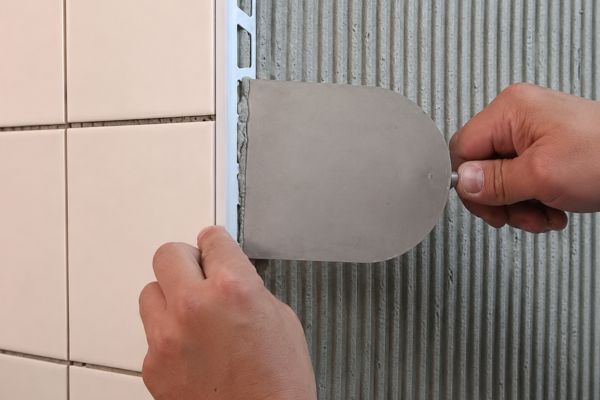
Most gaps beside tile trim are a failed joint, not a failed trim, and the strip itself is usually sound. What gave way is the grout or sealant that closed the line between trim and tile. So the right fix depends on two checks: how wide the gap is, and whether the trim still sits firm when you press it.
If the trim is firm and the gap is narrow, rake out the failed material and reseal the line. If the gap is deep, it needs a backer rod under the sealant. If the trim moves, or the same gap keeps reopening, filling will not hold. That trim needs refixing or replacing, not another bead.
Why gaps open beside tile trim
Start with the cause, because each cause points to a different fix, and sealing over the wrong cause just restarts the clock.
- The joint material aged out. Grout and sealant shrink and harden over time, until the bead loses its grip on one side and a hairline opens along the trim.
- The joint was rigid where it should flex. Grout packed into a line that moves, such as a floor perimeter or a long run, cracks as the floor shifts. The crack then follows the trim.
- The two materials move at different rates. PVC trim expands more than tile as the room warms. A hard-filled joint has nowhere to go, so it splits or pushes out.
- The substrate moved. Floors flex, screeds settle, and timber shrinks in its first heating seasons, and the trim line is where that movement shows first.
- The trim itself lost its bond. If the strip was bedded on dust or a thin skim of adhesive, it works loose over time. The gap is then a symptom, and the trim is the problem.
The fix, by gap width and trim condition
Measure the widest point of the gap, then press along the trim to test it. Use the table to pick the repair before you buy anything.
| What you find | The fix |
|---|---|
| Hairline to about 3 mm wide, trim firm | Rake out the failed material and reseal with flexible sealant |
| About 3 to 6 mm wide, or deeper than it is wide, trim firm | Press in a backer rod to set the depth, then seal over it |
| Any width, but the trim rocks, lifts, or feels loose | Do not fill it. Refix the strip or replace that section |
| A gap you sealed before, open again in the same place | Treat it as a movement problem, not a filling job |
Resealing the gap, step by step
- Cut out all the old sealant or cracked grout with a utility knife or grout saw. New sealant laid over failed sealant bonds to the failure, not to the joint.
- Clean the joint and let it dry fully, since dust, soap film, and moisture all break the bond you are trying to rebuild.
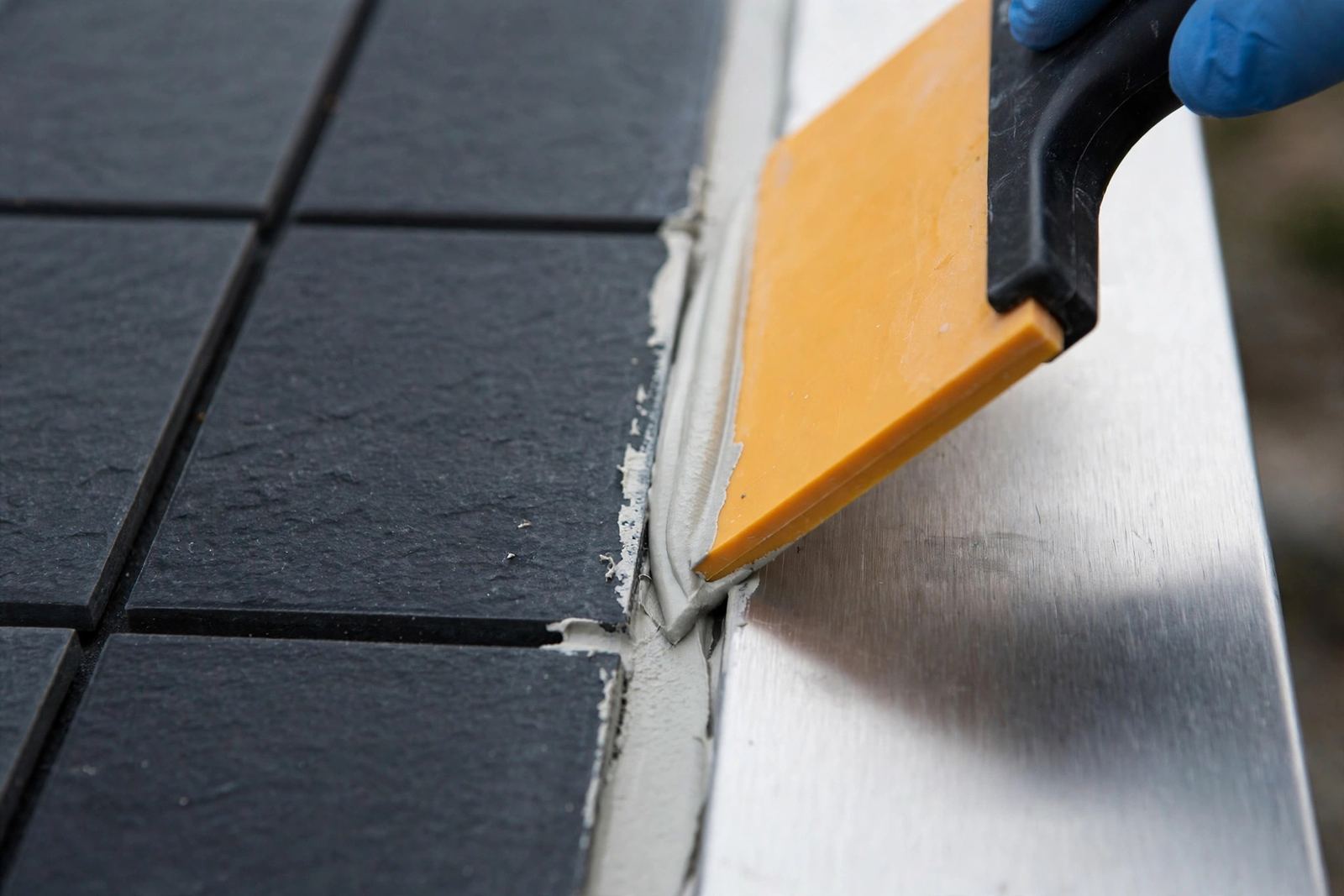
- Tape both edges of the line, since the tape gives a straight bead and keeps sealant off the tile face and the trim finish.
- On a deep gap, press the backer rod in first. The rod sets the sealant depth and stops the bead bonding to the back of the joint, so it can stretch instead of tearing.
- Run the bead in one steady pass and tool it smooth. Pull the tape while the sealant is still wet, before a skin forms.
Pick the filler by the room and the movement, not by habit. Silicone suits wet areas and lines that move, but it takes no paint. Polyurethane bonds harder and suits floor edges that take knocks. Epoxy filler is rigid once cured, so keep it for static grout lines only. A rigid filler in a moving line cracks again, whatever the tube promises.
When filling is the wrong repair
Some gaps are messages, not defects to bury under a bead. If the trim rocks when pressed, the bond behind it has failed, and a surface bead only hides that movement for a few months. If tiles beside the trim sound hollow or flex underfoot, the bed itself is failing. Stop there: that is a tiling repair, not a trim repair.
A gap that splits again in the same place each season is a movement line doing its job badly. Long runs and floor perimeters need a real expansion break, and our guide to expansion joints in tiled floors explains where those breaks belong. For a loose or damaged strip, replacing the damaged trim section is the lasting fix, and it rarely means removing tiles.
One boundary is worth keeping. This page covers gaps that appeared in a finished job. Deciding which brand-new joints to seal during an install is a different question. Our guide to caulking PVC and marble-look trim joints covers that one.
The order matters: check the trim first, then measure the gap, then pick the filler. Most failed repairs skip the first check and fill a gap that was never a filling problem.
Frequently Asked Questions
Can I put new caulk over old caulk in a gap beside tile trim?
No. New sealant sticks to the old bead, and the old bead is the part that already let go. The repair then fails again at the same weak layer. Cut the old material out fully and clean the joint, so the new bead bonds to the tile and the trim instead.
Should I fill the gap with grout or with sealant?
Sealant, in almost every gap beside a trim. That line is where two materials meet, and the two sides move at different rates. Grout is rigid, so it cracks in that line. Grout belongs in the static joints between tiles, not against the trim.
Why does the gap next to my tile trim keep coming back?
Because the cause is still moving. Either the joint sits on a line that flexes, such as a floor perimeter, or the trim itself has lost its bond. Resealing treats only the surface. Refix the trim, or give the line a proper movement joint, and the gap stays closed.
How wide a gap can sealant fill on its own?
A few millimetres, as a shallow bead. Once a gap is wider or deeper than that, the sealant sags and tears, so set the depth with a backer rod first. And if the trim also moves, no width of sealant is the right repair.
Does a gap beside tile trim let water in?
In a wet area, yes. A gap at a shower or bath edge gives water a path behind the trim and the tiles. Reseal wet-area gaps first. If a gap has stood open a long time, check what sits behind the trim before you close it.