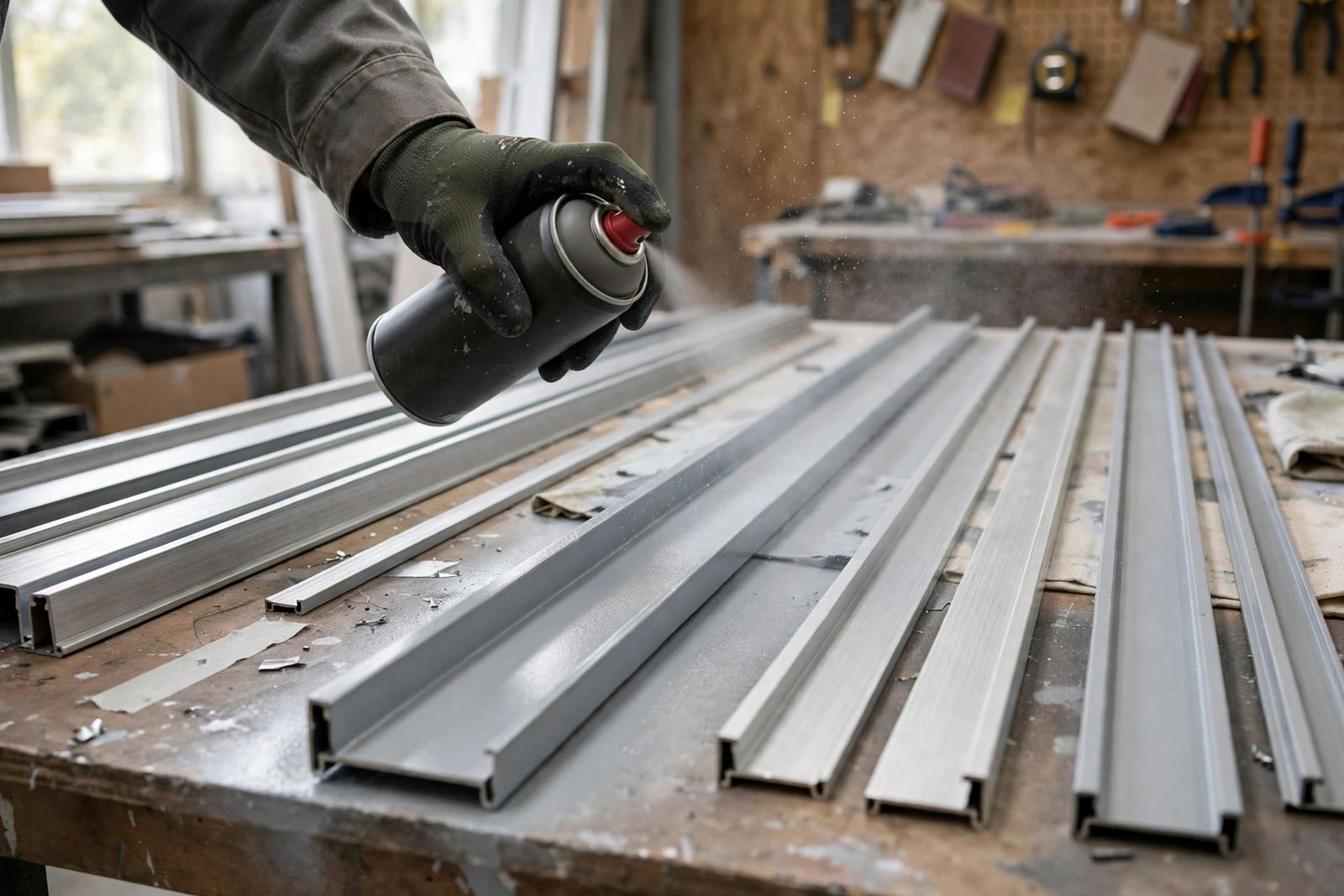
Yes, you can paint tile trim, and on sound trim in a dry area it can look convincing. Treat it as a cosmetic refresh, not a new finish. Paint is a film sitting on top of a factory finish that was made to shrug off water, knocks and cleaning. How long it lasts depends mostly on the finish underneath and how carefully you prepare it. On the wrong trim, in the wrong room, replacing the profile is less work than repainting it twice.
Start With the Finish You Already Have
Not every finish gives paint the same chance. Not sure whether yours is anodized or powder-coated? Our guide to anodized vs powder-coated aluminum tile trim compares the two. In rough order from best candidate to worst:
- Powder-coated aluminum. The best candidate. The existing coat is itself a cured paint film, so once it is degreased and lightly scuffed, new paint has something sound to grip.
- Anodized aluminum. Paintable, but the sealed oxide surface is hard and slick. It needs abrasion before priming, or the film peels away in sheets.
- Brushed stainless steel. Possible with thorough degreasing, fine abrasion and a metal bonding primer. The brushed grain gives the primer more tooth than a polished face.
- Polished or mirror stainless steel. The hardest surface on this list. The near-frictionless face leaves the paint film almost nothing to hold on to, so expect the shortest life here.
- Brass. Most brass trim is lacquered. Paint over sound lacquer after scuffing it, or strip failed lacquer first. Paint also freezes the look — the patina brass develops over time will no longer show through.
- PVC. The weakest candidate. The profile flexes, and some paint solvents soften plastic, so films tend to crack along the length. A plastic-rated primer helps, but replacement is usually the simpler answer.
The Prep Decides Whether It Lasts
Almost every peeling paint job on trim traces back to skipped preparation, not bad paint. Work through these steps in order:
- Clean. Wash off soap film, grease and grout haze. Silicone residue from old sealant is a common hidden cause of peeling.
- Dry fully. Moisture trapped under the film will lift it later, starting at the ends.
- Scuff-sand. Rub the visible face with fine abrasive paper until the shine is evenly dulled. This dull key is what the primer holds.
- Mask tightly. The visible face of most profiles is only a few millimetres wide, so mask both edges.
- Prime, then paint thin. Use a bonding primer made for the material, then two thin topcoats instead of one thick one. A spray usually leaves a smoother film on narrow profiles than a brush.
How Painted Trim Usually Fails
Paint rarely fails all at once. It starts at the exposed edge, where cloths, mops and vacuum heads strike first, and works back from there. Scratches cut through to bright metal and stand out more than on a factory finish. In showers and around baths, water and steam creep in at the cut ends and grout joints. The film lifts at those points first. The most visible failure is colour. A dark coat over a silver trim chips into a speckled two-tone, worse than the colour you were trying to escape.
When Replacing Beats Painting
Painting makes sense when the tiles are staying, the trim is sound and the area is dry. It suits a short-term refresh — a rental, a room being staged, or a colour test. Replace the trim instead when any of these hold:
- The trim is dented, bent, corroded or lifting away from the tile bed.
- It runs through a shower or another constantly wet zone.
- The new colour is a permanent choice. A factory finish, such as the finishes across the aluminum tile trim range, outlasts any film applied on site.
- You are retiling or changing the floor height anyway, so the profile has to come out regardless.
- The run is short. On one or two lengths, fitting new trim is often quicker than masking and priming the old piece.
If you do replace, pick the new finish against the tile, grout and fixtures rather than against the old trim. Our tile trim color matching guide works through that choice.
FAQ
What paint sticks to metal tile trim?
A bonding primer rated for metal, followed by an enamel-type topcoat. The primer does the adhesion work; a topcoat applied straight onto a factory finish is the most common reason paint peels. Spray application suits narrow profiles because the film goes on thin and even.
Can you paint stainless steel tile trim?
Yes, with degreasing, a fine scuff-sand and a metal bonding primer. Brushed finishes hold paint better than polished ones, because the grain gives the film a slight key. Even done well, expect it to mark and chip sooner than the original finish.
Can you paint PVC tile trim?
You can, using a primer made for plastic. But PVC flexes, and some solvents soften it, so the film tends to crack along the profile. For anything longer than a short strip, replacement is usually less effort than painting.
Will painted trim survive in a shower?
Not reliably. Constant water, steam and cleaning reach the film’s edge at joints and cut ends, and that is where lifting starts. In a shower, fit trim in the colour you want instead of painting the trim you have.