If you are choosing aluminum tile trim, the finish matters as much as the profile: anodized aluminum gives you a hard, metallic finish with excellent wear resistance, while powder coating gives you the widest color range at a lower cost. Neither is universally better — anodized wins where you want a metallic look and hard-wearing edges; powder-coated wins where you need a specific color or a tighter budget. Either way, both are a big step up from unfinished mill-finish aluminum, which oxidizes readily in wet areas.
How the two finishes are made
Anodizing is an electrochemical process that grows a hard oxide layer as part of the aluminum itself — not a coating sitting on top. As a rough sense of scale, supplier data puts anodized film around 8–25 μm, versus about 40–120 μm for powder coating, which is electrostatically sprayed on as a dry powder and then oven-cured into a thick polymer skin.
Why should a buyer care how it is made? Because “grown into the metal” versus “skin over the metal” explains nearly every practical difference below: how each finish handles scratches, how it ages outdoors, and what your color options are. (If you are still choosing the base metal itself, our aluminum vs stainless steel guide covers that decision; alloy choice within aluminum is covered in 6063 vs 6463.)
Anodized vs powder-coated at a glance
| Anodized | Powder-coated | |
|---|---|---|
| What it is | Oxide layer grown into the metal | Polymer skin sprayed on and oven-cured |
| Typical film build | On the order of 8–25 μm (supplier data) | On the order of 40–120 μm (supplier data) |
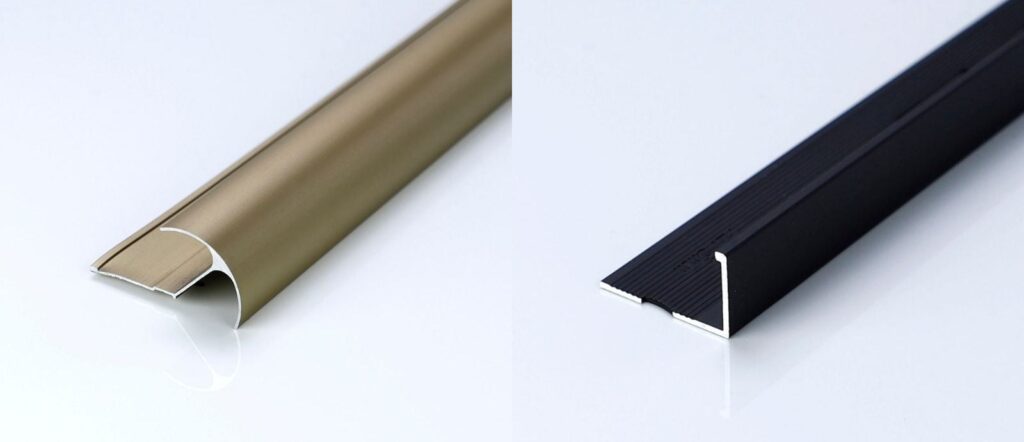
| Look | Metallic: silver, black, gold, champagne, bronze, grey | Any color; matte, gloss, metallic, or textured |
| Scratch behavior | Very hard surface; deep scratches are difficult to repair invisibly | Thicker cushion, but a hard knock can chip it and expose bare metal |
| UV exposure | Metallic colors generally reported as UV-stable | Colors can fade with prolonged UV exposure |
| Cost | Higher | Generally the more budget-friendly option |
| Maintenance | Wipe clean; avoid acid and abrasive cleaners | Wipe clean; touch-ups possible but color matching is tricky |
| Best for | Metallic look, hard-wearing edges | Custom colors, budget-driven projects |
What actually fails: scratches, chips, and grout
On paper both finishes are durable; in practice they fail differently. Anodized aluminum is very hard — everyday scuffs barely mark it — but a deep scratch is difficult to repair invisibly because the finish cannot be reapplied locally. Powder coating’s thicker film shrugs off light abrasion, but a sharp impact can chip it and expose the aluminum underneath, and touching up a chip without a visible color mismatch is tricky.
The failure mode most specific to tile trim, though, is grout. Two manufacturers’ technical notes agree: the alkaline ingredients in cementitious mortar and grout can etch or discolor anodized aluminum finishes. The practical rule is simple — wipe grout and mortar residue off the trim immediately during installation, and never clean anodized trim with hydrochloric or hydrofluoric acid cleaners or aggressive abrasives. Anodized finishes are otherwise described by manufacturers as providing years of maintenance-free service with just water or a gentle household cleaner.
Wet areas and outdoors
Start with what not to use: unfinished mill-finish aluminum. A manufacturer’s FAQ puts it plainly — mill finish carries a high risk of oxidation and staining in wet areas, and anodized or powder-coated finishes are the safer choice wherever appearance matters. Retail listings show major trim brands selling anodized aluminum profiles marketed for both wet and dry environments.
Between the two finished options for wet areas, both are serviceable; the decision usually comes back to look and budget rather than a hard technical barrier. Outdoors, factor in sun: metallic anodized colors are generally reported as UV-stable, while powder-coat colors can fade with prolonged exposure — worth weighing for a sun-baked balcony edge. (For constantly wet or coastal applications where the base metal itself matters, see our 304 vs 316 vs 316L stainless guide.)
Color, finish, and matching your tile
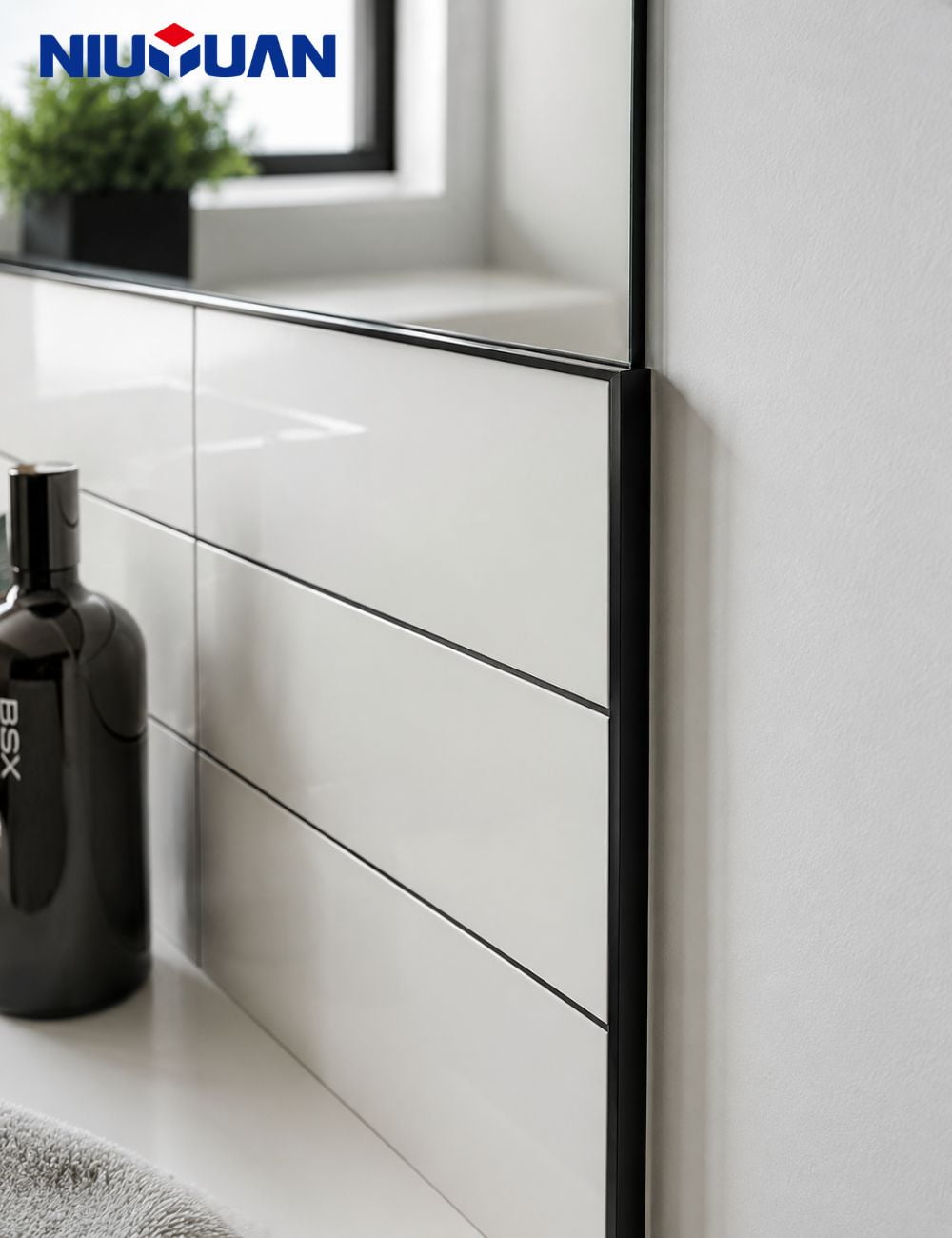
This is where the two finishes diverge most visibly. Anodizing produces a distinctly metallic look — think brushed nickel, champagne, antique bronze — in a limited palette. Powder coating opens up essentially any color, including matte black, whites, and textured finishes, and its thicker film can hide minor imperfections in the underlying aluminum.
Practical advice: if your design hinges on a metallic accent that echoes taps or fixtures, anodized is the natural pick. If you need the trim to disappear into a painted wall or match a specific tile glaze, powder coating gives you far more room. Either way, judge the final color on a physical sample under your actual lighting — screen renders lie.
What about cost?
Powder coating is generally the more budget-friendly of the two finishes, since anodizing needs more specialized process equipment. Actual pricing varies by region, color, and order volume, so treat any per-meter quote as project-specific — and remember the finish is only one line item next to alloy, profile complexity (see our profiles guide), and quantity.
Which finish should you choose?
Choose anodized if: you want a metallic look (brushed, polished, champagne, bronze); the trim sits on a high-traffic edge that takes abuse; you prefer the hardest available aluminum surface and a finish makers describe as maintenance-free.
Choose powder-coated if: you need a specific non-metallic color or a matte/textured effect; the project is budget-driven; you want the widest color flexibility, including hiding minor substrate imperfections.
Avoid mill finish wherever the trim is visible or the area gets wet — saving on finish is the classic false economy in tile trim. And whichever finish you pick, size the trim to the tile first: our tile trim size guide covers the measuring rules.
Our aluminum trim finishes
Our aluminum tile trims come in anodized colors — silver, black, gold, champagne, bronze, grey, and bright silver — plus brushed and polished metal effects, powder-coated finishes, and custom decorative surfaces for project requirements, according to our product page. If you are weighing finishes for a specific project, tell us the tile, the application, and the look you are after, and we will recommend the finish that fits — anodized where hardness and metallic tone matter, powder-coated where color and budget lead.
Frequently asked questions
Which is better for shower walls: anodized or powder-coated aluminum trim?
Both work. Anodized is the common pick for a metallic look with a hard, low-maintenance surface; powder-coated works equally well if you want a specific color. Whichever you choose, wipe grout off immediately during installation and avoid unfinished mill-finish aluminum in wet areas.
Will tile grout damage the finish on aluminum trim?
It can damage anodized finishes: manufacturers’ technical notes agree that alkaline cementitious grout and mortar residue can etch or discolor anodized aluminum, so residue should be removed immediately. Acid-based and abrasive cleaners should also be avoided on anodized trim.
Can powder-coated aluminum trim be used outdoors?
Yes, with a caveat on sun exposure: powder-coat colors can fade with prolonged UV, so for sun-baked edges a UV-stable anodized metallic finish is generally the safer reported choice. Either finish beats unfinished aluminum outdoors.
Is powder-coated trim cheaper than anodized?
Generally, yes — powder coating is the more budget-friendly of the two finishes. But pricing varies by region, color, and order volume, so compare project-specific quotes rather than assuming a fixed ratio.
Can I get aluminum trim in a custom color?
Powder coating offers the widest path to custom colors, including matte and textured effects. On the anodized side, we offer custom anodized colors by requirement alongside our stock palette of silver, black, gold, champagne, bronze, grey, and bright silver. For the full buying-guide collection, see our tile trim buying guides hub.