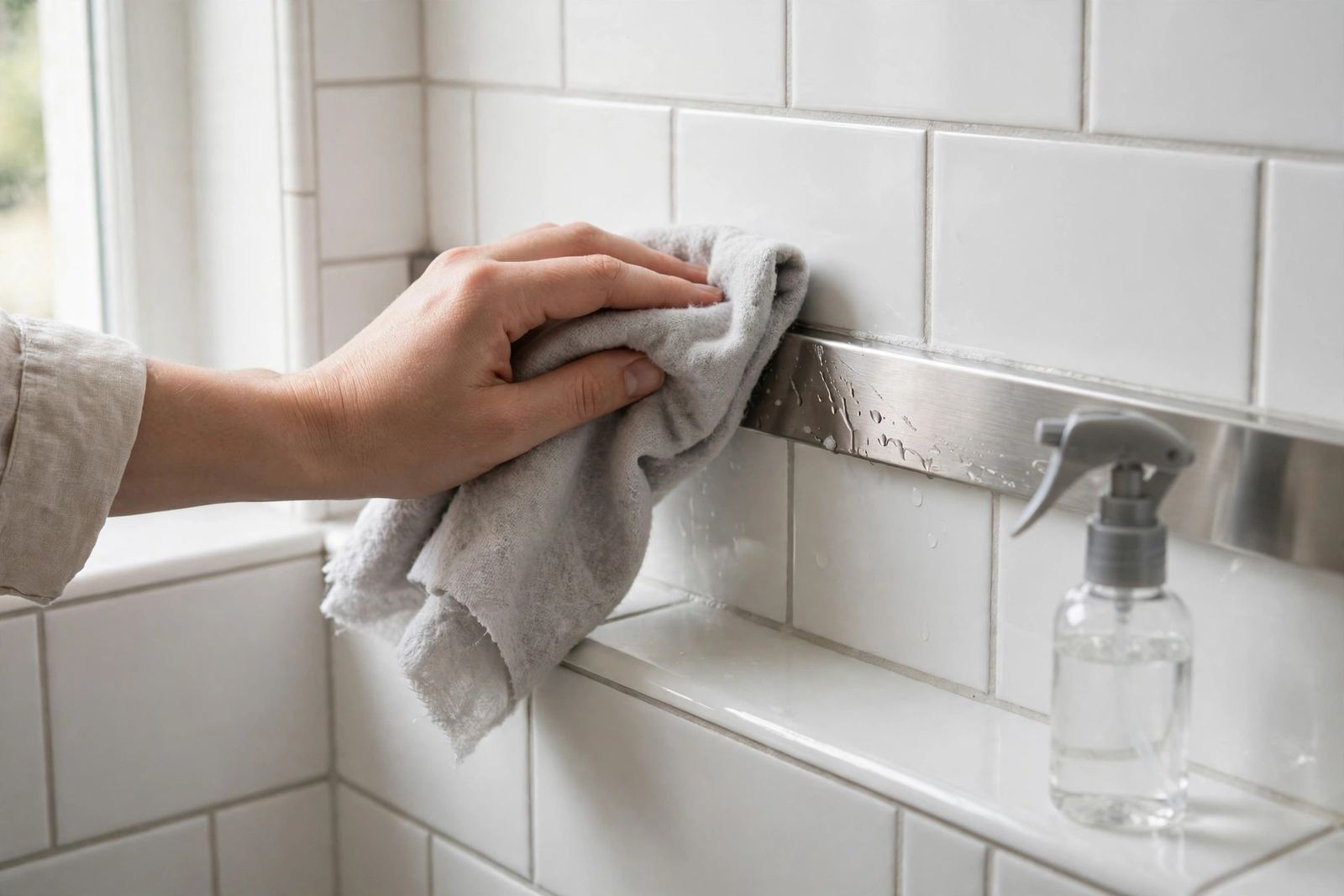
Most metal trim damage during cleaning comes from the wrong product, not from dirt. Start by naming the finish, then use mild soap and water, and dry the surface at once. That routine suits almost every metal trim, while strong cleaners and abrasive pads suit almost none.
First step: name the finish before you clean it
Brass, stainless steel, and coated finishes do not share one cleaning rule. Unlacquered brass darkens in air as copper reacts with oxygen and moisture, so it needs regular wiping and, at times, a brass polish. Lacquered or coated brass is different, since you are cleaning the coating, not the metal. Soap and water is the limit, and polish will damage the coating. Black, gold, and other coated finishes follow the same rule as lacquered brass.
Stainless steel also splits by finish. Brushed stainless has a grain direction, and wiping must follow that grain, or fine marks will cross the grain and show. Polished stainless shows fingerprints more readily, but the same mild routine applies. A PVD coated stainless finish can fingerprint too, and the coating maker guidance is the same: wash with soap and water, then dry. When the finish is unknown, treat it as coated, test a hidden spot first, and use only soap and water until the finish is confirmed.
The routine that suits most metal trim
Wipe the trim with a soft cloth dampened with warm water and a small amount of mild dish soap. Rinse with clean water, then dry at once with a clean, dry microfibre cloth, since air drying leaves mineral spots. On brushed finishes, wipe in the direction of the grain from end to end, and never in circles.
For fingerprints on stainless steel, the same routine is usually enough: soap, water, rinse, and dry.
| Finish and problem | Safe first step | Do not use |
|---|---|---|
| Unlacquered brass, tarnish | Soap wash first; brass polish only if tarnish remains | Steel wool, scouring powder, bleach |
| Lacquered or coated brass, dirt | Soap and water only, rinse, dry at once | Brass polish, ammonia, abrasives, strong acids |
| Black coated trim, water marks | Soap wash, rinse, dry at once; do not let water pool and dry on the face | Abrasive pads, chloride cleaners |
| Stainless steel, fingerprints | Soap and water along the grain, rinse, dry | Steel wool, chloride cleaners, circular scrubbing |
Brass, black, and stainless problems
Brass tarnish is oxidation, not dirt, so it will return after cleaning unless the surface is dried fully and handled less. Skin oils speed tarnish, so wipe brass after handling where trim is touched often. If a lacquered brass piece tarnishes in patches, the coating has failed in those spots. That is a refinishing job, not a cleaning job.
Black coated trim shows water marks because water left on the face deposits minerals as it dries. The fix is prevention: dry the trim after any wet cleaning, and wipe splashes before they dry. A mark left by dried water is often mineral residue on the coating. A gentle soap wash and full drying is the first step.
Stainless fingerprints are skin oil on a smooth face, and they show most on polished and dark finishes. Wipe along the grain with soap and water, rinse, and dry. Do not use a cleaner containing chlorides on stainless steel. Do not use steel wool at any stage, since it leaves fine scratches.
During grout work, protect the finish first, since fresh grout and strong grout cleaners often cause trim damage. The guide to regrouting around metal trim covers masking and testing before grout work. The guide to epoxy grout and trim finishes covers which finishes need extra care during grouting. For a handover pack, ask the supplier to state the finish type in writing.
What never to use, and when to stop
Never use scouring powder, steel wool, or abrasive pads on metal trim. Never use silver cleaners on brass or stainless surfaces, and never use bleach or chloride cleaners on stainless steel. Never use brass polish or ammonia on lacquered or coated brass. Test any new product on a hidden length first. Labels cannot know which coating is on the trim, so a label claim alone is not enough.
Stop and seek advice when the problem is not surface dirt. Green crust on brass, deep scratches through a coating, or rust spots that return after cleaning all point past routine cleaning. Further scrubbing will usually make those problems worse. Record the finish and products tried, and pass that record to the supplier first.
Frequently asked questions
Can I clean all metal tile trim with the same product?
Mild soap and water is safe as a first step for most finishes, but the limits differ. Lacquered and coated brass must stop at soap and water.
Why does brass darken again soon after cleaning?
Brass tarnish is oxidation from air and moisture, speeded by skin oils. Full drying and less handling will slow it. Unlacquered brass will still darken again over time.
How do I remove water marks from black trim?
Wash gently with soap and water, rinse, and dry at once. Prevent marks by drying splashes before they dry. Do not use abrasive pads.
Why do fingerprints show so clearly on stainless trim?
Fingerprints are skin oil on a smooth face. They show most on polished finishes. Wipe along the grain with soap and water, rinse, and dry.