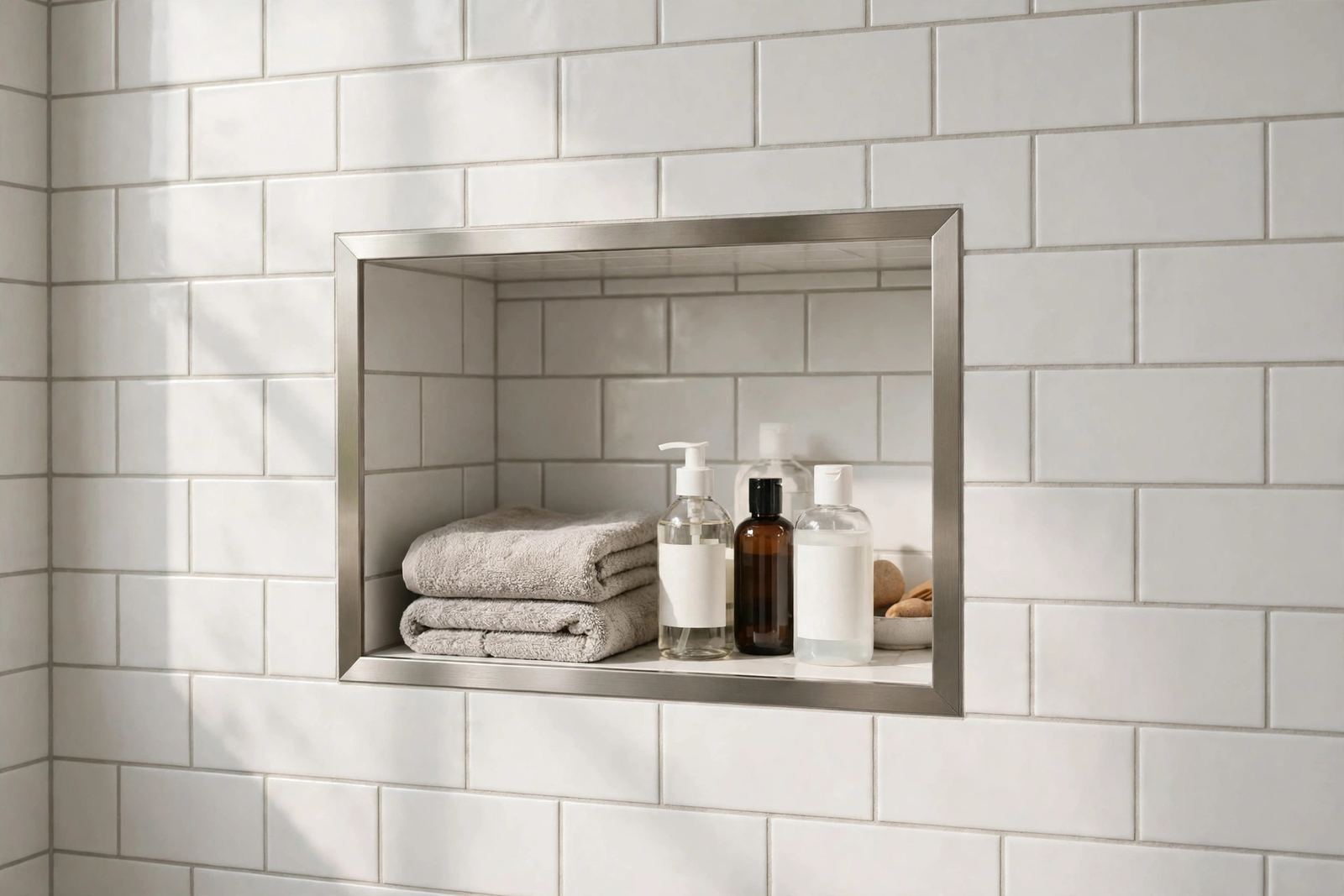
For a steam room, pick 316 stainless steel trim as the default. It resists the mix of constant vapor, heat cycles, and cleaning chemicals better than any other common trim material. Anodized aluminum can work on dry-side edges, and brass suits low-splash accents, but both need written confirmation of their finish and grade. PVC is the weakest pick here, because heat and steam age it faster than still water does.
The metal is only half the decision. A steam room pushes water vapor into every joint, so the trim must sit in a sealed assembly, not just on a tiled wall. This guide covers the material choice first, then the joints where steam rooms fail, and the checks to run before you order. Pool and outdoor trim follow different rules, and niche corners have their own details, so this guide stays on the steam room itself.
Why steam is harder on trim than shower water
A shower wets the trim and then dries out. A steam room keeps the air near saturation for the whole session, and vapor reaches places liquid water never touches. Vapor passes through grout lines and into the thin gap behind a trim leg. When it condenses there, it stays put. That trapped moisture is what stains metal, lifts coatings, and feeds mold behind the tile.
Heat adds a second stress. The room cycles from cool to hot and back with every session, and trim, tile, and sealant expand at different rates. That movement works on the joints again and again. A joint sealed with rigid grout will crack over time, and each crack opens a path for vapor. This is why the tile industry treats steam rooms as their own assembly, not as a hotter shower.
The standard behind that assembly is the TCNA Handbook, methods SR613 and SR614. For rooms in continuous use, the handbook calls for a low-perm waterproof membrane, one that limits vapor to 0.5 perms or less under test. Where the membrane lets through more vapor, a vapor retarder must sit behind the wall. Trim choice follows the same logic: pick the material that stays stable in vapor, not the one that only resists splashes.
Steam-room trim materials at a glance
Five materials cover nearly every steam-room order. The table below rates each one on vapor and heat behavior, corrosion risk, finish risk, and fit. Two notes apply across the table. First, no grade of stainless steel is rust-proof, so cleaning still matters. Second, a coating is only as good as its rating for wet heat, so ask for that rating in writing.
| Material | Vapor and heat behavior | Corrosion risk | Finish risk | Where it fits |
|---|---|---|---|---|
| 316 stainless steel | Holds shape and surface in constant vapor and heat cycles | Lowest here; molybdenum resists pitting from chlorides | Brushed hides marks; PVD color needs a written rating | Default for steam-room edges, corners, and benches |
| 304 stainless steel | Same shape stability as 316 | Higher pitting risk where cleaners or chlorides collect | Same finishes as 316 | Dry-side edges and mild-cleaning rooms only |
| Anodized aluminum | Light, easy to cut; oxide layer resists water | Reacts with alkaline cement; mortar must come off the face at once | Anodized layer can dull under strong cleaners | Wall edges away from direct steam |
| Brass H59 | Solid feel and warm color | Tarnishes in high humidity without routine cleaning | Lacquer or plating wears where steam and cleaners meet | Low-splash accents; confirm the finish in writing |
| PVC | Ages faster under sustained heat than under still water | No rust, but heat aging shortens its life | Color can fade with heat and cleaning | Budget dry-side edges only |
The table points one way for the steam zone itself. Use 316 there, and treat the other materials as choices for edges that sit outside the steam. A buyer who specs 304 or aluminum into the steam zone saves a little money. That saving buys the part most likely to fail first.
316 or 304: the grade call
The two grades look the same once finished, but the alloy differs in one element. Grade 316 carries 2 to 3 percent molybdenum, while 304 carries none specified. Molybdenum lifts resistance to pitting, the small local attack that starts in crevices and under deposits. In a steam room, cleaners and condensed vapor collect in exactly those places, so the extra alloy earns its place.
Keep 304 for edges that stay dry or see only light cleaning. Name the grade per zone in the purchase order, not per building, so the factory cuts the right stock for each run. Our grade comparison sets out the full composition and the zones each grade suits, and it is worth a read before you write the order. Our stainless steel trim page lists the grades and finishes offered.
Where trim goes in a steam room, and how each joint is sealed
Four spots need trim in most steam rooms. Outside wall corners take the most contact, so a round-edge profile softens the line and resists chips. The ceiling line matters because condensate runs down it, and the TCNA steam-room detail slopes the ceiling to stop drips. Bench edges and the door threshold take wear and water together, so a firm profile with sealed ends lasts longer there.
Inside corners deserve a different treatment. A metal inside-corner piece covers the joint, but the seal still comes from flexible sealant, not from the metal alone. Grout is rigid, so it cracks as the room cycles between hot and cold. Seal the corner with a sealant rated for wet heat, and leave a movement joint where the wall meets the floor and the ceiling. The TCNA method EJ171 covers movement joints for tiled rooms of this type.
Niche and bench details sit close to the steam, so they need the same 316 grade as the main runs. Our shower niche guide covers the corner and slope details for niches, and this guide does not repeat them. The rule here is simple: any edge the steam reaches gets the steam-zone material, and any edge outside it can take a lighter spec.
Match the profile height to the tile
Trim profiles come in L-shaped, T-shaped, and round-edge forms, and the profile sets how the edge reads and how it takes wear. If the basic forms are new to you, our guide on what tile trim is explains each one before you choose.
Match the profile height to the tile thickness before you order. A leg that sits short of the tile face leaves a sharp lip, and a leg that stands proud catches cleaning cloths and feet. Confirm the tile thickness with the tiler first, then pick the profile height from that number. Accessories matter too. Order inside and outside corner pieces and end caps in the same grade and finish. No mixed metal should sit in the steam.
What to confirm before you order
A steam-room order fails on paper before it fails on site. Run this checklist with the supplier before you pay, and keep the answers with the order. If a supplier cannot answer a line, treat that as a gap, not as a detail to settle later.
- Grade in writing: 316 for the steam zone, with a mill certificate on request.
- Finish code: brushed, mirror, or PVD, named by code, not by word alone.
- Profile and height: L-shaped or round-edge, matched to the measured tile thickness.
- Accessories: corner pieces and end caps in the same grade and finish.
- Heat and cleaner rating: the finish rating for wet heat and the cleaners the room will use.
- Sample and lead time: a sealed sample first, then bulk timing in writing.
- Order terms: MOQ, tooling fee terms, and sample retention in the order.
With NIUYUAN, stainless steel orders start at 500 pieces, samples ship in 7 days, and bulk runs take 20 to 30 working days. Custom samples take 7 to 10 days. Sealed samples stay on file for 2 years. Tooling fees return once the agreed cumulative order volume is met. The first technical reply comes within 1 working day. Confirm these terms on your own order, since MOQ and lead time move with profile and finish.
The short version has three parts. Use 316 stainless steel for every edge the steam reaches. Seal joints instead of grout at every movement line. Run the written checklist before the order. Get those three right and the trim outlasts the room around it. Skip one, and the first failure will show at the joint, not on the metal face.
Frequently asked questions
What tile trim material is best for a steam room?
316 stainless steel. It holds up in constant vapor, heat cycles, and cleaning chemicals better than 304, aluminum, brass, or PVC. Name the grade in writing and ask for a mill certificate.
Can I use aluminum tile trim in a steam room?
Anodized aluminum can work on edges outside the direct steam, but check the coating rating for wet heat first. Aluminum reacts with alkaline cement, so mortar must come off the visible face at once during installation.
Can PVC tile trim go in a steam room?
PVC is the weakest pick for the steam zone. Sustained heat ages it faster than still water does, and it can soften and fade. Keep PVC for dry-side edges only.
Should steam-room trim joints use grout or sealant?
Use flexible sealant at movement joints, where the wall meets the floor and the ceiling, and at inside corners. Grout is rigid and cracks as the room cycles hot and cold.
What should I confirm with the supplier before ordering steam-room trim?
Grade 316 in writing, finish code, profile height matched to tile thickness, corner pieces and end caps in the same grade, the finish rating for wet heat, and sample and lead time terms.