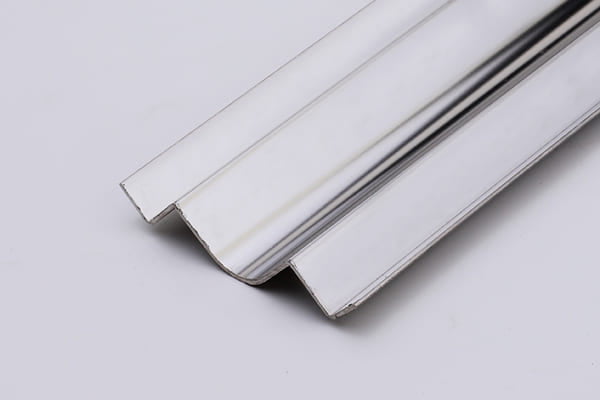
Regrouting Around Metal Tile Trim: How to Protect the Finish
Regrouting can refresh tired joints without replacing tile or trim. The finish survives when you mask the trim, keep cutting tools centred in the joint, and remove grout residue before it hardens. Cement grout can stain anodised aluminium if it dries on the surface, and epoxy residue is harder to remove once it cures. Acid cleaners and abrasive pads can also damage metal finishes, so work in small sections, testing every cleaner in a hidden spot.
Where the damage actually comes from
Three risks do most of the harm, and a blade can score a soft finish in one slip. Wet cement grout can leave alkali residue that discolours anodised aluminium. A harsh cleaner can then etch the surface while you remove haze, and stainless steel can tarnish if residue is left in place.
| Finish | Main risk | Protection step |
|---|---|---|
| Anodised aluminium | Alkali residue, acid cleaners | Mask fully, wipe off at once |
| Stainless 304 and 316 | Scratches, tarnish, residue pitting | Mask, soft cloth, rinse well |
| Lacquered brass | Abrasives, strong cleaners | Mask, test hidden first |
| Chrome and smoked chrome brass | Scratches, harsh chemicals | Mask, avoid abrasive pads |
Use this table as a starting guide, not a guarantee. Finishes vary by supplier. Lacquered brass needs extra care because its coating is thin. If you do not know your finish, treat it as the most delicate option listed.
Mask before you cut or grout
Masking is cheap, fast, and far easier than repairing a scratched edge. Apply painter’s tape tight along both sides of the trim before cutting or grouting. Add cardboard over wide profiles, and check trim size before ordering a replacement. Press tape edges down so grout cannot creep underneath. Remove tape after grout has firmed and the first haze pass is wiped.
- Tape both trim edges, not just one side.
- Cover wide profiles with cardboard.
- Keep a damp sponge and clean water nearby.
- Work one short run at a time.
Remove old grout without scoring trim
Use a hand grout saw for short runs and soft grout for the most control near a metal edge. Use an oscillating tool with a carbide or diamond blade only for longer runs, and keep the blade centred in the joint. Score the joint centre first so the tool follows a guide, not the trim. Vacuum dust from the joint, and stop and re-mask if tape lifts or the blade drifts.
Aim for a clean joint, not maximum depth. Guides commonly call for removal to about two thirds of the joint depth, or 3 mm below the tile surface. Deeper cutting near trim raises contact risk, so favour a hand tool when the joint runs tight against metal. If damage already runs past the finish, read how to replace damaged tile trim before you cut further.
Choose the new grout for the finish
Cement grout is forgiving, but its residue must not dry on anodised aluminium, so wipe it with a damp sponge after it firms. Then make a second clean water pass for haze. Epoxy grout resists stains and moisture, yet its residue must come off before curing starts, often within 20–30 minutes. Cured epoxy haze may need a solvent or abrasion, and either method can threaten a metal finish.
Clean up in the right order
Start with plain water and a soft cloth for fresh haze. Rinse often, change dirty water, and do not let slurry dry on the trim. Use only a mild, neutral cleaner for stubborn film, tested first on a hidden length of the same trim. Avoid cleaners with hydrochloric or hydrofluoric acid on anodised aluminium, and avoid steel wool, emery paper, and abrasive pads on all metal finishes. Rinse well after any cleaner.
Decide: protect, repair, or replace
NIUYUAN trim ranges cover aluminium 6063 and 6463, stainless 304 and 316, and brass H59. When sourcing a match, confirm alloy, profile, and finish, because a near match will show at a corner. Avoid the errors in common tile trim installation mistakes, and check the step-by-step tile trim installation guide if the trim itself must come out.
- Finish bright after a test clean: keep it.
- Light marks on a hidden run: monitor only.
- Deep scoring or flaking lacquer: plan replacement.
- Unknown finish or failed spot test: ask the supplier.
Frequently asked questions
Can I regrout without removing the trim?
Yes, if the trim is sound and fixed. Mask both edges, keep tools centred in the joint, and wipe residue off before it hardens. Remove it only if loose, bent, or corroded under the surface.
Will cement grout damage anodised aluminium trim?
Wet cement residue can discolour anodised aluminium if it dries on the surface, so mask the trim, wipe residue off, and rinse with clean water. Do not let grout film harden while you work another section.
Is epoxy grout safer for metal trim?
Cured epoxy resists stains and moisture, but its clean up window is short, so residue must come off before curing starts, within 20–30 minutes. Cured haze may need a solvent or abrasion, which can threaten a metal finish.
Which cleaner is safe for lacquered brass?
No cleaner here is presented as safe for all finishes, including lacquered brass, so start with water and a soft cloth. Test any mild neutral cleaner in a hidden spot first, and confirm with your trim supplier before wider use.