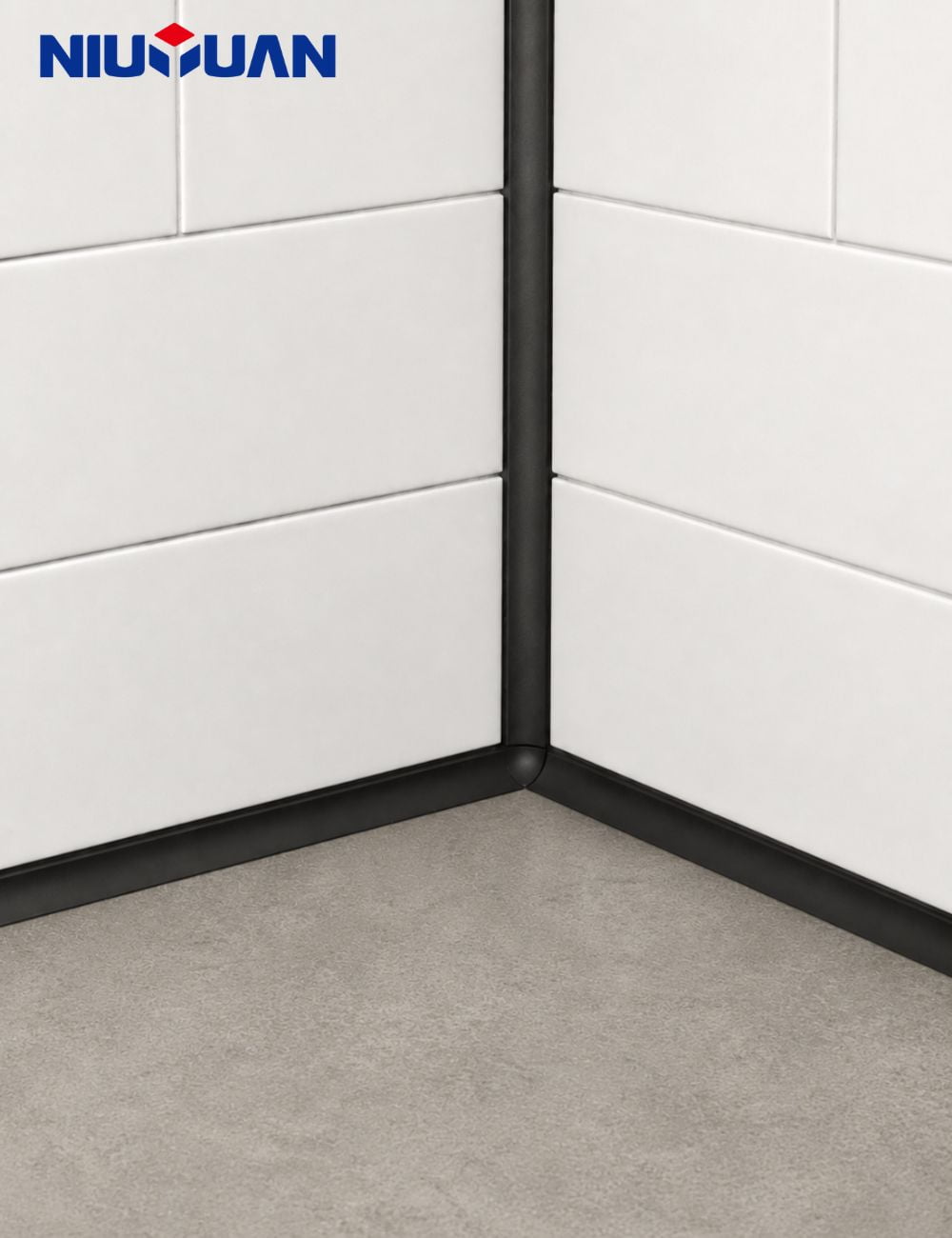
Inside Corner Tile Trim vs Silicone: Which Finish for Dry, Wet and Commercial Areas
For most inside corners, silicone sealant is the right finish in dry rooms, while a rigid cove profile wins in wet and commercial zones. Two tiled walls move apart as buildings settle, heat up, and cool down. A hard grout line cannot follow that movement, so it cracks and lets water reach the wall behind.
This guide compares the two finishes by zone, covering dry rooms, showers, and commercial kitchens in turn. It also flags where the two finishes work best together on one project. Use the decision table first, then read only the section that matches your room type.
| Zone | Recommended finish | Why it wins |
|---|---|---|
| Dry room | Silicone bead | Follows movement, stays neat, easy to renew |
| Wet room shower | Cove profile plus sealed edges | Hard face sheds water, gives mould less grip |
| Commercial food area | Coved base, checked against local code | Curved face clears fast, no sharp dirt trap |
Two finishes, two different jobs
A cove profile is a preformed strip that sits in the inside corner and covers the joint. Its visible face curves across the angle instead of leaving a sharp ninety degree joint. A flange beds into tile adhesive under the field tiles and locks the strip before grouting starts, following standard install steps. The result is a hard, fixed line that shields tile edges from knocks during daily use.
Silicone sealant is a flexible bead applied after tiling, and it stays elastic once cured. That elasticity lets the bead stretch as walls shift, without cracking like rigid grout. Installers leave a gap at the change of plane for this bead, and that gap is the movement joint rather than a defect. A colour matched bead blends with grout lines on flat walls for a tidy finish.
The contrast matters for buying decisions, because each finish solves a different problem. A profile adds a fixed, cleanable face but cannot stretch, while silicone stretches well yet stays soft and needs renewal. Neither finish replaces waterproofing behind the tiles, which must stay continuous across every corner in the room. Choose the visible finish for movement, water, and cleaning in that room.
Dry zones: let silicone do the work
In bedrooms, living rooms, and dry hallways, wall tile edges face movement but little water. A neat silicone bead handles that movement without adding a visible strip along the corner. It also costs less labour than fitting a profile along every corner in a large project. For rental stock or large housing runs, that saving scales fast, but renewal needs a plan. Inspect beads at handover checks, before tenants report a failed joint.
Dry zones still need one rule observed without exception on every project. Never fill an inside corner with rigid grout alone, because a corner joint moves. Grout on a flat wall is fine, but a cracked grout line in a dry room shows common installation mistakes and invites dust. It also signals weak detailing to any buyer who inspects the finish closely.
- Dry bedrooms and living areas: silicone bead
- Tile meeting painted wall: confirm sealant before repaint plan
- Low traffic corridors: silicone bead, inspected at each tenancy change
Wet zones: why showers punish soft beads
Showers send water down both walls into the same corner line every day. That corner stays wet longer than any flat tile face in the same room. A silicone bead can seal it well at first, but heat, soap, and standing water strain the bond over time. Mould can also settle into a soft bead that stays damp between showers.
A cove profile changes that balance in a useful way for wet rooms. Its hard face sheds water instead of holding a damp bead against the tile. Cleaning tools can wipe a smooth curve without digging into soft sealant. The profile still needs sealed edges at the tile, but those seals stay smaller and easier to inspect than a full bead.
That does not make silicone useless in a shower, since some corners leave no room for a profile. Use it where a profile cannot fit, such as tight niche corners, and choose a sanitary grade product there. Treat a stained or peeling bead as a maintenance signal, and replace it fully instead of layering fresh sealant over old material.
Commercial areas: cleaning speed decides
Commercial kitchens, food prep rooms, and washdown areas face daily cleaning routines. Staff mop, hose, or scrub the wall to floor junction every day. A sharp ninety degree joint traps soil where tools cannot reach, which creates a hygiene risk. That trapped soil can also become a failed inspection point, so buyers should treat corner shape as a compliance detail.
A curved cove base answers that problem directly, because the curve lets mops and squeegees pass without catching a sharp edge. Some published food facility rules call for a cove base several inches high. One county rule cited in research calls for at least six inches high, and another calls for a minimum three eighths inch radius curve. Always confirm the local rule for the project site before ordering any corner finish.
Note the scope limit here with care, since a tile inside corner profile differs from a full coved base system. Large commercial floors often use resin, quarry tile, or sheet systems for the full cove. A metal or PVC corner profile suits wall corners and smaller junctions instead. For a full floor to wall cove, ask the project specifier first, before fixing the order.
Combining both, and choosing a material
Some corners benefit from both finishes used together on one joint. Fit the corner piece for the hard face, then seal its edges with silicone for movement. The profile takes knocks and daily water, while edge seals absorb movement between walls. This pairing suits busy bathrooms and hotel corridors, and it keeps renewal small, since only edge seals need attention.
Material choice should follow water exposure and cleaning load in each room. Stainless steel suits wet rooms and busy commercial corners with heavy cleaning. Aluminium suits dry and light wet areas, while PVC suits dry rooms and budget led housing runs. Brass inside corner supply is not confirmed here, so confirm it before ordering.
For bulk orders, confirm size against tile thickness before placing volume, using the site size guidance. NIUYUAN minimum orders differ by material for standard lines. Aluminium starts at 1,000 pieces and stainless steel at 500 pieces, while brass starts at 200 pieces and PVC at 2,000 pieces. Samples ship in 7 days, or 7 to 10 days for custom work, so allow that time in the project plan.
Frequently asked questions
Can I use grout in an inside corner instead of sealant?
No, grout is rigid and corners move, so a grout line in a corner tends to crack under stress. Use a flexible sealant or a profile with sealed edges instead, and keep grout for joints on one flat plane only.
Does a cove profile replace silicone completely?
No, the profile still needs sealed edges where it meets tile, because a fixed strip cannot absorb movement. The gain is a smaller seal area that stays easier to inspect, not a corner with zero sealant.
Which finish suits a shower corner best?
A cove profile suits most shower corners, with sealed edges, because its hard face sheds water well. Its smooth face also wipes clean with less effort, while silicone alone fits only where a profile cannot fit.
Is silicone enough for a commercial kitchen corner?
Usually no, commercial washdown corners need a cleanable curved face that staff can mop without trapping soil. Check the local health rule for cove height and radius first, since a tile profile alone may not meet a full coved base rule.
How often should shower silicone be checked?
Inspect beads on a regular cycle and after any leak sign, so small failures get caught before water damage spreads. Replace stained, peeling, or gapped sealant fully, not over old material, and dry the joint fully before applying the new bead.
Buyer checklist: specify it right
Use this list on the purchase order to avoid vague corner specs across rooms. Vague specs cause mixed finishes on one project, which complicates cleaning and maintenance later. Each line below maps to one decision the supplier needs, so copy the list, fill the gaps, and attach it to the order.
- Room type for each corner: dry, wet, or commercial
- Finish per room: silicone bead, cove profile, or both
- Tile thickness, so the profile size matches the tile
- Material per room: stainless steel, aluminium, or PVC
- Brass inside corner: confirm supply before ordering
- Commercial hygiene rule: confirm before ordering
- Renewal plan for silicone beads: owner and inspection interval