Choose PVC tile trim when budget and easy installation matter most and the project stays indoors, dry-to-damp, and low-traffic — budget residential walls, rental renovations, DIY retail SKUs. Choose aluminum tile trim when you need impact resistance, heat tolerance, or a premium metallic finish — commercial floors, kitchens near heat sources, high-traffic corridors, outdoor and sun-exposed installations.
For distributors, the practical answer is usually both: PVC moves on price and volume for the budget segment, aluminum moves on durability and specification for the mid-to-premium segment. Below is exactly where each material wins, so you can match stock to the projects you serve.
PVC vs Aluminum Tile Trim at a Glance
| PVC tile trim | Aluminum tile trim | |
|---|---|---|
| Upfront cost | Lower | Higher |
| Weight | Lighter than aluminum — easier to carry and cheaper to ship per piece | Light for a metal, roughly twice the density of PVC — still easy to handle |
| Moisture resistance | Waterproof and damp-proof; will not corrode. In poorly ventilated damp areas, organic buildup can occur on surfaces | Excellent when anodized or powder-coated; bare aluminum can pit or whiten under sustained moisture or alkaline conditions (wet cement) |
| Impact and scratch resistance | Lower — prone to scratches, dents, and cracking over time, especially in high-traffic areas | Higher — metal hardness holds its edge under impact and traffic |
| Heat tolerance | Limited — can soften or deform near heat sources such as stoves | High — withstands high temperatures without deforming |
| Fire performance | Limited combustibility; can release toxic gases when burned | Non-combustible metal with higher fire resistance |
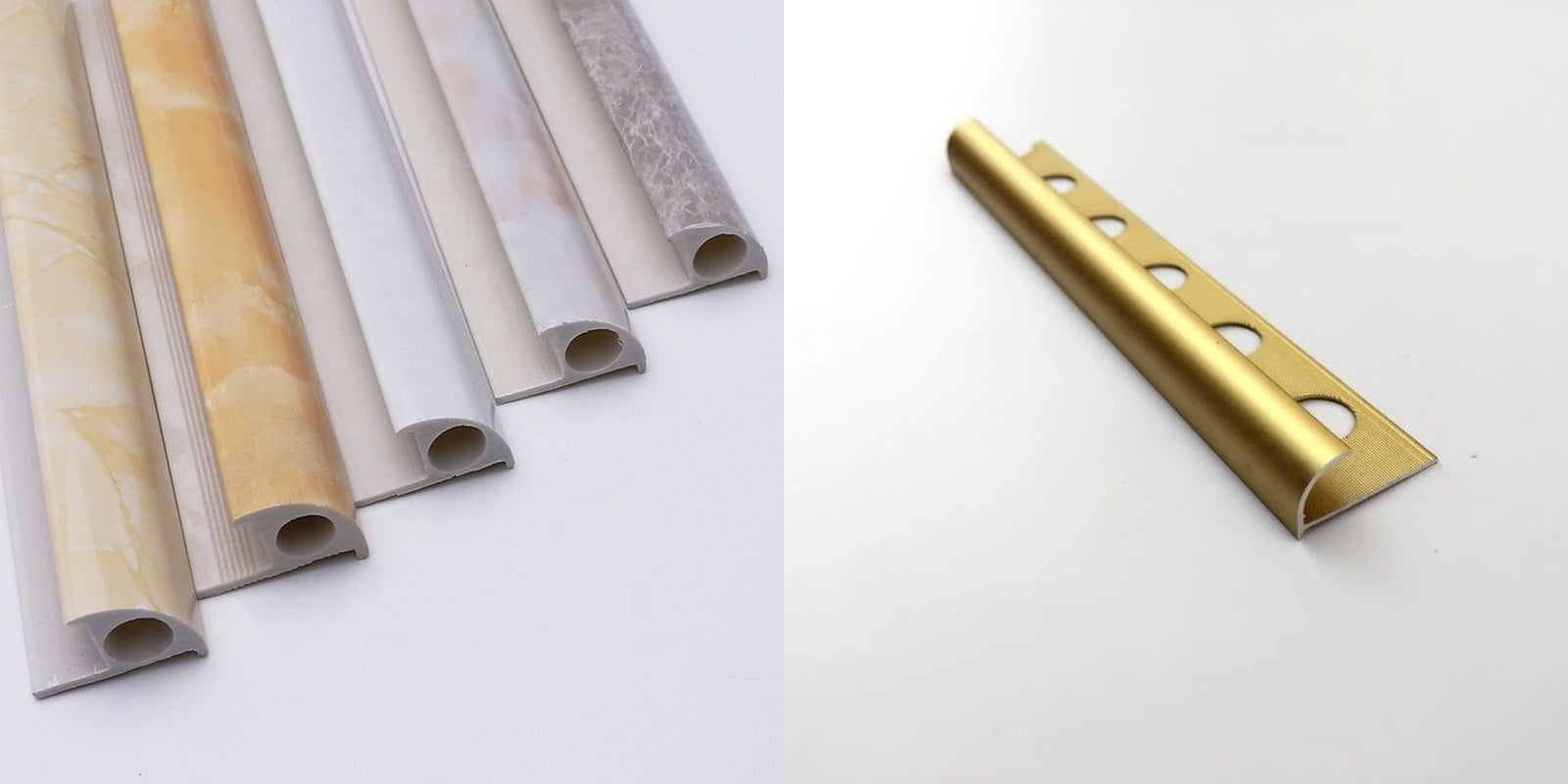
| Finish options | Solid colors plus printed wood-grain and stone patterns; no metallic sheen | Anodized colors (matte black, champagne, silver), brushed, polished, powder-coat including wood-grain effects |
| On-site cutting | Easy — cuts with basic hand tools | Needs a metal-cutting blade and proper technique |
| UV and aging | Prolonged UV exposure can age and discolor the surface | Anodized finishes hold color well; best choice for sun-exposed areas |
| Typical NIUYUAN MOQ | 2,000 pcs | 1,000 pcs |
| Best for | Budget interiors, damp indoor areas, DIY retail SKUs, fast low-cost projects | Commercial and high-traffic floors, kitchens, outdoor and sunlit projects, premium specifications |
Cost: Upfront Price vs Replacement Cost
PVC trim costs less upfront than aluminum — every supplier comparison reviewed for this guide agrees on the direction. The gap comes from raw material cost and processing: aluminum extrusion plus anodizing or powder-coating is a more complex, costlier process than PVC extrusion.
For distributors, the more useful math is replacement cost. In a hotel corridor or shopping-mall floor, a cracked or yellowed PVC trim means labor, tile damage, and downtime — costs that can erase the upfront saving. In a budget apartment bathroom that will be renovated in a few years anyway, PVC’s lower price wins outright. Match the material to the project’s expected service life, not just the purchase order.
Weight: Why It Matters Beyond Handling
PVC is lighter than aluminum, which makes it easier to carry and faster to position on site — one reason installers prefer it for quick residential jobs. For export buyers, the second effect is freight: more pieces per kilogram means lower sea-freight cost per piece on bulk orders. Derived consideration, not a freight quote — confirm with your forwarder.
Moisture: Where Each Material Belongs
PVC is waterproof and damp-proof by nature — it will not corrode, rust, or absorb water, which makes it a safe default for bathroom walls, kitchen backsplashes, and other damp indoor areas. One caveat from supplier experience: in poorly ventilated damp areas, mold and organic buildup can grow on trim surfaces, so ventilation and cleaning still matter.
Aluminum resists moisture well once finished — anodizing or powder-coating forms a protective layer that stands up to water, humidity, and cleaning chemicals. The weak spots are unfinished edges and alkaline exposure during installation (wet cement/mortar), which can cause pitting or whitish oxidation on bare aluminum. Rule of thumb: PVC for damp interiors on a budget; aluminum (finished, never bare) where the trim must also survive impact, heat, or outdoor exposure.
Strength, Heat, and Fire: The Decisive Differences
This is where the two materials separate most clearly:
- Impact: Aluminum’s metal hardness resists dents, scratches, and cracking under luggage wheels, cleaning carts, and heavy foot traffic. PVC is serviceable but softer — it scratches and dents more easily, and can crack over time in high-traffic areas.
- Heat: PVC can soften or deform near heat sources, so keep it away from stoves and other hot zones in kitchens. Aluminum withstands high temperatures without deforming, making it the safer choice around heat.
- Fire: Aluminum is a non-combustible metal with inherently higher fire resistance — relevant for public and commercial projects with fire-safety specifications. PVC has limited combustibility and can release toxic gases when burned, a real consideration for stairwells, corridors, and public buildings.
If your customers’ projects face impact, heat, or fire codes, aluminum is the specification. If none of those apply, PVC’s cost advantage stands.
Finish Options: What Sells on the Shelf
The two materials sell on different looks:
- PVC tile trim is typically supplied in solid colors (most commonly white) plus printed wood-grain and stone-pattern foils that coordinate with tile designs. It has no metallic sheen — the look is clean and practical rather than premium.
- Aluminum tile trim offers anodized matte black, champagne, and silver, plus brushed, polished, and powder-coated options including wood-grain effects. If your customers buy on metallic aesthetics, aluminum gives you the premium SKUs.
Confirm colors on physical samples before bulk orders — see our tile trim finishes guide. And note UV aging: prolonged sun exposure can discolor PVC surfaces, so reserve PVC for interiors and specify aluminum for sunlit or outdoor installations.
Installation: Speed vs Technique
PVC wins on installation speed: it is lightweight, flexible, and cuts easily with basic hand tools, which is why it dominates DIY retail and fast residential jobs. Aluminum needs a metal-cutting blade and proper technique — slower, but the result is a harder, longer-lasting edge.
For contractors quoting labor, the trade-off is real: PVC saves installation time; aluminum saves callbacks.
Which Should You Stock? A Distributor’s Decision Matrix
| Your customers’ projects | Stock this |
|---|---|
| Budget residential walls, rental renovations | PVC — price and volume win |
| Bathrooms and kitchens (damp interiors) | PVC for budget jobs; aluminum for premium or high-traffic specs |
| Areas near heat sources (stoves, hot zones) | Aluminum — PVC can soften |
| Hotels, malls, transit — high traffic and impact | Aluminum — durability and replacement cost |
| Outdoor, balcony, or sun-exposed installations | Aluminum — UV and heat tolerance |
| DIY and home-center retail SKUs | PVC — easy to cut and install, lowest price |
| Fire-safety-specified public buildings | Aluminum — non-combustible |
| Floor transitions and expansion joints | Either material works — see tile expansion joints for the joint logic |
Two practical notes on ordering: NIUYUAN’s MOQ is 2,000 pcs for PVC and 1,000 pcs for aluminum profiles, and trim height should be matched to tile thickness — our tile trim size guide covers the sizing rules. If your customers also ask about stainless options for wet commercial specs, our aluminum vs stainless steel guide covers that comparison.
What to Put in Your RFQ
A clear RFQ gets you an accurate quote faster:
- Material: PVC or aluminum (6063/6463) — and the environment it will serve
- Profile and size: profile type, height matched to tile thickness, length or custom lengths
- Finish and color: PVC solid color or printed pattern; aluminum anodized color, brushed, or powder-coat — with a sample reference wherever possible
- Quantity and packaging: estimated pcs, export carton/pallet requirements, private-label needs
- Target delivery: project timeline and destination port
- Material documentation: tell us in your RFQ if you need test reports or compliance documents
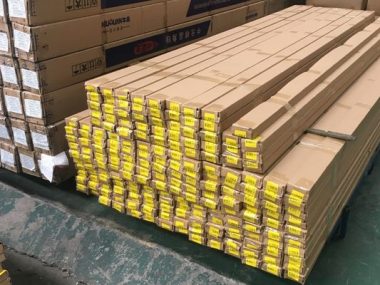
NIUYUAN supports OEM profiles, private label, and custom export packaging. Custom samples take 7 days (7–10 for complex profiles); bulk orders run 20–30 working days. Send the list above via our contact page.
FAQ
Is PVC tile trim waterproof enough for bathrooms? Yes. PVC is waterproof and will not corrode or rust, making it well suited to bathroom walls and other damp indoor areas. Keep the space ventilated and cleaned, since mold can grow on any surface in poorly ventilated damp conditions.
Will PVC tile trim crack or turn yellow over time? It can. PVC is softer than metal, so it scratches, dents, and can crack over time — especially in high-traffic areas. Prolonged UV exposure can also discolor the surface, which is why PVC belongs indoors and aluminum is the better choice for sunlit or outdoor installations.
Can PVC tile trim be used outdoors? Not recommended as a first choice. Heat can soften PVC and UV exposure ages the surface. For balconies, facades, and other outdoor or sun-exposed installations, aluminum trim is the safer specification.
Which is cheaper to ship — PVC or aluminum tile trim? PVC. It is lighter than aluminum, so more pieces fit per kilogram and the sea-freight cost per piece is lower on bulk orders. Confirm actual rates with your forwarder — this is a directional consideration, not a freight quote.
What MOQs should I expect when ordering PVC vs aluminum? At NIUYUAN: 2,000 pcs for PVC, 1,000 pcs for aluminum. Custom finishes and profiles supported; confirm MOQ for mixed-finish orders in your RFQ.