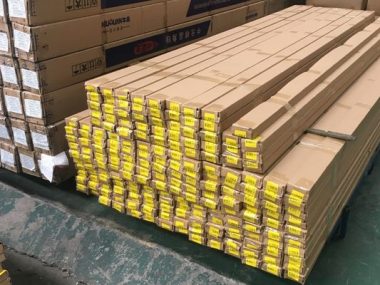
Choose solid brass tile trim when the project sells on a premium look and feel — luxury bathrooms, hotel lobbies, high-end retail, and any specification where real metal at the edge justifies a higher price. Choose aluminum tile trim when budget, color range, and light weight matter most — residential projects, dry interiors, and price-sensitive volume orders.
The honest distributor answer: brass wins on perceived value, aluminum wins on turnover. Below is exactly where each material earns its place, so you can match stock to the projects you serve.
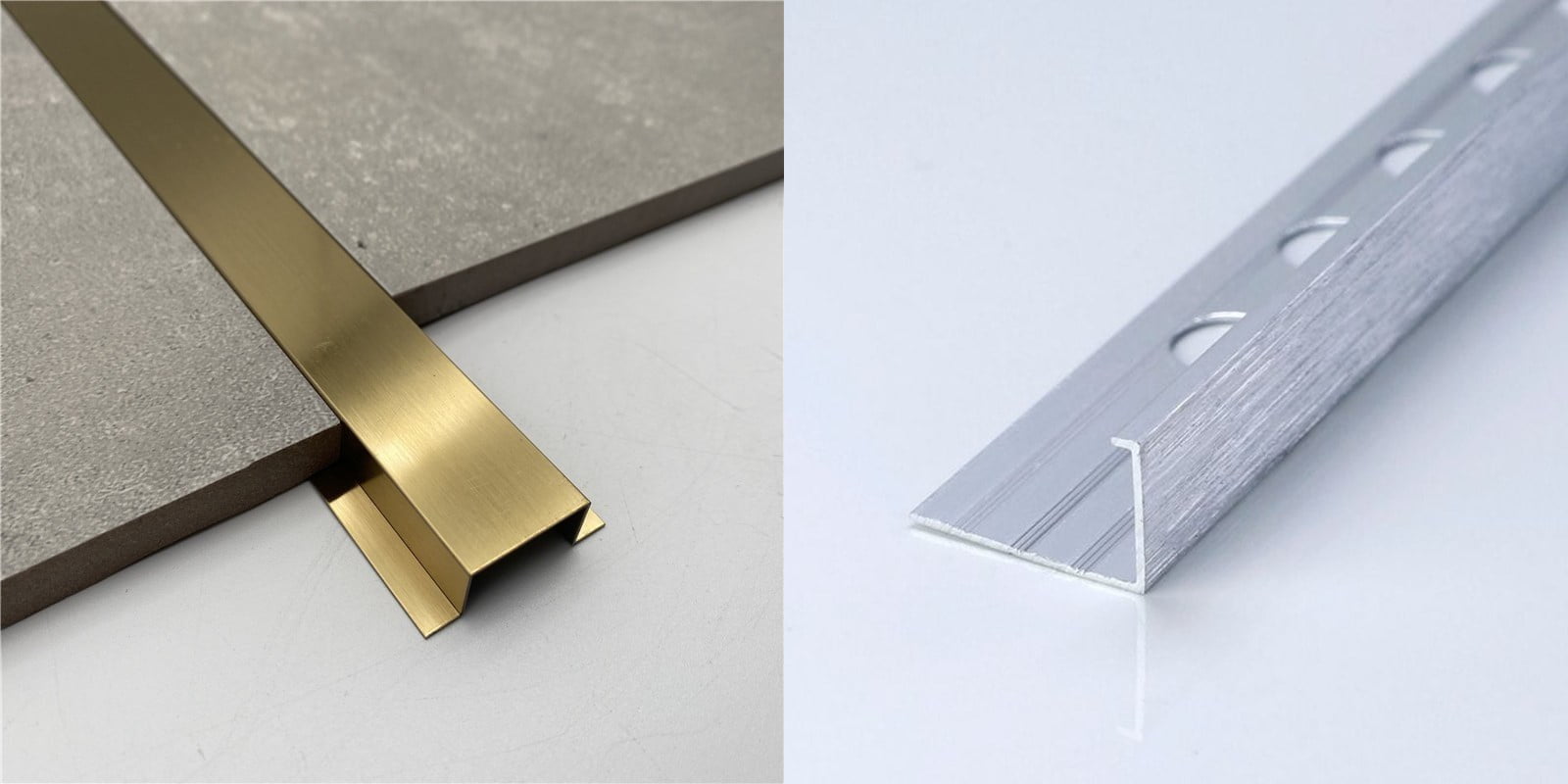
Brass vs Aluminum Tile Trim at a Glance
| Brass tile trim | Aluminum tile trim | |
|---|---|---|
| Material | H59 solid brass (copper-zinc alloy) | 6063/6463 aluminum |
| Upfront cost | Higher — the premium-priced option | Lower |
| Weight | Roughly 3x denser than aluminum (~8.5 vs ~2.7 g/cm³) — heavier to handle and ship | Light — easier to handle and cheaper to ship per piece |
| Tarnish / surface aging | Unlacquered brass develops a natural patina over time; lacquered brass stays uniform until the coating wears; shine restored by buffing | Anodized/powder-coated finishes hold color well; bare aluminum can oxidize or whiten in moisture, UV, or salt air |
| Wet-area suitability | Good for bathrooms (brass doesn’t rust); avoid constant chlorinated water — dezincification risk | Dry/mildly humid interiors; never bare aluminum in wet areas |
| Finish options | Metallic palette: brushed, polished, satin, antique brass | Very wide: anodized colors, brushed, polished, powder-coat including wood-grain effects |
| On-site cutting | Both are soft metals — cut easily with standard tooling, no steel-rated blade needed | Same |
| Typical NIUYUAN MOQ | 200 pcs | 1,000 pcs |
| Best for | Luxury bathrooms, hotels, premium residential, brass-fixture coordination | Budget projects, dry interiors, color-driven retail SKUs, volume orders |
Cost: Upfront Price vs Perceived Value
Solid brass trim costs more upfront than aluminum — every supplier comparison reviewed for this guide agrees on the direction. (No source we checked publishes a factory bulk price multiple — treat any “X times more expensive” figure online as retail anecdote, not a quote.)
The distributor question is not which is cheaper — it’s which earns its margin. Brass trim sells into projects where the finish is part of the luxury story: a marble vanity splashback, a hotel lobby floor border, a high-end shower niche. There, the material premium is a fraction of the project budget. Aluminum wins the opposite game: more pieces per order, faster turnover, lower inventory cost.
Weight: Why It Matters Beyond Handling
Brass is roughly three times as dense as aluminum (~8.5 vs ~2.70 g/cm³). That heft is part of brass’s selling point: weight reads as quality to customers handling samples in a showroom.
For export buyers, the second effect is freight: at the same profile, brass ships at roughly three times the weight per piece, which raises sea-freight cost per piece on bulk orders. Derived consideration, not a freight quote — confirm with your forwarder.
Corrosion, Tarnish, and Patina: The Real Difference
This is where buyers get confused, so let’s be precise.
Brass doesn’t rust — it’s a copper-zinc alloy, and its surface changes are oxidation, not structural corrosion. Unlacquered brass naturally darkens and develops a patina; that’s the metal behaving as designed, not damage. Lacquered brass keeps a uniform golden look — until the lacquer chips, scratches, or chemically breaks down, at which point tarnish appears at the breach. The maintenance story is simple: buffing with a conventional polish restores the shine, and damp or outdoor exposure accelerates dulling.
Aluminum’s weak spots are different: UV, salt air, and aggressive chemicals can oxidize the surface and shift its color, which is why aluminum is best suited to interiors and why an anodized finish is recommended wherever appearance matters.
One caution for specifiers: brass faces dezincification — selective zinc loss leaving a porous copper structure — in chlorinated water, a known risk in pool equipment. So: brass for bathrooms, yes; brass edging around a chlorinated pool, no. For pool surrounds and coastal projects, 316 stainless steel is the correct specification — see our aluminum vs stainless steel guide for the full breakdown.
Strength and On-Site Workability
Neither material will trouble your installers. Both are soft, workable metals that cut cleanly with standard tooling — neither demands the steel-rated blades and heat control stainless steel requires. Where they differ is feel: brass’s density gives a solid, premium feel and good resistance to casual knocks; aluminum’s lightness makes long lengths easier to carry and position on large runs.
Finish Options: What Sells on the Shelf
The palettes point in opposite directions:
- Brass tile trim lives in the metallic gold family: brushed brass, polished brass, satin brass, and antique brass — a factory-aged look for buyers who want patina character from day one. If your customers coordinate with brass taps, warm marble-effect porcelain, or beige stone, solid brass is the authentic match.
- Aluminum tile trim offers the widest color range of any trim material: anodized matte black, champagne, and silver, plus brushed, polished, and powder-coated options including wood-grain effects.
One distributor insight worth knowing: the market also sells brass-look anodized aluminum — satin brass and polished brass finishes on aluminum profiles. It gives budget projects the brass appearance at aluminum cost and weight. If a customer asks for “brass trim” on a tight budget, this is the SKU to offer — just be transparent that it’s a brass finish, not solid brass. Confirm colors on physical samples before bulk orders — see our tile trim finishes guide.
Which Should You Stock? A Distributor’s Decision Matrix
| Your customers’ projects | Stock this |
|---|---|
| Luxury bathrooms, hotel lobbies, premium residential | Brass — perceived value justifies the premium |
| Brass fixtures / warm marble / beige stone coordination | Brass — the authentic material match |
| Budget residential, rental renovations | Aluminum — price and turnover win |
| Dry interiors, feature walls, color-driven retail SKUs | Aluminum — widest finish range at the lowest cost |
| Standard bathrooms and kitchens | Either — let budget and finish preference decide |
| Shower enclosures and wet rooms | Brass (lacquered or maintained) or anodized aluminum — never bare aluminum |
| Swimming pools, coastal, chlorinated environments | Neither — specify 316 stainless steel |
| Floor transitions and expansion joints | Either material works — see tile expansion joints for the joint logic |
NIUYUAN’s MOQ is 200 pcs for brass and 1,000 pcs for aluminum — brass’s lower MOQ makes testing premium SKUs cheaper. Trim height should match tile thickness — our tile trim size guide covers the sizing rules.
What to Put in Your RFQ
A clear RFQ gets you an accurate quote faster:
- Material: solid brass (H59) or aluminum (6063/6463) — and whether the customer wants genuine brass or a brass-look finish
- Profile and size: profile type, height matched to tile thickness, length (2.44m / 2.5m / 2.7m / 3.0m or custom)
- Finish: for brass — brushed, polished, satin, antique, or lacquered; for aluminum — anodized color, brushed, or powder-coat — with a sample reference wherever possible
- Patina expectation: confirm with the customer whether natural patina development is acceptable or a maintained shine is required
- Quantity and packaging: estimated pcs, export carton/pallet requirements, private-label needs
- Target delivery: project timeline and destination port
- Material documentation: tell us in your RFQ if you need mill certificates or test reports
NIUYUAN supports OEM profiles, private label, and custom export packaging. Custom samples take 7 days (7–10 for complex profiles); bulk orders run 20–30 working days. Send the list above via our contact page.
FAQ
Is brass tile trim worth the extra cost over aluminum? For luxury bathrooms, hotels, and premium residential projects — yes. The solid-brass look and feel is part of what the customer is paying for, and the material premium is small against the project budget. For budget-driven volume work, aluminum delivers a finished edge at a much lower cost and turns inventory faster.
Does brass tile trim tarnish? Unlacquered brass naturally darkens and develops a patina — that’s the metal’s normal behavior, not damage, and it doesn’t affect structural strength. Lacquered brass stays uniformly golden until the lacquer is breached. Either way, buffing with a conventional polish restores the shine. If the customer wants an aged look from day one, antique brass finish is available.
Can brass tile trim be used in bathrooms and wet areas? Yes. Brass doesn’t rust, so it’s well suited to bathrooms, shower walls, and niches. Keep it away from constant chlorinated water (pool surrounds), where dezincification is a known risk — specify 316 stainless steel there instead.
Can I get the brass look without paying for solid brass? Yes — brass-finish anodized aluminum (satin brass, polished brass) gives the appearance at aluminum cost and weight. It’s a legitimate budget option; just be transparent with customers that it’s a brass finish on aluminum, not solid brass.
What MOQs should I expect when ordering each material? At NIUYUAN: 200 pcs for solid brass, 1,000 pcs for aluminum. Custom finishes and profiles supported; confirm MOQ for mixed-finish orders in your RFQ.