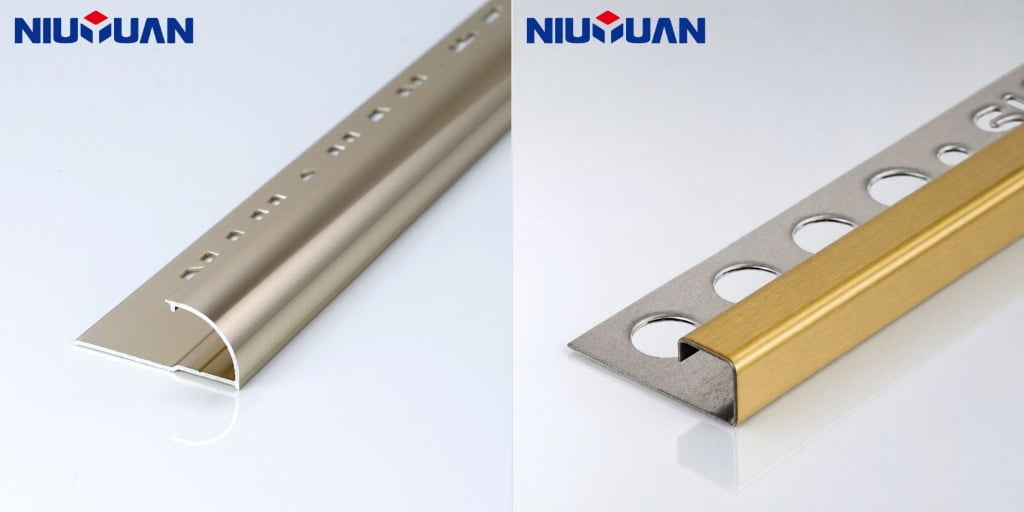
Choose aluminum tile trim when budget and color variety matter most and the installation stays dry and low-traffic — residential walls, dry interiors, price-sensitive projects. Choose stainless steel tile trim for moisture, cleaning chemicals, heavy foot traffic, or coastal and pool environments — bathrooms, showers, commercial kitchens, hospitals, outdoor projects.
For distributors, the practical answer is usually both: aluminum moves on price and color range, stainless steel moves on performance specifications. Below is exactly where each material wins, so you can match stock to the projects you serve.
Aluminum vs Stainless Steel Tile Trim at a Glance
| Aluminum tile trim | Stainless steel tile trim | |
|---|---|---|
| Upfront cost | Lower | Higher |
| Weight | About one-third of stainless for the same profile — easier to handle and cheaper to ship per piece | Heavier, more structural rigidity |
| Corrosion resistance | Good when anodized or powder-coated; bare aluminum can pit or whiten in sustained moisture, alkaline conditions (wet cement), or under harsh cleaners | Excellent — chromium content (≥10.5%) forms a passive protective layer; 316 grade for chlorides, coastal, and pool environments |
| Dent and scratch resistance | Softer — dents and scratches more easily | Harder — holds its edge under impact and traffic |
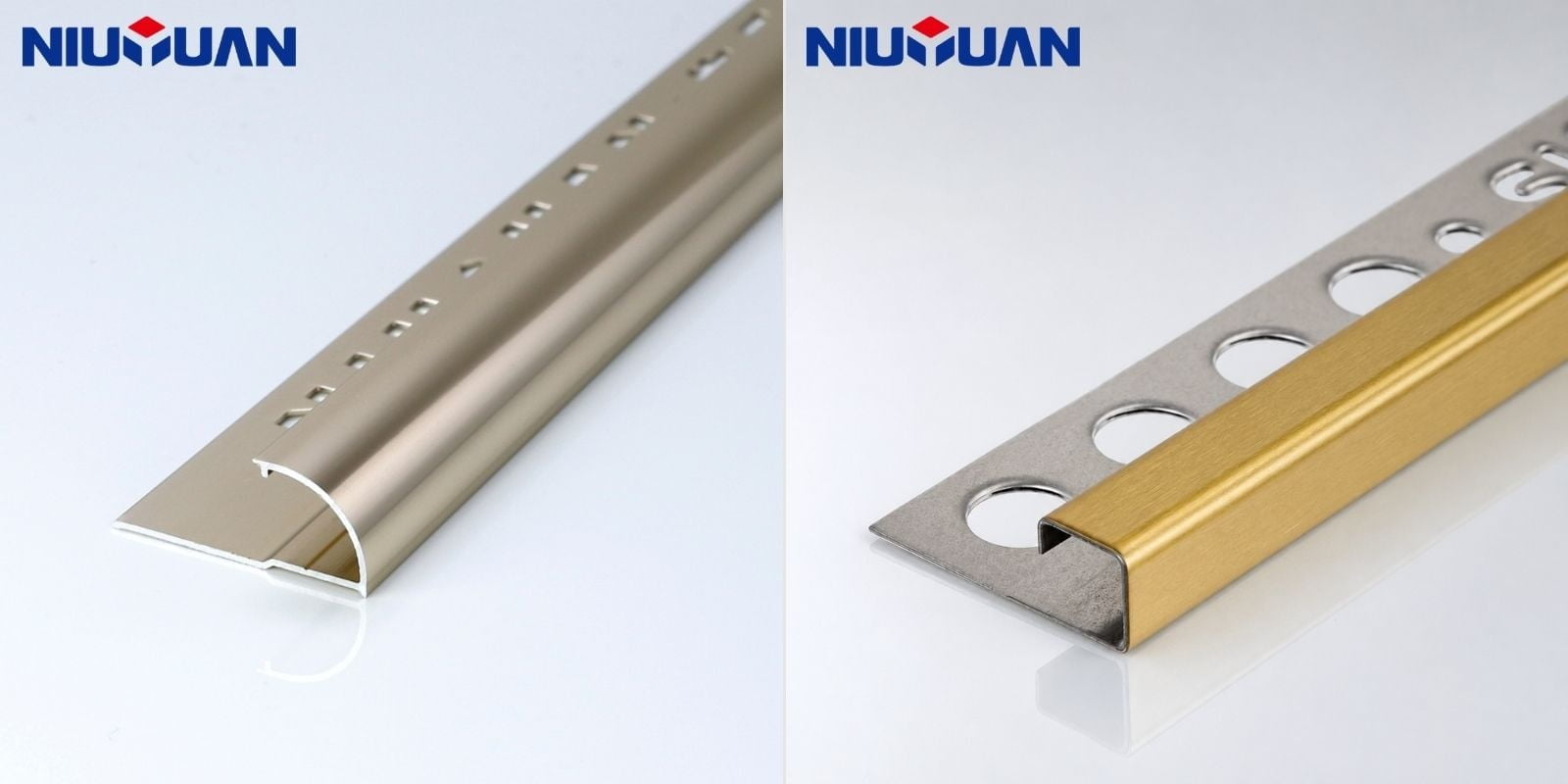
| Finish options | Very wide: anodized colors (matte black, champagne, silver), brushed, polished, powder-coat including wood-grain effects | Brushed, mirror, and PVD colors (black titanium, champagne gold, rose gold) |
| On-site cutting | Easier — cuts with a non-ferrous blade | Needs a steel-rated blade and proper technique |
| Typical NIUYUAN MOQ | 1,000 pcs | 500 pcs |
| Best for | Dry interiors, residential walls, color-driven retail SKUs, budget projects | Wet areas, commercial and high-traffic floors, coastal and pool projects, premium specifications |
Cost: Upfront Price vs Life-Cycle Cost
Stainless steel trim costs more upfront than aluminum — every supplier comparison reviewed for this guide agrees on the direction. (Some retail blogs cite a 3–4x multiple, but that reflects retail pricing, not factory bulk pricing — treat it as a rough indicator, not a quote.)
For distributors, the more useful math is life-cycle cost. In a hotel lobby, hospital corridor, or restaurant kitchen, replacing a failed trim means labor, tile damage, and downtime — costs that dwarf the material premium. For dry residential walls where neither material is stressed, aluminum’s lower upfront cost wins outright.
Weight: Why It Matters Beyond Handling
Aluminum trim weighs roughly one-third of stainless for the same profile (density ~2.7 vs ~7.9 g/cm³) — easier to carry and position on site. For export buyers, the second effect is freight: more pieces per kilogram means lower sea-freight cost per piece on bulk orders. Derived consideration, not a freight quote — confirm with your forwarder.
Corrosion Resistance: Where Each Material Belongs
Stainless steel gets its corrosion resistance from chromium (≥10.5%), which forms a thin passive layer. Within stainless, grade matters: 304 suits indoor bathrooms, kitchens, and standard commercial interiors; 316 is for constant wetting, chlorinated pool surrounds, commercial kitchens, hospitals, and coastal or outdoor exposure. Details are in our stainless steel grade guide — match the grade to the harshest exposure the trim will see.
Aluminum relies on its natural oxide layer plus applied finishes, with known weak spots: sustained moisture on unfinished edges, alkaline exposure during installation (wet cement/mortar), and harsh cleaners can cause pitting or whitish oxidation. Rule of thumb: aluminum for dry or mildly humid interiors; wet-area use demands a proper anodized or powder-coated finish — never bare aluminum.
Strength, Denting, and On-Site Workability
Aluminum is the softer metal — it dents and scratches more easily under luggage wheels, cleaning carts, and heavy foot traffic, the exact conditions of commercial floors. Stainless steel’s hardness is why it dominates high-traffic specifications.
The trade-off appears at installation: aluminum cuts easily with a standard non-ferrous blade, while stainless needs a steel-rated blade and controlled technique (overheating can discolor cut ends).
Finish Options: What Sells on the Shelf
This is where the materials diverge most visibly for resale:
- Aluminum tile trim offers the widest color palette: anodized matte black, champagne, and silver, plus brushed, polished, and powder-coated options including wood-grain effects. If your customers buy on color coordination, aluminum gives you the most SKUs.
- Stainless steel tile trim offers brushed, mirror, and PVD-coated colors such as black titanium, champagne gold, and rose gold —a hard deposited coating that bonds tightly to the stainless surface and resists wear well.
One caveat: an anodized layer is thin — a deep scratch can reveal silver aluminum beneath, while PVD color on stainless is more wear-tolerant. Confirm colors on physical samples before bulk orders — see our tile trim finishes guide.
Which Should You Stock? A Distributor’s Decision Matrix
| Your customers’ projects | Stock this |
|---|---|
| Dry residential walls, feature walls | Aluminum — price and color range win |
| Standard bathrooms and kitchens | Either — let budget and finish preference decide |
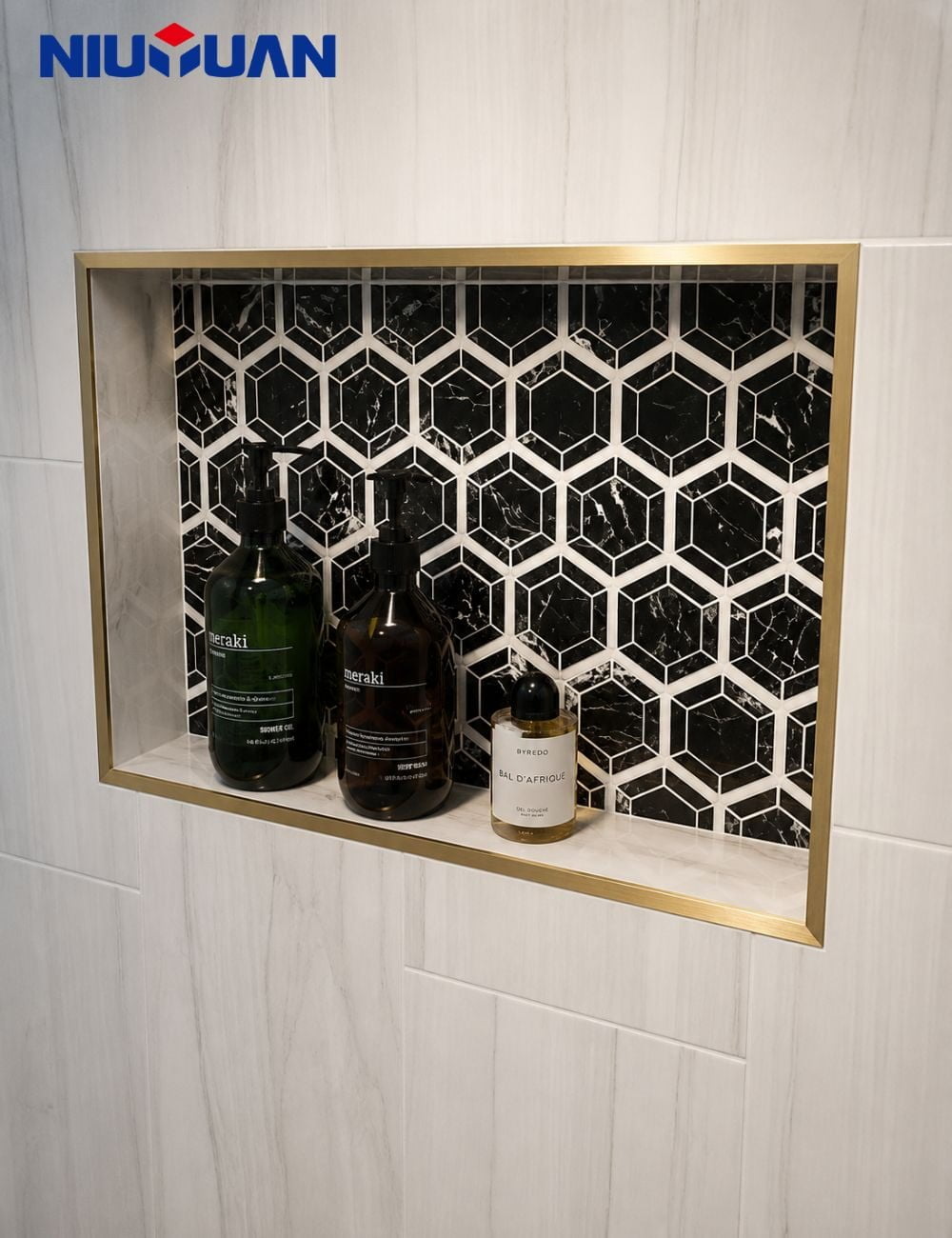
| Showers, niches, and wet rooms | Stainless steel (316 for constant wetting) |
| Swimming pools and coastal projects | Stainless steel 316 |
| Hotels, hospitals, restaurants, transit — high traffic | Stainless steel — durability and life-cycle cost |
| Color-driven retail and DIY SKUs | Aluminum — widest finish range at the lowest cost |
| Floor transitions and expansion joints | Either material works — see tile expansion joints for the joint logic |
Two practical notes on ordering: NIUYUAN’s MOQ is 1,000 pcs for aluminum and 500 pcs for stainless steel profiles, and trim height should be matched to tile thickness — our tile trim size guide covers the sizing rules.
What to Put in Your RFQ
A clear RFQ gets you an accurate quote faster:
- Material and grade: aluminum (6063/6463) or stainless steel (304/316) — and the environment it will serve
- Profile and size: profile type, height matched to tile thickness, length or custom lengths
- Finish: anodized color, brushed, mirror, or PVD — with a sample reference wherever possible
- Quantity and packaging: estimated pcs, export carton/pallet requirements, private-label needs
- Target delivery: project timeline and destination port
- Material documentation: tell us in your RFQ if you need mill certificates or test reports.
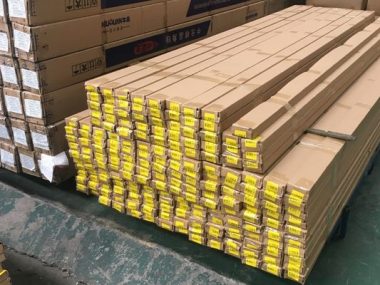
NIUYUAN supports OEM profiles, private label, and custom export packaging. Custom samples take 7 days (7–10 for complex profiles); bulk orders run 20–30 working days. Send the list above via our contact page.
FAQ
Is stainless steel tile trim worth the extra cost?
For wet, high-traffic, chemical, coastal, or pool environments, yes — durability and corrosion resistance outweigh the upfront premium over the trim’s service life. For dry, low-traffic interiors, aluminum delivers the same finished look at a lower cost.
Can aluminum tile trim be used in bathrooms?
Yes, with conditions. Use anodized or powder-coated aluminum (never bare aluminum), keep it away from constant direct water inside shower enclosures, and avoid harsh alkaline cleaners. For shower walls and niches with daily wetting, stainless steel is the safer specification.
Which material is better for outdoor or coastal projects?
Stainless steel — 316 grade for salt air and chlorinated environments. Aluminum works outdoors in mild climates with a quality anodized finish, but tolerates sustained moisture and salt poorly.
What’s the difference between 304 and 316 stainless steel for tile trim?
316 adds 2–3% molybdenum to the basic 304 formula, which markedly improves resistance to pitting in chloride environments (pool chlorine, salt air, harsh cleaners). Use 304 for standard interiors and 316 for wet, coastal, or chemical exposure. Our 304 vs 316 vs 316L guide has the full breakdown.
What MOQs should I expect when ordering each material?
At NIUYUAN: 1,000 pcs for aluminum, 500 pcs for stainless steel. Custom finishes and profiles supported; confirm MOQ for mixed-finish orders in your RFQ.