
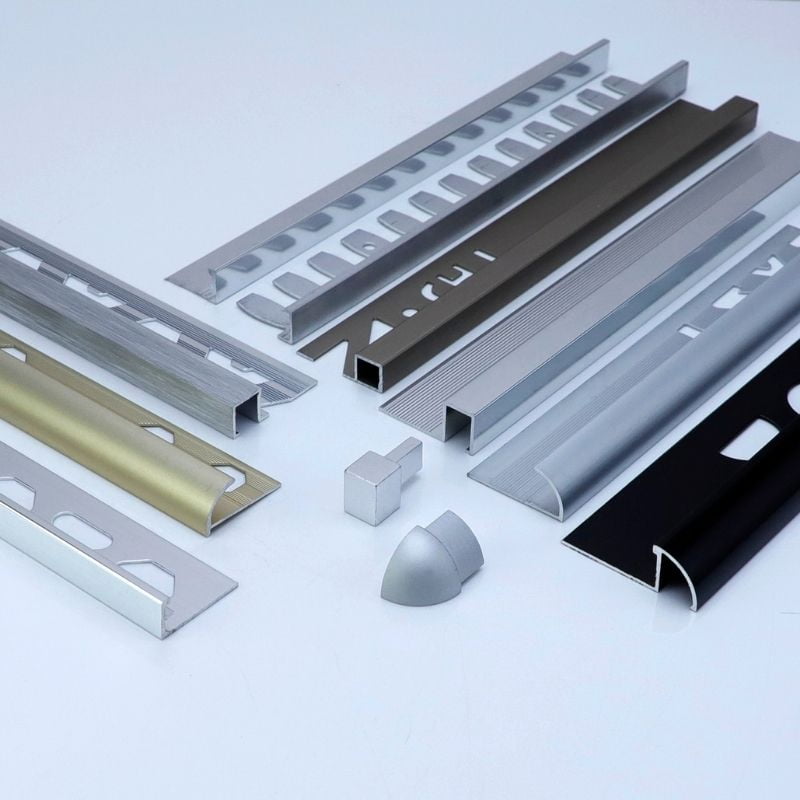
A retail-ready tile trim pack is one unit a shop can scan, hang, and sell without opening or repacking it. The barcode must scan at the till, and the hang hole must fit the peg. The front panel must show the profile, height, length, and finish at one glance. If any of the three fails, the unit goes back to the distributor or waits in the stockroom.
This guide covers the three checks in order: barcode, hang hole, and shelf face. It then covers the master carton, because the unit pack and the shipping carton serve two different readers. The till reads the unit barcode.
What Retail-Ready Means for One Trim SKU
Retail-ready packaging is built for the shelf, not for the container, while a bulk export pack protects profiles in transit and says little. A retail unit pack must protect the profile, carry the facts a buyer needs, and fit the fixture it will hang or stand on. The pack format follows the profile, so a buyer new to the range should first check what tile trim is and how it works.
| Pack element | Specify in the order | If it is missed |
|---|---|---|
| Unit barcode | Type, source, size, placement | No scan at the till |
| Hang hole | Style, size, position, strength | The pack will not hang |
| Front panel | Profile, height, length, finish | Wrong size returned |
Barcodes: Type, Size and Placement
Every retail barcode carries a GTIN, the Global Trade Item Number. GS1 issues GTINs. The number must come from GS1 or a GS1 member organisation, because a resold or invented number can clash with another product. Confirm the barcode type and number source in writing before artwork starts.
Two symbols cover most retail: EAN-13 outside North America and UPC-A in the United States and Canada. EAN-13 holds a 13-digit GTIN, and UPC-A holds a 12-digit GTIN. At full size, the narrowest bar measures 0.330 mm, the symbol spans 37.29 mm including its quiet zones, and the bars stand 22.85 mm tall. GS1 allows 80 to 200 percent of that size, but a smaller symbol is harder to scan.
Placement matters as much as size. Put the barcode on a flat area on the back of the pack, in the lower right area. Keep the quiet zones clear of text, logos, folds, and varnish. Do not wrap a barcode around a curve, and test the printed code with a real scanner on a sample, not on a screen proof.
Hang Holes: Euro Slot or Round Hole
A hang hole turns a flat pack into a peg display. Two styles cover most fixtures: the euro slot and the round hole. The euro slot suits more peg sizes and stops the pack from spinning, while the round hole suits light units on a known peg size. Name the style your buyer uses.
Size, position, and strength decide whether the hole works. The hole must sit on the centre line of the pack, or the unit will tilt on the peg. The card around the hole must hold the weight of the packed profile. An aluminum profile is the lightest common choice, so a card proven on aluminum may fail under stainless steel or brass. Ask the supplier for a photo of the packed unit hanging on a peg before approval.
Shelf Display: Three Seconds at the Shelf
A shopper decides in seconds, so the front panel must answer four questions fast: which profile, which height, which length, and which finish. Put the profile name and the height in the largest type, because a wrong height is the most common return. Confirm the height against the trim size guide before the front panel is printed. Use one colour band per height or finish so a shopper can find the right variant.
Show the product when the pack allows it. A window cut in the front panel lets the shopper see the real finish and the profile shape, which a printed swatch cannot match. If the pack is closed, print a true-scale profile drawing on the front, with the height marked in millimetres. Keep the pack base flat so the unit stands straight on a shelf or a peg.
Master Carton and Written Confirmation
The unit pack and the master carton serve different readers. The unit pack carries the retail barcode and the profile facts. The master carton carries the trade facts: SKU, quantity, purchase order number, country of origin, and net and gross weight.
- Barcode: type, GTIN source, size, placement.
- Hang hole: style, centred, card strength named.
- Front panel: profile, height, length, finish, material.
- Master carton: SKU, count, PO, origin, weights, two panels.
- Sample proof: one packed unit scanned and hung.
Do not quote carton counts or weights from a guide or an old order. Counts and weights change with profile length and material. Ask for the count, carton size, and gross weight on the proforma invoice, and check them against the first shipment.
A retail-ready pack earns its shelf space by removing work from the shop: no relabelling, no repacking, and no guessing at the till. Custom branding, artwork, and print runs sit in the private-label part of the order, and the private-label packaging guide covers that side. Send the confirmation list with the order, and ask for the packed sample before the run.
Frequently Asked Questions
What does retail-ready packaging mean for tile trim?
A pack a shop can scan, hang, and sell without opening or repacking it. The barcode scans at the till, the hang hole fits the peg, and the front panel shows profile, height, length, and finish.
Which barcode should a tile trim pack carry?
EAN-13 outside North America and UPC-A in the United States and Canada. The number is a GTIN issued through GS1. Confirm the type and the number source in writing before artwork starts.
Euro slot or round hole: which hang hole is better?
The euro slot fits more peg sizes and stops the pack from spinning, so it is the safer default. A round hole suits light units on a known peg size. Confirm the style against the buyer’s fixture and test it on a packed sample.
What must the front panel show?
Profile, height, length, finish, and material. Put the profile name and height in the largest type. A window that shows the real finish helps the shopper pick the right variant.
What goes on the master carton?
SKU, quantity per carton, purchase order number, country of origin, and net and gross weight. Print the markings on two adjacent panels. Confirm counts and weights with the supplier in writing, since they change with profile length and material.