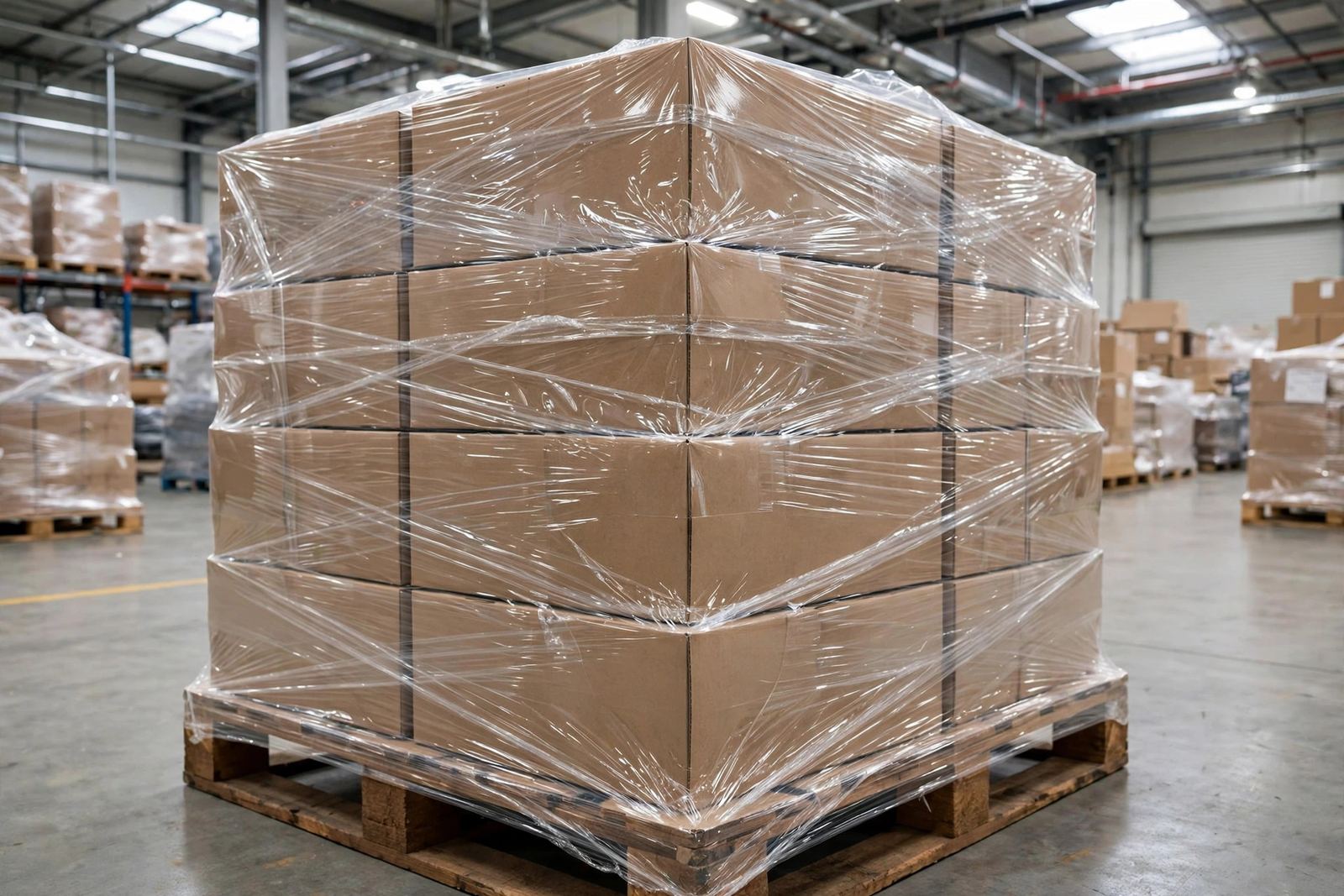
A private label tile trim order fails at the warehouse, not at the factory. The trim can be perfect, yet the shipment still stalls. A barcode will not scan, a carton mark disagrees with the packing list, or the instruction sheet names the wrong profile. Three items decide whether that meeting goes smoothly: the barcode, the instruction sheet, and the carton mark. Each one has an owner, a format, and a check.
This guide covers only the packaging layer. The wider private label process runs from sampling to production, and this guide picks up where that process reaches the packing line. You own the barcode and the artwork; the factory prints them where you instruct.
Barcodes: the brand owner supplies the number
A barcode has two parts, and buyers often confuse them. The symbol is the pattern of bars, and the number is the identity behind it. Only the brand owner can allocate the number. For tile trim sold under your brand, that brand owner is you, not the factory.
GS1 states the rule plainly: the organisation that owns the specifications of the trade item normally allocates the Global Trade Item Number (GTIN). The factory prints the code you supply; it does not invent one for you. If you hold no GS1 company prefix yet, join your national GS1 member organisation first.
EAN-13, UPC-A, and the carton code
Two retail formats cover most markets: EAN-13 carries a 13-digit GTIN and is common in Europe and many other markets. UPC-A carries a 12-digit GTIN and is common in North America, and both formats identify one distinct trade item. A different size, finish, or profile length is a different trade item, so it needs its own GTIN.
The outer carton needs its own treatment: a retail barcode belongs on the inner retail pack. The master carton usually carries a separate carton code. It is often an ITF-14 built from the same GTIN, or a carton label with your SKU and the purchase order number. Put that choice in the packing specification.
Checks that protect scanning
Send the barcode as a controlled file, not as a picture pasted into a document. Keep the quiet zone clear: it is the blank margin around the symbol, and printing into it breaks scanning. Ask the factory to scan a printed sample before the run. Never buy a GTIN from a reseller: a resold number still belongs to its first owner, and a retailer that checks ownership will reject it.
The instruction sheet: one page inside every box
Tile trim is installed by people who may never have seen your profile before. If you need a refresher on what tile trim is and where each profile shape is used, start there.
The sheet travels inside the box to the installer. It should fit on one page and name the exact profile in the box. A generic sheet helps no one, and a sheet that names the wrong profile creates warranty calls.
What the sheet must cover
A workable sheet covers six points, starting with the profile, material, and finish, so the installer can check the box at a glance. It states the profile size and the tile thickness it fits, because a trim that does not match the tile edge will not sit flush. It shows how to cut the profile and how to fix it, in the order the installer will do the work.
It also notes care limits for the finish and warns about sharp cut edges. It gives a contact route for questions, so the installer reaches you rather than guessing. Keep the sheet tied to the product, not to the order. Print to the approved revision only, and show the revision number on the sheet.
Language deserves a decision of its own, because the sheet must be readable in the market where the trim will be installed. A sheet in English only is fine for some markets and useless in others. Confirm the language list in writing, and check it against the markets on the order.
Carton marks: main mark and side mark
The carton mark is the block of text and symbols printed on the outside of each export carton. It links a physical carton to its paperwork, so cargo can be identified without opening a document folder. Two panels carry it: the main mark on the wide faces, and the side mark on the narrow faces. Together they answer three questions: whose carton is this, where is it going, and what is inside.
The main mark identifies the shipment at a glance. It carries your name or an agreed buyer code, the purchase order number, and the destination port or city. It also carries the carton sequence, written as one carton out of the total. Numbering must run without a gap.
The side mark carries the contents: the product name, the item code or SKU, and the quantity packed inside the carton. It also lists the gross weight, the net weight, and the outer dimensions. Gross weight is goods plus packaging, and net weight is goods only. Both figures must match the packing list exactly, because a mark that disagrees with it can slow the whole shipment.
| Panel | Where it sits | Fields to include |
|---|---|---|
| Main mark | Wide faces | Buyer code; PO number; destination; carton sequence; country of origin |
| Side mark | Narrow faces | Product name; item code; quantity; gross weight; net weight; dimensions |
Origin and handling marks
Two marks come from rules, not from habit, and the first is the country of origin statement. For goods imported into the United States, customs rules require the outermost container to state the country of origin. So “Made in China” must appear on the carton in a clear and permanent form. Settle this early when importing tile trim from China, because a missing origin mark can hold a shipment at the port.
The second is the handling mark: pictorial handling symbols, such as “this way up” and “keep dry”, follow ISO 780. They should match the real handling needs of the carton, because a fragile mark on a carton that is not fragile is noise.
Print quality is part of the mark, not an afterthought. Ask for a printed sample carton before the run.
The pre-shipment packaging checklist
Run this check on the first cartons off the line, where a fault costs one carton. The same fault found at the destination costs the whole shipment.
- Barcode printed from the controlled file, scanned from a real carton, quiet zone clear.
- Instruction sheet inside the box, matching the profile, in the right language.
- Main mark and side mark on the correct faces, every field filled in.
- Carton sequence complete, with no gaps or duplicates.
- Weights and dimensions on the carton matching the packing list.
- Country of origin printed in the wording the destination market requires.
- No factory name or code visible on the carton, unless you asked for it.
- One sealed sample carton photographed from all four sides.
Ask the factory to send the sample carton photos before the shipment leaves. Compare them field by field against the packing list, not by eye against the artwork proof. The proof shows what was intended; the photo shows what was printed.
What to confirm in writing before production
Some packaging facts belong to your order, not to any guide. Put each one in the purchase order or the packing specification, and get the factory’s written confirmation before production starts. NIUYUAN supports custom packaging, and bulk orders run 20 to 30 working days. Settle these items early enough for the carton printer to work to them.
Packaging choices also feed into what drives the cost of a tile trim order. Printed cartons, inserts, and pallet labels are priced per order rather than per piece.
The seven items
| Item to confirm | Why it must be written down |
|---|---|
| Pieces per carton, and pieces per pallet | The warehouse counts by the carton |
| Carton size and carton board grade | Size and strength decide stacking and transit damage |
| Gross weight and net weight per carton | Both figures must match the packing list exactly |
| Barcode file and placement | Only a controlled file scans reliably at retail |
| Instruction sheet text and languages | The sheet must name the ordered profile and read correctly in each market |
| Carton mark layout and wording | Main mark, side mark, and origin wording differ by destination |
| Sealed sample carton approval | One approved sample locks the run |
None of these items is hard on its own. The cost comes from leaving them until packing day. A distributor who confirms them in writing and checks the first sealed carton will rarely see a packaging problem twice. Keep the photos with the order file. The factory keeps a sealed reference sample for two years, so disputes can be settled against the sample, not against memory.
The same written approach applies to the product itself. Custom trim profiles also need their sizes, finishes, and tolerances confirmed in writing before the mould is cut.
Frequently asked questions
Who supplies the barcode for a private label tile trim order?
You do, as the brand owner. GS1 places GTIN allocation with the organisation that owns the specifications of the trade item. The factory prints the code you supply. It must not invent a number, reuse another customer’s number, or use a resold number that still belongs to its first owner.
Do I need a different barcode for each finish or size?
Yes. A different size, finish, or profile length is a different trade item, so it needs its own GTIN. EAN-13 and UPC-A are both GTIN formats, with 13 digits and 12 digits respectively. One code shared across a whole range will fail at a retailer’s till or in a marketplace listing.
What should the carton mark say?
The main mark on the wide faces carries your name or buyer code, the purchase order number, the destination, the carton sequence, and the country of origin. The side mark on the narrow faces carries the product name, the item code, the quantity inside, the gross and net weight, and the outer dimensions. Both must match the packing list exactly.
Does the instruction sheet need to be in the destination language?
Yes. The sheet must be readable in the market where the trim will be installed, and the language list should be confirmed in writing for each order. The sheet should name the exact profile, state the tile thickness it fits, show how to cut and fix it, note care limits, and warn about sharp cut edges.
What packaging details must I confirm before production?
Confirm pieces per carton and per pallet, carton size and board grade, gross and net weight, the barcode file and its placement, the instruction sheet text and languages, the carton mark layout and wording, and approval of one sealed sample carton. Get each item confirmed in writing before production starts.