
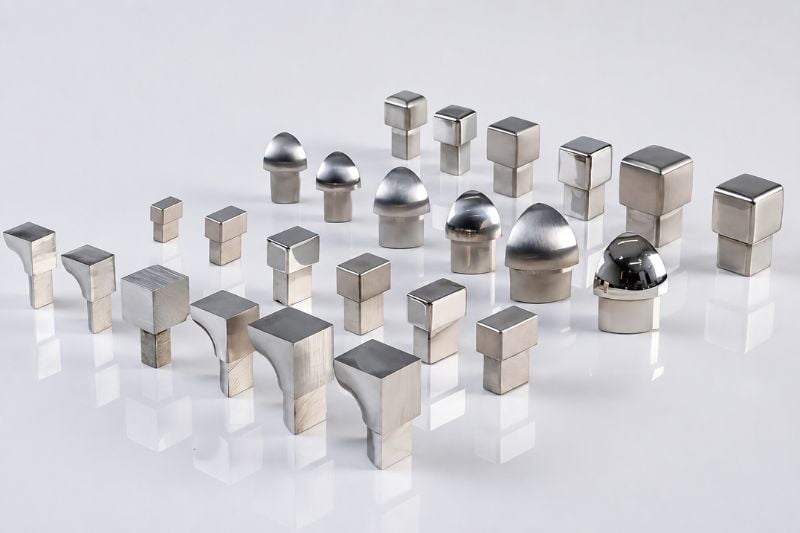
Tile trim profiles are only half of a finished installation. Every run also has joints where two lengths meet, corners where the direction changes, and ends where the profile stops — and each of those points needs a small matching piece: a connector, a corner piece, or an end cap. The three pieces do three different jobs, and none of them is universal: on the NIUYUAN accessory range they are molded PVC/ABS pieces sized by profile shape and leg height (8, 10 or 12 mm) and color-matched to the trim. This guide explains what each accessory does, how matching works, and what to confirm before you order — using the specification ranges published on our tile trim accessories pages as the worked example.
Why accessories are specified with the trim, not after it
An accessory only works if it matches the profile it has to fit. The matching depends on five things together: the profile shape, the size (above all the leg height and the profile opening), the corner direction and angle where relevant, the finish or color, and the installation position. That is why accessories are reviewed together with the main profile before quotation, not added once the trim is already on its way.
There is also a scope question to settle early. Existing accessory options can be checked first for standard profiles; a new shape, a special size or a significantly modified accessory may require tooling review, sample confirmation, a separate MOQ confirmation and its own lead-time evaluation. Buyers who confirm accessories at RFQ stage avoid the classic failure: cartons of trim on site, and corners finished with site-cut miters because the matching pieces were never ordered.
Connectors: joining two lengths into one run
A tile trim connector joins two straight trim lengths end to end into one continuous run, so installers do not have to cut exact lengths on site or leave a visible butt joint. The connector is push-fit: it slides into the profile cavity at both ends and holds the two lengths in alignment while the adhesive sets. No tools or fasteners are required.
Order connectors per straight joint, not per length of trim: a run built from three lengths has two joints and needs two connectors (plus spares — see the counting notes below). The fit is checked against the profile shape, the leg height and the cavity dimensions, so share those — or send a profile sample — before ordering.
Corner pieces: corners without miter cuts
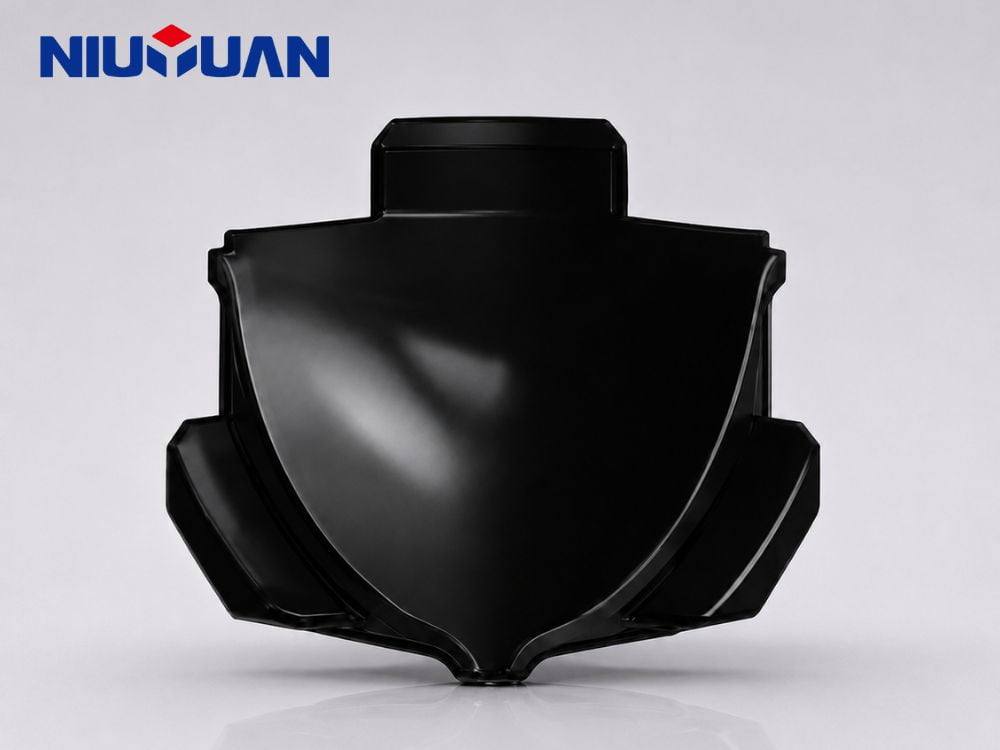
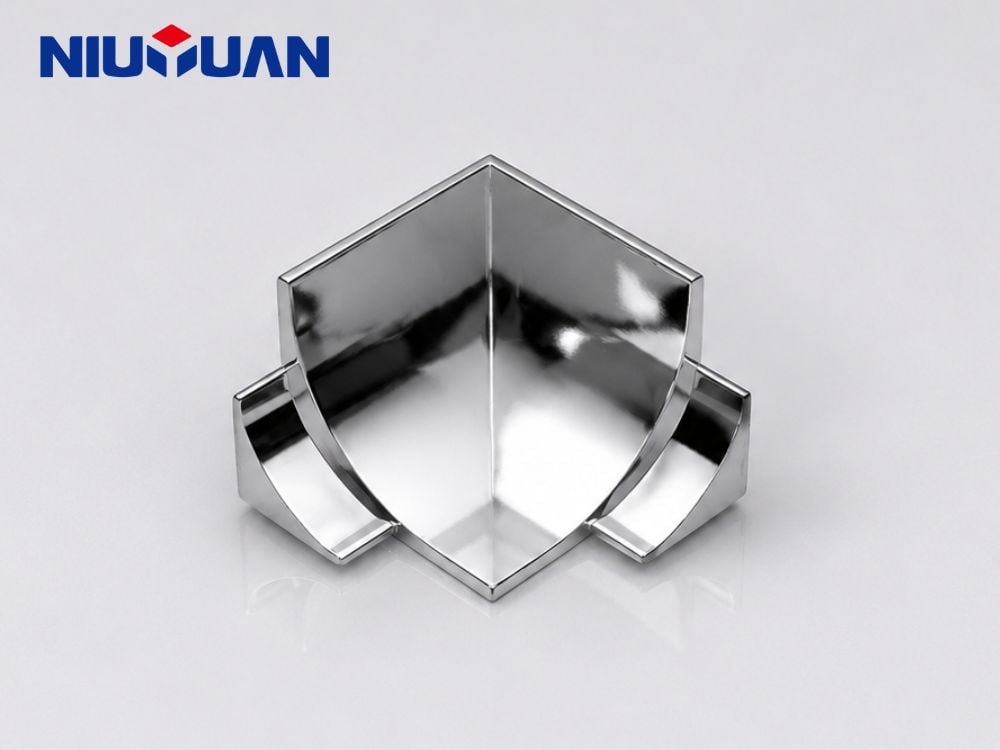
Tile trim corner pieces are pre-formed 90-degree joints that replace 45-degree miter cutting on site. The range covers four corner conditions:
- Inside corners — where two tiled planes meet in a concave (internal) corner.
- Outside corners — where the trim turns a convex (external) corner.
- Two-way pieces — joining two trim lengths where walls meet.
- Three-way pieces — joining three lengths where two walls and the floor or a countertop converge; this is the junction installers find hardest to miter by hand.
Corner pieces push-fit into the profile ends, so the corner comes out sharp and consistent across a whole project instead of depending on each installer’s cutting. When you order, confirm the corner type as well as the profile shape and leg height — a two-way and a three-way piece for the same profile are different parts.
End caps: closing the exposed end
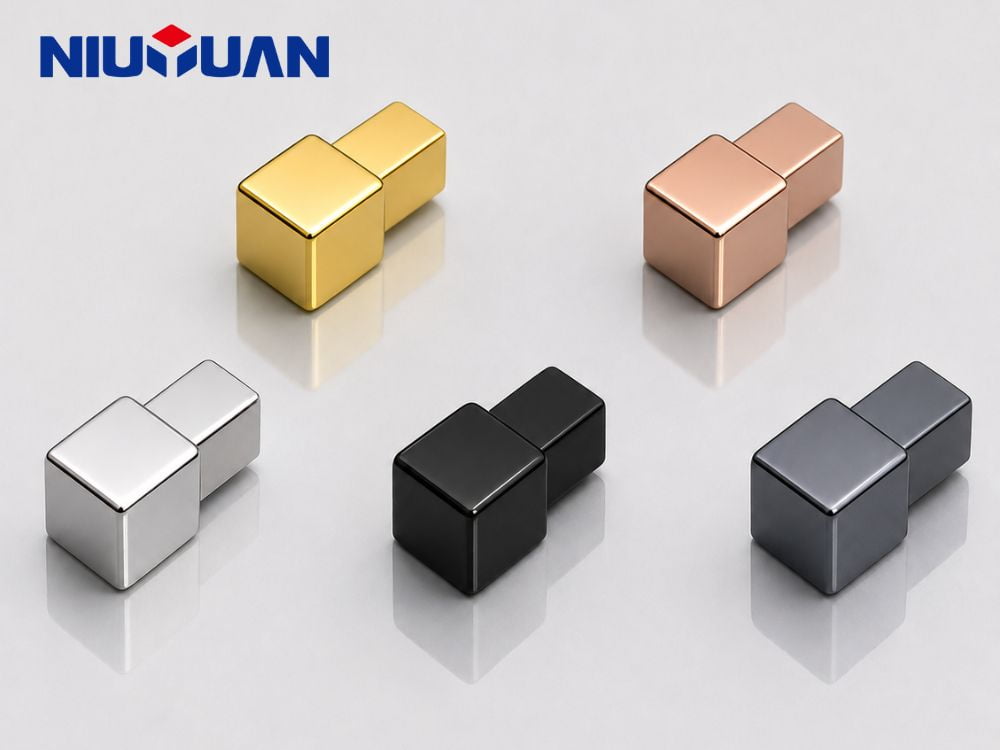
An end cap closes and seals the exposed end of a profile where a run terminates — at a wall end, a countertop termination, a stair edge or anywhere the trim stops in open view. It does two things at once: it covers the sharp cut edge, which is a safety point for installers and end users, and it seals the hollow profile cavity, keeping dust, debris and moisture out of the most vulnerable point of the installation, the open cut.
End caps are push-fit over the profile end rather than into the cavity — pressed on by hand, with no adhesive, screws or tools. Count one cap per exposed end: a run that terminates at both ends needs two, while a run that finishes into a corner piece or a wall may need none at that end.
The three accessories side by side
| Accessory | Job | Where it is used | How it installs |
|---|---|---|---|
| Connector | Joins two straight lengths end to end into one aligned run | Straight joints along a run | Push-fit into the profile cavity at both ends |
| Corner piece | Forms a clean 90-degree corner without miter cutting | Inside, outside, two-way and three-way corners | Push-fit into the profile ends |
| End cap | Closes and seals an exposed profile end; covers the sharp cut edge | Run terminations: wall ends, countertops, stair edges | Push-fit over the profile end |
All three are covered by the same matching logic. If you are still choosing the profiles themselves, our tile trim profiles guide explains the shape families the accessories have to match.
How matching works: shape, leg height, color
Matching runs in three checks, in this order:
- Profile shape. The stocked accessories fit L-shaped, T-shaped, round-edge, square-edge and triangular profiles. A profile outside those families needs a custom review rather than an assumed fit.
- Leg height. Accessories are sized in 8, 10 and 12 mm leg heights. The accessory’s leg height must correspond to the profile it fits — this is the dimension that most often goes wrong when accessories are ordered from a photo alone. Share the cavity dimensions, or send a sample, if there is any doubt.
- Color. The pieces are molded in PVC/ABS colors matched to the trim finishes: white, ivory, beige, silver, black, gold and chrome. Send a color reference or a sample of the trim, and the match is confirmed before production — see our tile trim finishes overview for the finish directions the colors are matched to.
One honest boundary: the connectors, corner pieces and end caps on these product pages are PVC/ABS pieces, including when they are paired with metal trim — the color carries the match, not the material. If your project specification requires the accessory itself to be a specific material, raise it at RFQ stage so it can be reviewed as a custom requirement instead of discovered on delivery.
Specification summary
The three accessory product pages publish one consistent specification set:
| Item | Published range |
|---|---|
| Material | PVC / ABS plastic |
| Profile shapes | L-shaped, T-shaped, round edge, square edge, triangular |
| Leg height | 8 / 10 / 12 mm |
| Colors | White, ivory, beige, silver, black, gold, chrome — matched to trim colors |
| Installation | Push-fit; no tools or fasteners (end caps: no adhesive either) |
| Packaging | 50 or 100 pcs per polybag; export carton |
| MOQ | 2,000 pcs |
| Samples | Standard samples in 7 days; custom colors or shapes in 7–10 days |
| Bulk lead time | 20–30 working days |
| OEM | Private label and custom colors / shapes supported |
Accessories can be packed and labeled together with the matching tile trim profiles, and fit, angle, surface appearance, color consistency and packing quantity are checked before shipment. Mixed colors or shapes within one order can be discussed — send your breakdown with the enquiry.
Five ordering mistakes to avoid
- Ordering accessories after the trim. Matching needs the profile’s shape, leg height and cavity — and custom pieces may need tooling time. Specify accessories in the same RFQ as the trim.
- Counting pieces per box instead of per joint. Count connectors per straight joint, corner pieces per corner (by type), and end caps per exposed end — then add a spare allowance for site losses.
- Assuming one corner piece fits every corner. Inside, outside, two-way and three-way are different parts. List corner conditions from the drawings, not just a total.
- Matching color from a screen. Silver, gold and chrome accessory colors are molded matches to the trim finish; confirm against a physical sample or color reference before production.
- Assuming an accessory exists for a custom profile. Special profiles may need custom accessory development with its own tooling, MOQ and lead time — confirm before the profile is finalized, not after.
What to include in your RFQ
- The main tile trim profile (shape, material, finish) the accessories must match
- Accessory types and quantities, counted per joint, corner and exposed end
- Leg height (8, 10 or 12 mm) and cavity dimensions, or a profile sample
- Corner types needed: inside, outside, two-way, three-way
- Finish or color reference, or a physical sample for matching
- Packaging requirements (including whether accessories pack with the trim) and target schedule
Send the list through our contact page with your trim enquiry, or alongside a custom tile trim requirement if the profile itself is still being developed.
FAQ
Do tile trim accessories fit any profile?
The stocked connectors, corner pieces and end caps fit L-shaped, T-shaped, round-edge, square-edge and triangular profiles in 8, 10 and 12 mm leg heights. Fit also depends on the profile cavity, so confirm the shape, leg height and cavity dimensions — or send a sample — before ordering. Special profiles may require custom accessory development.
Are the accessories made of metal like the trim?
No. The connectors, corner pieces and end caps on the NIUYUAN accessory pages are molded PVC/ABS, color-matched to the trim finishes — white, ivory, beige, silver, black, gold and chrome. The match is carried by color and fit, not by material, so raise any material-specific requirement at RFQ stage.
How many accessories do I need for a project?
Count by junction, not by length: one connector for each straight joint where two lengths meet, one corner piece for each corner (listed by inside, outside, two-way or three-way type), and one end cap for each exposed profile end. Add a small spare allowance for site losses, and send the breakdown with your enquiry.
Can accessory colors match my trim finish?
Yes. The pieces are molded in colors matched to trim finishes, including white, ivory, beige, silver, black, gold and chrome. Send a color reference or a physical sample and the match is confirmed before production; mixed colors within one order can be discussed.
What are the MOQ, sample and lead times for accessories?
The standard MOQ is 2,000 pcs. Standard samples are ready in 7 days, and custom colors or shapes take 7–10 days. Bulk production runs 20–30 working days, and the pieces are packed 50 or 100 per polybag in export cartons, with private-label packaging supported.