
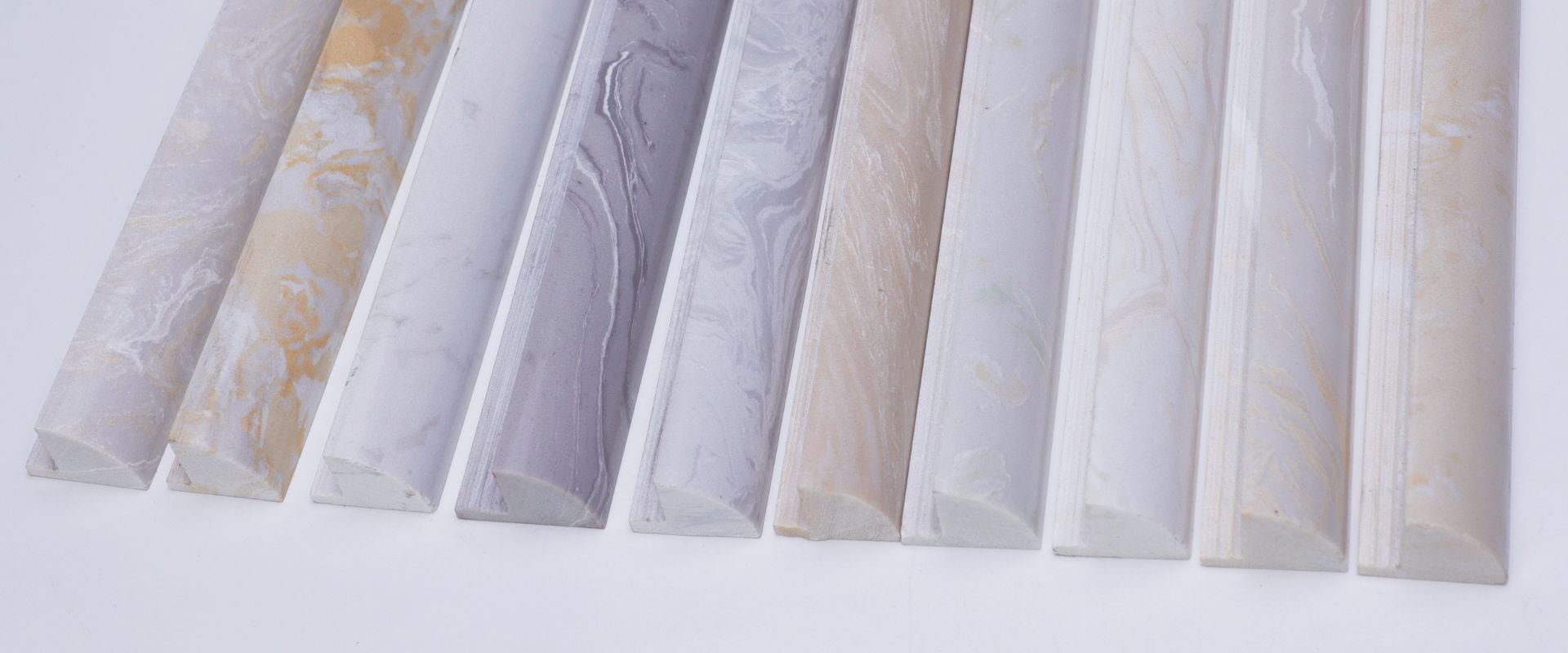
Travertine tile trim works when you treat the edge as the weak point of a porous stone. The holes that give travertine its look open up at every cut edge, and that edge is where dirt collects, water enters, and chips start. A finish does three things in order. Fill the open holes, seal the stone before grouting, and cap the edge with a profile that takes the impact. Skip one step and the edge shows it in months.
Why the Edge Fails First
Travertine forms in mineral springs, and gas bubbles leave holes in it. A factory fill closes most holes on the tile face, but a cut opens new ones along the edge. That edge then absorbs grout pigment, soap, and grease faster than the face does. It also chips more easily. Marble Systems warns that the holes make travertine more prone to chipping at a cut edge than denser stone such as marble. Cut slowly, and support the tile fully.
I have seen this on hotel bathroom orders. A buyer picks filled, honed travertine for the wall, then leaves the top edge raw to save a line item. Six months later the edge line is grey, and the installer blames the stone. The stone did nothing wrong. The edge never got the same protection as the face. If a travertine edge is visible, it gets a finish.
Fill the Holes in the Right Order
Decide filled or unfilled before the tile goes on the wall. Filling gives a smoother face that is easier to clean, and it suits floors, kitchens, and wet areas. Leaving holes open keeps the raw tumbled look, but the holes trap dirt and need more upkeep. On an edge, the choice is easier. Fill it. An open hole on a visible edge reads as damage, not character.
Match the filler to the hole size. A water-activated stone powder suits small pits and dries matte, which fits honed or tumbled faces. A polyester filler suits medium holes on floors where the patch must take a polish. Epoxy belongs only in large or load-bearing voids, where strength matters more than colour match.
Whatever filler you use, follow one order. Clean the hole first, let it dry fully, pack the filler slightly proud, and wait for the full cure before sealing. Sealing a damp patch traps moisture and weakens the bond.
Pick a Profile That Protects the Edge
A filler alone does not protect an edge from knocks. You need a profile over it. Two routes work, and the room decides between them. A stone bullnose or quarter-round in matching travertine keeps the colour and texture continuous, and it suits dry walls and quiet borders.
A metal profile takes the impact instead of the stone, and it suits showers, kitchen splashbacks, and floor edges where feet pass. We supply the metal route in aluminium and stainless steel, and it hides the raw cut completely. For wet areas, stainless steel in 304 or 316 is the safer pick, since it resists corrosion where water sits.
| Profile | Look | Best for | Edge protection |
|---|---|---|---|
| Stone bullnose | Same stone, same finish | Dry walls, borders | Matches tile, chips like it |
| Metal quarter-round | Brushed or polished metal | Shower niches, splashbacks | Rounded, takes light knocks |
| Metal L-profile | Slim metal line | Floor edges, wet areas | Covers raw cut, takes impact |
Match the trim height to the tile plus its adhesive bed, not to the tile alone. A trim that sits low leaves the stone edge proud and exposed. A trim that sits high creates a lip that catches feet and mops. Our size guide covers the tile thickness plus adhesive rule, so read it before you order. Order a sample when the finish must match the field tile, since travertine varies by batch.
Seal Twice: Before and After Grout
Seal the stone before grouting. A penetrating sealer on the tile face acts as a grout release, so grout pigment and moisture cannot soak into the pores while you work. This matters most on unfilled travertine, where open holes give grout far more surface to settle into. Follow the sealer maker’s cure time before you grout, and keep the tile clear of dust and spills.
Seal again once the grout has cured. One supplier’s guide puts resealing at about every 3–5 years indoors, and every 3 years outdoors or in wet areas. Treat that as a starting point, not a promise, and test with water. When water stops beading and starts soaking in, reseal. Sealing blocks stains, but it does not stop etching. Lemon juice, vinegar, and wine leave a dull mark on contact, so clean with a pH-neutral stone cleaner.
Confirm Before You Order
Put four lines in writing before you order. First, filled or unfilled, and the finish, honed, tumbled, or polished. Second, the trim profile and its height against your tile thickness plus adhesive. Third, a sealed sample that shows the filler colour and the finish together. Fourth, the reseal and care routine to follow. A custom sample takes 7–10 days, so build that into your schedule rather than ordering blind.
FAQ
Can I leave a travertine tile edge unsealed?
No. An unsealed edge absorbs grout, soap, and dirt faster than the face, and the holes give stains more surface to grip. Seal before grouting and again after the grout cures.
Should I fill the holes in travertine trim?
Yes, on any visible edge. Filling gives a smoother, easier-to-clean surface. Leave holes open only where you want the raw tumbled look and accept the extra upkeep.
Is metal trim or stone trim better for travertine?
Stone trim matches the colour and finish best on dry walls. Our stone trim guide covers the general rules for marble and other stone. Metal trim protects better in showers, splashbacks, and floor edges, where it takes the impact instead of the stone.
Can travertine tile trim go in a shower?
Yes, with limits. Use a filled, honed tile, seal before and after grouting, and cap the edge with a stainless steel profile. Travertine is more porous than marble, so heavy water exposure still wears on it over time, even with sealing.
Travertine rewards buyers who finish the edge with the same care as the face. Fill the holes, seal twice, and cap the edge with a profile that fits the room. Then confirm the four lines above in writing and order the sample. That is the whole job, and it keeps a porous stone looking sharp for years.