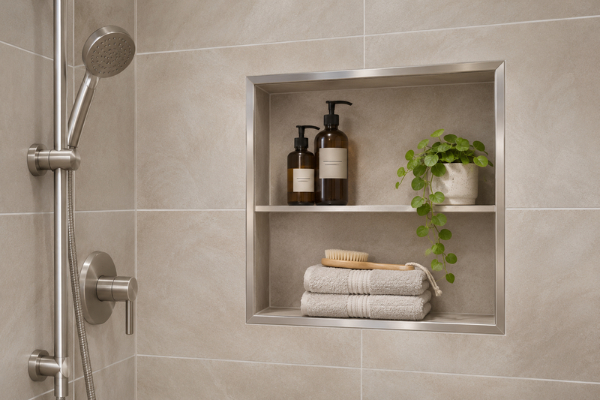
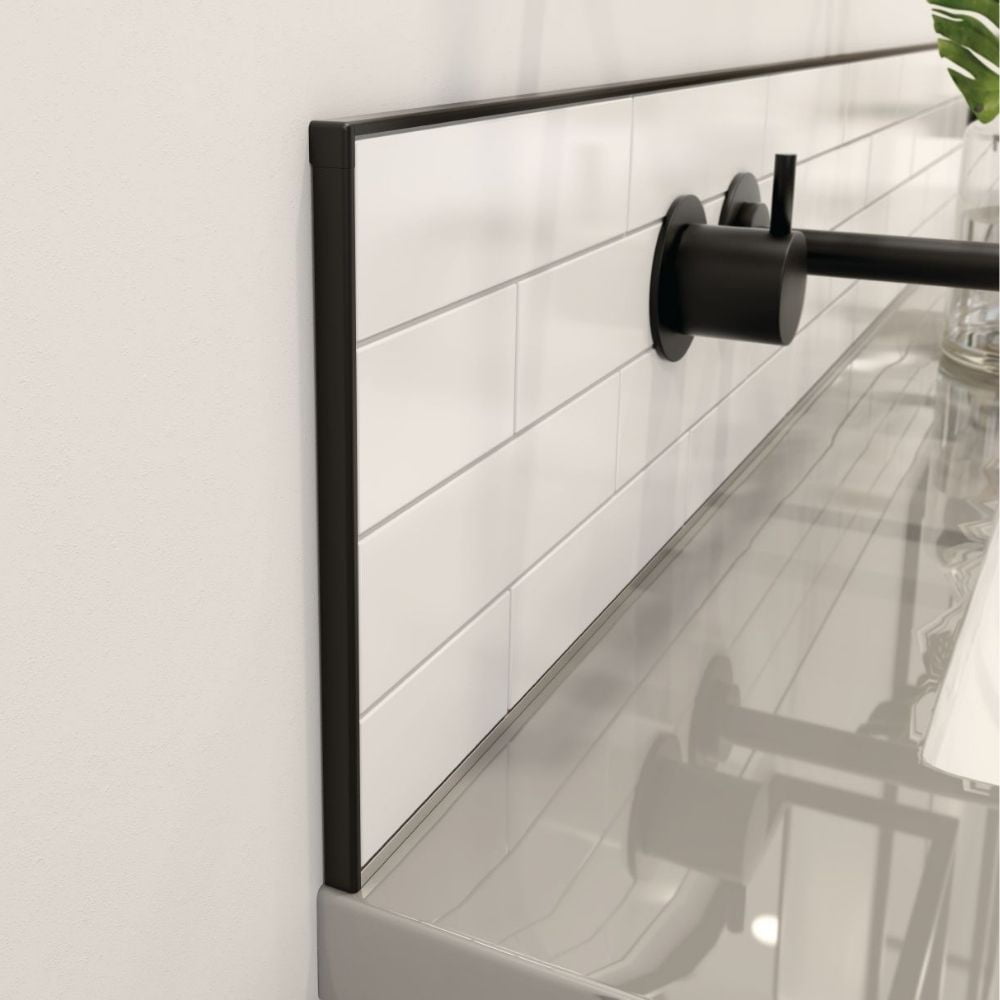
For flat-edged subway tile, a slim metal L profile is the safest default. It caps the raw cut edge, protects it from chips, and leaves a clean line. Bullnose tile works too, but only when the tile range sells a matching piece. Pencil liners add a decorative frame, not a clean edge. Pick the profile by edge type first, then by height, then by material. Get those three choices right and the finish looks planned, not patched.
One boundary matters before you read further. This guide covers ordinary flat-edged subway tile, the plain 3 by 6 inch brick with a square edge. Bevelled metro tile has a sloped face, and its edge sits differently against a profile. If your tile is bevelled, read our guide on trim that sits flat on bevelled metro tile instead. The two guides solve different fit problems, and mixing them up is the most common ordering error we see.
First, Check the Edge: Flat or Bevelled?
Hold the tile edge-on and look at the face. A flat-edged tile meets its edge at a right angle, with no slope. A bevelled tile slopes down toward the edge, so the face falls away before the profile starts. That slope changes which profile sits flat, and it changes the height you need. Check this before you order anything, because a profile chosen for the wrong edge type will rock or leave a lip.
I have seen buyers order a full container of trim against a tile sample they never held edge-on. The profile arrived, the tiler dry-laid one run, and the edge stood proud by two millimetres. The fix was a new order and a six-week delay. One minute with a straight edge and a sample tile would have caught it. Ask your supplier for a sample profile and a sample tile, then lay them together on a flat table before you commit.
Five Edge Options for Flat-Edged Subway Tile
Five finishes cover almost every flat-edged subway job. Each one suits a different look and a different budget of effort. The table below sets out the trade-offs in one place, so you can rule out the wrong options fast. Our six profile types compared puts these five options in the wider profile family.
| Option | Look | Best for | Weak point |
|---|---|---|---|
| Metal L profile | Slim, crisp line | Backsplash ends, shower walls, wainscot caps | Shows as a metal line |
| Bullnose tile piece | Soft, blends into the glaze | Classic kitchens, where a match exists | Needs a glaze match; range-bound |
| Pencil liner | Raised decorative frame | Borders and feature strips | Decorative, not a clean edge cap |
| Mitred edge | Invisible, no trim showing | High-end corners, stone-look tile | Skilled labour; chips if knocked |
| Caulked termination | Bare, minimal | Hidden ends, tight budgets | Exposed edge stays visible |
Metal L trim is the workhorse. It needs no glaze match, so one profile serves many tile colours. Bullnose is the classic answer, but it only works when the tile maker sells the matching piece. Many modern subway ranges do not. Pencil liners frame a border rather than cap an edge, so they solve a design problem, not a finish problem. Mitred edges look superb and cost the most in labour. Caulk alone is a stopgap, not a finish.
How to Pick the Height
Height is the decision buyers get wrong most often. The rule is simple. The profile should sit 1 to 2 mm above the tile thickness. That covers the tile plus the adhesive bed under it.
Measure the tile with calipers, not the box label, because the label rounds. Then add the adhesive allowance your tiler uses. Pick the next stock height that covers the total.
A common 8 mm wall tile on a standard bed usually takes a 10 mm profile. That is the working example, not a universal answer. A thicker porcelain subway tile, or a tile laid on a heavy bed, needs a taller profile.
A profile that is too short leaves the tile edge exposed. A profile that is too tall stands proud and catches cloths and dust. Dry-lay one tile and one profile length before the bulk order, and confirm the height against that sample. Our guide to choosing the right trim size walks through the full measurement method.
Match the Material to the Room
Subway tile appears in kitchens, bathrooms, and lobbies, and each room asks for a different metal. Stainless steel is the safe default where water and grease are constant. Grade 304 suits most kitchens and bathrooms. Grade 316 is the choice where salt air or harsh cleaners are in play. Anodised aluminium is lighter and easier to cut on site, which suits long straight runs and dry zones.
Brass is a design choice first. It brings warmth to a scheme, but it needs lacquer or plating to hold its look near grease, and raw brass will change colour. Our orderable brass finishes are lacquered, chrome-plated, and smoked chrome. PVC trim is light and cheap, and it suits dry, low-wear runs, but it will not take the knocks a metal profile takes. Pick the metal for the room, not for the catalogue photo.
| Material | Best for | Watch out for |
|---|---|---|
| Aluminium 6063 | General interiors, dry zones, long runs | Soft; dents on high-impact edges |
| Stainless steel 304 | Kitchens, bathrooms, most wet areas | Heavier; needs a clean cut to avoid burrs |
| Stainless steel 316 | Coastal and pool-adjacent jobs | Higher cost; confirm grade in writing |
| Brass H59 | Warm schemes, lobbies, feature walls | Patinas unless sealed; confirm the finish route |
| PVC | Dry, low-wear runs, tight budgets | Marks easily; not for wet or impact edges |
Where Each Option Works Best
Kitchen backsplash ends: the run stops short of a cabinet or a doorway, and the thin edge is on show all day. A slim metal L profile caps it with a line that matches the taps and handles. Our guide to metal backsplash trim works through the zone-by-zone choice in full. Bullnose works here too, when a matching piece exists, but it reads softer and more traditional.
Shower walls and niches: water runs down these edges every day, so the profile must shed water and resist corrosion. Stainless steel 304 is the default, with 316 for coastal jobs. Mitred corners look clean here, but a knocked mitre chips, while a metal profile takes the knock. Our round edge range shows the fuller bead for impact edges. Ask the supplier for corner pieces for the turn, or plan mitred cuts in advance.
Wainscot caps and half-height runs: a tiled dado ends mid-wall, and the top edge is at eye level. This is where a bullnose tile piece earns its keep, because the rounded glaze reads as part of the tile. If no matching bullnose exists, a metal L profile with a brushed finish is the fallback. Avoid a polished face here, since it shows every touch at eye level.
Three Mistakes That Ruin the Finish
Ordering by the box label: the label says 8 mm, the tile measures 9 mm, and the 10 mm profile now sits short once bedded. Measure three tiles from different boxes with calipers and use the thickest. This one check prevents the most common return.
Mixing edge types in one order: flat and bevelled subway tiles look alike in a photo, and a mixed order is easy to place. The profiles that fit one will not fit the other. Confirm the edge type on the order itself, in writing, before the supplier cuts lengths.
Forgetting the ends: a straight run is easy, but every run ends somewhere, and the end is what the eye finds. Count the outside corners, the niche rims, and the return edges before you order. Order corner pieces or extra length for mitres with the main run, not as an afterthought. A second small order costs more per metre and arrives late.
How to Specify It in an RFQ
Send the supplier one line per fact, and leave nothing to guess. Tile thickness measured with calipers, profile height picked from the sample, and edge type stated as flat or bevelled. Material and grade named in full, finish route named, and a sealed sample on file. Lengths counted by run, corner pieces counted separately, and the delivery split named if the order ships in phases.
Our factory runs aluminium, stainless steel, brass, and PVC profiles at volume. Minimum orders are 1,000 pieces for aluminium, 500 for stainless steel, 200 for brass, and 2,000 for PVC. Samples ship in 7 days, or 7 to 10 days for custom work. Bulk orders run 20 to 30 working days.
We keep sealed samples on file for 2 years. We refund tooling once the agreed cumulative volume is reached. We answer technical questions within 1 working day. Confirm the same points with any supplier before you place the order, and keep the sample until the goods land.
FAQ
What is the best trim for subway tile?
A slim metal L profile is the safest default for flat-edged subway tile. It caps the raw edge, needs no glaze match, and suits backsplash ends, shower walls, and wainscot caps. Choose bullnose when a matching piece exists and the edge should blend into the tile glaze.
What height trim do I need for subway tile?
Pick a profile 1 to 2 mm above the tile thickness, so it covers the tile plus the adhesive bed. A common 8 mm wall tile on a standard bed usually takes a 10 mm profile. Measure the tile with calipers and confirm against a sample before the bulk order.
Do I need bullnose for subway tile?
No. Bullnose is one option, not a requirement. Metal trim, mitred edges, and pencil liners all finish a subway edge. Bullnose is the right call when the edge should blend into the tile glaze and a matching piece exists for your tile range.
Can metal trim be used on subway tile in a shower?
Yes. Stainless steel 304 suits most showers, with 316 for coastal jobs. Set the profile in adhesive with the tile run, and use corner pieces or mitred cuts at the turns. Do not use PVC on edges that take daily water and knocks.
Does bevelled subway tile need a different trim?
Yes. Bevelled tile has a sloped face, so its edge sits differently against a profile. A profile that fits flat-edged tile may rock or leave a lip on bevelled tile. See our guide on trim for bevelled metro tiles for the fit rules that apply there.
Choose the edge type first, then the height, then the material. For a flat-edged subway run, that order usually lands on a slim metal L profile, 1 to 2 mm above the tile thickness, in the metal that fits the room. Confirm the height against a sample tile, name the finish in writing, and count the corners before you send the RFQ. The trim is a small part of the order, but it is the part the client sees every day.