

Two factories can quote prices a long way apart for what looks like the same tile trim, and both can be honest — because a tile trim price is not a property of the profile name. It is built, line by line, from the material and grade, the profile’s size and wall thickness, the finish process, the quantity structure, any tooling or customization, the packaging, and the trade term it is quoted on. Change any one of those and the price changes, even when the product description on the quote does not. This guide takes the build apart factor by factor, then gives you the normalization checklist that makes two quotes genuinely comparable. One boundary up front: this page explains how prices are formed and compared. It does not publish NIUYUAN prices, and any page that prints a universal price for “tile trim” without naming a specification, a date and a trade term is giving you a number you cannot use.
Why “the same trim” gets very different quotes
Start with the unit problem, because it alone explains a large share of quote gaps. Across factory listings and marketplaces, tile trim is priced per piece, per meter, per kilogram and occasionally per square meter — sometimes on the same results page, with minimum quantities stated in different units again. A per-piece price means nothing until you know the length of the piece: reference lengths on our product pages run from 2.44 m to 3.0 m depending on material, so two “per piece” quotes can differ by more than 20% in the metal or plastic you actually receive before any real price difference exists. Underneath the unit sits the specification problem. “Aluminum trim, 10 mm, silver” can describe two alloys, several wall thicknesses, an anodized or a powder-coated finish, and bulk or retail packaging. A quotation is only as good as the specification behind it — the six items to lock before asking for a price are set out in our guide to importing tile trim from China, and every factor below is one of those items showing up in the price.
Factor 1: Material and grade set the starting point
Material is the largest single driver, and grade moves the price inside each material. On our published positioning, PVC is the most economical trim material — lightweight, color-flexible and built for cost-sensitive interior programs — while solid brass sits at the premium, design-led end. Aluminum and stainless steel sit between them, and within stainless the grade matters: 304 covers standard interiors, while 316 is specified for wet, coastal and more demanding environments, and the grade change moves both the price and where the trim can be used. The practical reading is not “pick the cheapest material” but “do not compare across grades as if they were one product”: a 316 quote and a 304 quote for the same profile are prices for two different corrosion performances. The material pages — aluminum, stainless steel, brass and PVC — list the grades each line is actually made in, which is the level a quote should name.
Factor 2: Profile size is material usage
A trim profile is priced substantially on how much material is in each meter of it. Height, visible face width and above all wall thickness decide that: across our material lines, common wall thickness references run from fractions of a millimeter on stainless sheet profiles to 0.8–1.5 mm on PVC, and a thicker wall is more raw material, more weight and more freight volume in every carton. This is also where quiet specification drift hides. A quote that does not state a wall thickness is not a cheaper quote for your profile — it is an unwritten invitation to supply a thinner one. When you compare, put the full dimension set side by side: height matched to tile thickness, thickness, length and visible face. If one quote is missing a dimension the other states, ask for it in writing before you compare numbers; the tile trim profiles guide shows which dimensions define each shape family.
Factor 3: Finish and color are processes, not adjectives
“Gold” is not a specification, and neither is its price. A stock solid color on PVC, a custom color matched to your tile range, an anodized aluminum finish, a brushed stainless surface and a PVD color are different processes with different setup, consistency control and rejection risk — and the quote reflects that. Two finish details reliably move prices. The first is stock versus matched: a custom color or finish is confirmed at sample stage and produced against that approved sample, which is work a catalogue finish does not need. The second is consistency scope: one finish across one production run is a simpler commitment than the same finish held identical across repeat orders and matching accessories. When a finish quote looks low, check which of those it actually includes — and make sure the sealed sample, not the adjective, is what the price is attached to.
Factor 4: Quantity structure — MOQ is per specification
Minimum quantities apply per material, profile, finish and color — not per order total — and they differ sharply by material. NIUYUAN’s published reference MOQs are:
| Material | Reference MOQ |
|---|---|
| Solid brass (H59) | From 200 pcs |
| Stainless steel (304/316) | From 500 pcs |
| Aluminum (6063/6463) | From 1,000 pcs |
| PVC | From 2,000 pcs |
Three things move the final figure and the unit price away from that reference: whether new tooling is required, the finish and color program (a matched custom color is a different commitment from a stock finish), and the packaging scope. Small runs also carry setup — extrusion setup, color change, packing change — spread across fewer pieces, which is why a trial quantity and a container quantity of the identical profile are legitimately different unit prices. Comparing a 300-piece trial quote from one factory against a 5,000-piece program quote from another tells you nothing about either factory’s pricing; compare at the same quantity, per specification.
Factor 5: Customization and tooling
A profile that already exists and one that has to be developed are different purchases. At NIUYUAN, a drawing or sample is first checked against 3,000+ existing molds; a match or near-match avoids tooling entirely, and new tooling is discussed only when the profile cannot reasonably be produced from existing options. Where tooling is needed, the mold fee is confirmed before sample development starts, and it is credited back once an agreed cumulative order quantity is reached, with that threshold confirmed in writing. So a custom-profile quote should show three things separately: the tooling position, the sample position, and the unit price at a stated quantity. A quote that folds them into one unit price hides what you are actually paying for — and makes the next order’s price impossible to predict. The full process is set out on our custom tile trim page.
Factor 6: Packaging is part of the product price
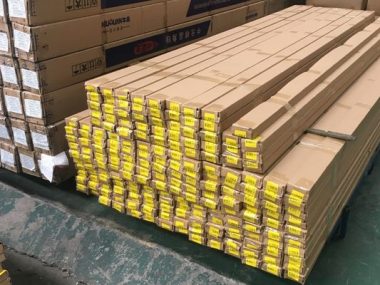
Standard export packing — protective film and export cartons — is the baseline most factory quotes assume. Retail cartons, sleeves, printed labels, barcodes, shipping marks and private label packaging are production inputs with their own materials, printing setup and practical minimums, and they belong in the specification, not in a follow-up email after production starts. Two quotes can differ simply because one assumes bulk cartons and the other priced your retail program. Packaging also reaches into freight: carton dimensions and pieces per carton decide how much of a container your order actually fills, so a packaging difference quietly becomes a freight difference as well.
Factor 7: The trade term decides what the price includes
The last factor is not in the product at all. An EXW price stops at the factory door, a FOB price includes delivery loaded on the vessel at the origin port, a CIF price adds freight and minimum insurance to your port, and a DDP price wraps everything to your door into one number with the least visibility inside it. The lowest headline number is usually the one that includes the least. On top of that, ocean freight is a dated price: spot rates move week to week, a freight quote carries a validity window, and a 20–30 working day production run can easily outlive the rate it was quoted against. The only comparison that survives contact with reality is landed cost on the same basis — product, freight and insurance, duty, port and broker fees, and local delivery, all for the same destination and the same shipping week. The importing guide builds that calculation line by line, including a dated freight snapshot that shows how quickly the numbers move.
How to compare two quotes like for like
Normalize before you compare. Work through this checklist and rewrite both quotes onto the same basis; the gaps that remain after normalization are the real price differences.
| Check | What to align |
|---|---|
| Unit | Convert both to price per meter (or per piece) at the same stated length |
| Specification | Same material and grade, profile, height, wall thickness, visible face |
| Finish | Same finish process and color basis, both tied to an approved sample |
| Quantity | Same quantity per profile and finish — not the same order total |
| Packaging | Same carton type, pieces per carton, labels and private label scope |
| Trade term | Same Incoterm, same destination, same validity date on freight |
| Inclusions | Samples, tooling, inspection and matching accessories (corners, end caps, connectors) — included or visibly excluded on both |
Three red flags are worth naming. A quote with no wall thickness or no grade is a price for an unspecified product. A quote with no validity date is a price that can be re-opened at shipment. And a per-kilogram quote with no stated weight per meter cannot be converted into anything — ask for the weight, or walk away from that line. None of this requires suspicion; it is simply the difference between comparing prices and comparing numbers.
What to send so the quotes you get are comparable
- Material and grade, profile type, and a drawing or photo if you have one
- Height matched to your tile thickness, wall thickness, visible face and required length
- Finish and color — or the physical sample or reference you want matched
- Quantity per profile, finish and color, stated separately
- Packaging scope: bulk or retail cartons, labels, barcodes, private label
- Destination country and port, preferred Incoterm, and target timeline
- Whether matching accessories and any documentation are part of the order
Send the same list to every factory you are comparing, through the same channel — for NIUYUAN, the contact page. Identical inputs are what make the outputs comparable; a sharper quote against a vaguer enquiry is usually just a quote with more assumptions buried in it.
FAQ
Why do two factories quote very different prices for the same tile trim?
Because the description is rarely the whole specification. Two quotes for “aluminum trim, 10 mm, silver” can differ in alloy, wall thickness, length, finish process, quantity basis, packaging and trade term — and each of those moves the price. A quote is only comparable once every line of the specification behind it matches, which is why the checklist in this guide works through the specification, the unit and the terms before it looks at the number.
Which tile trim material is cheapest?
On published positioning, PVC is the most economical trim material and solid brass sits at the premium, design-led end, with aluminum and stainless steel between them. The honest answer comes with a condition: material sets the starting point, but a thick, custom-colored PVC profile in retail packaging can cost more to land than a thin aluminum profile in bulk cartons — compare complete specifications, not material names.
How do I compare a price per piece with a price per meter?
Convert both to the same unit at the same length. Divide a per-piece price by the piece length in meters to get a per-meter figure, or multiply a per-meter price by the length to get a per-piece figure — then check that the two quotes also assume the same wall thickness, finish and packaging, because a cheaper per-meter rate on a thinner profile is not the same product at a lower price.
Is an EXW quote cheaper than an FOB quote?
On paper, usually — and that is exactly the trap. EXW stops at the factory door, so export handling, port costs and freight sit outside the number; FOB includes delivery to the vessel at the origin port. The comparison that matters is landed cost on the same basis: same Incoterm, same week, same destination. Our importing guide builds that full picture line by line.
What should I check before accepting the lowest quote?
Check that the quote names the material grade, profile dimensions including wall thickness, finish, length, quantity basis and packaging; that it states a validity date; and that samples, tooling and matching accessories are either included or visibly excluded. If a low quote is silent on thickness or grade, it is not a lower price for your product — it is a price for a different, unspecified one.