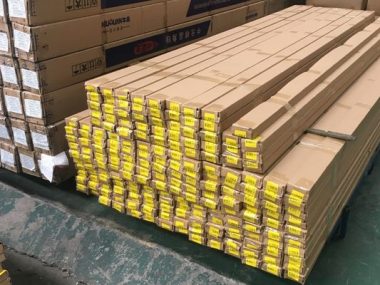
6463 is a variant of 6063 — the two alloys are so closely related that the Aluminum Association treats second-digit variations as the same alloy family. The practical difference for tile trim buyers is small but specific: 6463 is widely described (mostly in supplier literature) as developed for bright-dip anodizing, the chemical-polishing process that produces mirror-bright, shiny aluminum finishes; we could not locate the Aluminum Association primary document for this article. For standard anodized or powder-coated trim, 6063 is the industry workhorse and does the job. For bright, reflective finishes — shiny silver, gold, bronze — 6463 is the right specification.
For distributors, the buying rule is simple: default to 6063; specify 6463 when the finish must be bright-dip shiny. And once you pick one, keep it consistent across the whole visible run — the two alloys can anodize to slightly different shades.
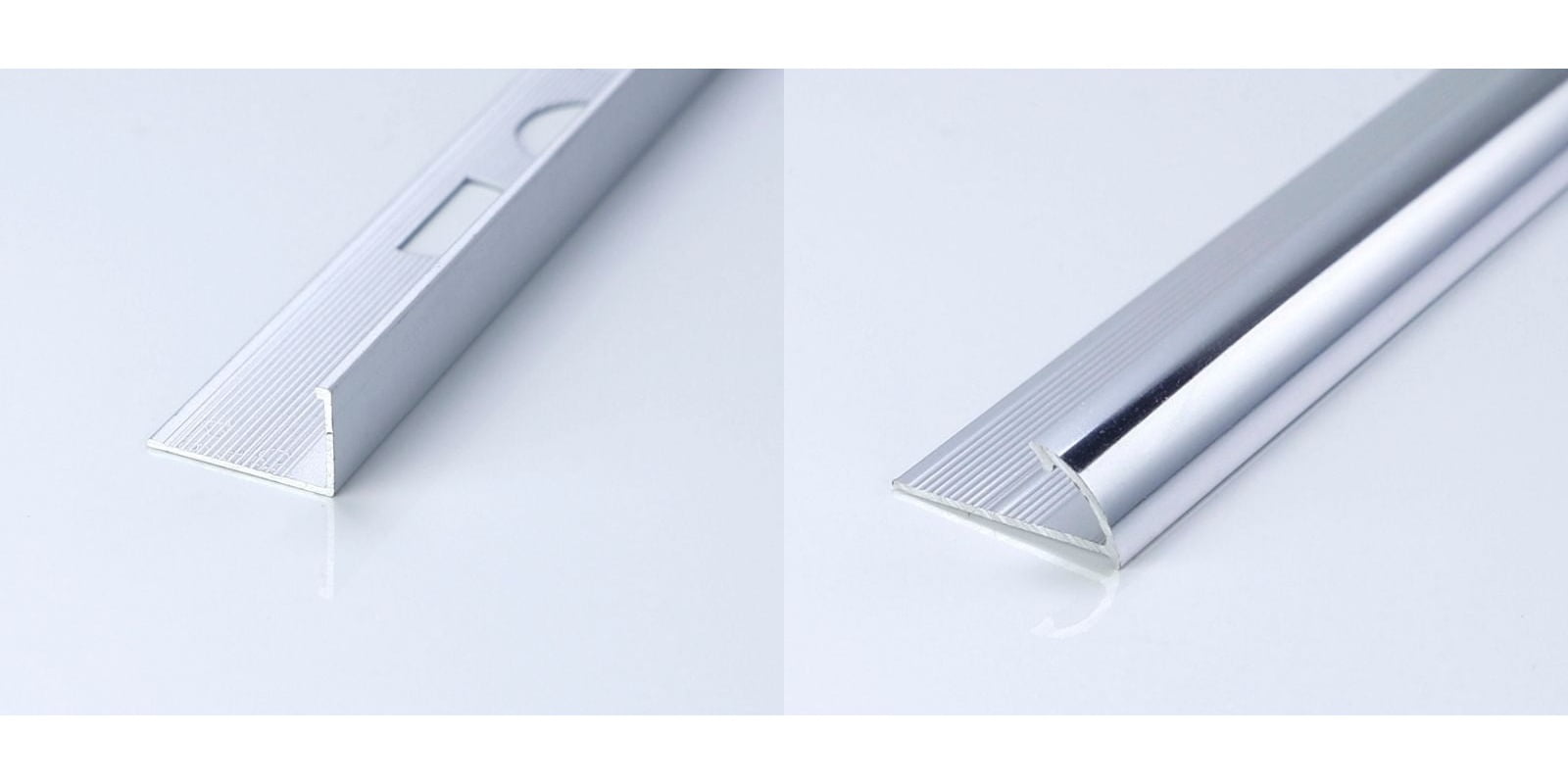
6063 vs 6463 Aluminum at a Glance
| 6063 | 6463 | |
|---|---|---|
| Alloy relationship | The base architectural alloy | A variant of 6063 — same 6xxx (Al-Mg-Si) family |
| Silicon / magnesium limits | Si 0.20–0.60%, Mg 0.45–0.90% | Identical: Si 0.20–0.60%, Mg 0.45–0.90% |
| Impurity limits (Fe / Cu / Mn) | Fe <0.35, Cu <0.10, Mn <0.10 | Fe <0.15, Cu <0.20, Mn <0.05 — tighter on iron and manganese |
| Strength | Moderate — the standard for architectural profiles | Low to moderate — marginally softer in the same temper |
| Anodized appearance | Very good — smooth, takes color well | Excellent — very bright, mirror-like response |
| Developed for | General architectural extrusion | Bright-dip anodizing |
| Covered standards | ASTM B 221, EN 573-3, EN 755-2 | Same: ASTM B 221, EN 573-3, EN 755-2 |
| Best for tile trim | Standard anodized and powder-coated trim | Bright-dip shiny finish SKUs |
Composition: What’s Actually Different
The headline first: the two alloys’ main alloying elements are specified at identical limits — silicon 0.20–0.60% and magnesium 0.45–0.90% for both, per the Aluminum Association composition tables. That’s why they’re considered variants of one alloy rather than two different materials.
The difference sits in the impurity ceilings:
- Iron: 6463 caps it at 0.15% vs 0.35% for 6063
- Manganese: 6463 caps it at 0.05% vs 0.10% for 6063
- Copper: 6463 allows up to 0.20% vs 0.10% for 6063
Why does this matter? Anodizing turns the aluminum surface itself into the finish, so what goes into the billet shows up in the coating. In industry practice, 6463’s tighter iron and manganese limits are associated with a brighter, more consistent anodized finish — especially after bright-dip chemical polishing. The micro-level mechanism behind that association isn’t source-verified in this guide, so treat it as a practical industry association rather than a metallurgical proof. For ordinary satin or powder-coated trim, the composition gap is invisible; for a mirror-bright finish, it’s the whole game.
Strength: 6463 Is Slightly Softer
Supplier comparison tables rate 6463’s strength “low to moderate” against 6063’s “moderate.” A temper-matched materials-database comparison (the published figures are for 6063A-T5 vs 6463-T5) puts it in numbers: roughly 210 vs 180 MPa ultimate tensile strength, 170 vs 130 MPa yield. Both are heat-treatable (T5/T6 tempers are standard), both extrude well, and 6463 is generally an extrusion-only alloy — fine, since tile trim is extruded anyway.
For tile trim, this strength gap is not a selection factor. Trim is decorative edging, not a load-bearing member — it doesn’t carry structural loads where 30 MPa would change the answer. Neither alloy’s strength should drive your purchase decision; the finish requirement should.
The Finish Difference: Bright-Dip Anodizing
This is where 6463 earns its place. Bright-dip anodizing is a chemical-polishing pretreatment — a phosphoric/nitric acid bath run under strict control — that brightens the aluminum surface before the anodizing step. Unlike plating, it deposits nothing on the surface; it refines the metal itself to a highly reflective, near-mirror state. The subsequent anodizing then hardens that surface and allows it to be dyed.
The catch: how bright the result gets depends on the alloy. 6463 is widely described in supplier literature as developed for exactly this process, and tile trim manufacturers describe 6463 plus bright dip as the best-practice pairing for reliably shiny aluminum trim — shiny silver, shiny gold, shiny bronze, champagne mirror finishes. The production sequence is extrusion, polishing, bright dip, then anodize.
Practical note for buyers: if a bright-finish SKU arrives dull, streaky, or inconsistent batch to batch, the alloy going into the extrusion — and whether it changed between batches — is one of the first things to check. A finish specification that just says “anodized gold” without naming the alloy or the bright-dip process leaves that door open.
Don’t Mix Alloys in One Visible Run
One of the most useful facts from the Aluminum Association’s extrusion guidance: different alloys produce different shades when anodized identically. The stated recommendation is direct — if the components of an assembly must match in shade, use the same alloy throughout.
Translated to buying practice:
- Don’t mix 6063 and 6463 lengths in the same wall run, niche, or visible installation.
- Name the alloy on your purchase order, not just the finish color — otherwise a factory may substitute whichever billet is on hand, and you’ll discover the shade difference after installation.
- If a project needs both standard and bright-dip profiles, keep each finish family on its own alloy and keep the families visually separated.
Cost: Same Metal Price, Extra Process Step
Here’s a fact that surprises buyers: relative material-database indicators place the two alloys’ base metal at the same level. These are relative database indicators, not factory procurement quotes — don’t read this as a promise that 6463 billet will cost you the same as 6063 in a real supplier quote.
Where the money goes is the process. Bright dipping is an additional controlled chemical step on top of standard anodizing — tighter chemistry control, more technical skill, more time. So bright-dip shiny 6463 finished goods legitimately carry a process premium over standard anodized 6063. Treat that as directional: no published factory bulk price multiple was found for this guide, so any “X times more expensive” figure online is retail anecdote, not a quote.
The honest distributor math: you’re not paying for a rarer metal, you’re paying for a brighter process. Price the SKU accordingly.
When to Specify Which: A Buyer’s Decision Table
| Your order | Specify this |
|---|---|
| Standard anodized trim — matte black, champagne, silver, brushed | 6063 — the workhorse; best value |
| Powder-coated trim, any color including wood grain | 6063 — powder coat hides the alloy’s optical advantage |
| Bright-dip mirror finishes — shiny silver, gold, bronze | 6463 — widely described in supplier literature as developed for this process |
| Mixed profiles in one project where shades must match | One alloy throughout — state which on the PO |
| Premium retail SKUs sold on a mirror-bright look | 6463 with bright-dip anodizing |
Three related reads: our tile trim finishes guide covers the full finish menu, and the aluminum vs stainless steel guide helps when the decision is the metal itself rather than the alloy. Trim height should always match tile thickness — see our tile trim size guide. If the choice is between anodized and powder-coated aluminum, our head-to-head guide compares cost, durability, and color range.
What to Put in Your RFQ
A clear RFQ gets you an accurate quote faster — and for this topic, the alloy line matters more than usual:
- Alloy: 6063 or 6463 — or state the finish intent (“bright-dip mirror gold”) and let the factory confirm the alloy
- Temper: T5 or T6
- Finish: anodized color, bright-dip mirror, or powder coat — with a physical sample reference wherever possible
- Shade consistency: note if multiple profiles must match in one installation
- Profile and size: profile type, height matched to tile thickness, length or custom lengths
- Quantity and packaging: estimated pcs, export carton/pallet requirements, private-label needs
- Target delivery: project timeline and destination port
- Material documentation: tell us in your RFQ if you need mill certificates or test reports
NIUYUAN extrudes aluminum tile trim in 6063 / 6463 alloy, with OEM profiles, private label, and custom export packaging. Samples take 7 days (7–10 for complex profiles); bulk orders run 20–30 working days; aluminum MOQ is 1,000 pcs. Send the list above via our contact page.
FAQ
Are 6063 and 6463 aluminum the same? Not quite — 6463 is a variant of 6063 within the same 6xxx (Al-Mg-Si) family. Their silicon and magnesium limits are identical; 6463 has tighter iron and manganese impurity limits. It is widely described in supplier literature as developed for bright-dip anodizing, which is where the difference shows.
Which is stronger, 6063 or 6463? 6063 is slightly stronger — roughly 210 vs 180 MPa ultimate tensile in T5 temper per materials-database comparisons. For tile trim, which is decorative edging rather than structural, the gap doesn’t change where either alloy can be used.
Does 6463 aluminum cost more than 6063? Relative material-database indicators place the two alloys’ base metal at the same level (not factory procurement quotes). Bright-dip shiny finished goods cost more because bright dipping adds a controlled chemical processing step — you’re paying for the process, not a rarer metal. We did not find a published factory bulk price multiple in the sources reviewed for this guide, so treat price-multiple claims as anecdote.
Can I mix 6063 and 6463 trim in one project? Not in the same visible run. Different alloys can anodize to slightly different shades under identical conditions, so the Aluminum Association guidance is to use one alloy throughout when shades must match. Name the alloy on your purchase order.
Which alloy should I specify for bright, shiny tile trim? 6463 with bright-dip anodizing — supplier literature widely describes that combination as developed for exactly this result: a mirror-bright, dyed anodic finish in shiny silver, gold, bronze, or champagne. Confirm the finish on physical samples before bulk orders.