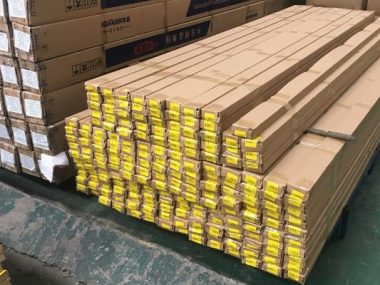
Choosing brass tile trim is not a grade decision — there is one material to confirm, H59 solid brass — it is a finish and expectation decision. Confirm first that the trim is genuinely solid brass, not a brass-coloured finish on another metal. Then choose among brushed, polished, satin and antique by how the edge will be seen, touched and cleaned, not by the colour name alone. And before bulk production, settle the question brass buyers most often leave open: brass surface appearance can change over time, so agree in writing what appearance you are buying, and lock that finish with a sealed sample the bulk batch will be checked against.
Start with the material: H59 solid brass, not a brass colour
The first selection error happens before finishes are even discussed. On our brass tile trim range page, the distinction is stated plainly: brass tile trim refers to the material — H59 solid brass — while “gold tile trim” usually refers to a surface colour or finish effect that may be made from aluminium, stainless steel, brass or another material. A gold-coloured aluminium profile and a solid brass profile can look close in a photo and differ in weight and in how the surface ages. So the first line of any brass specification is the material itself, confirmed in writing. If a quotation does not state the base material, you are not yet comparing brass with brass.
Unlike the other single-material guides in this series, there is no second grade to weigh. Stainless steel selection turns on grade — 304 against 316 for the exposure, as our 304 vs 316 vs 316L grade guide sets out — and aluminium selection turns on alloy and finish process, as our 6063 vs 6463 aluminium guide explains. For brass, the material question closes with H59, and the real selection work moves to the finish, the profile’s job, and the sizing — in that order.
The four finishes, as selection premises
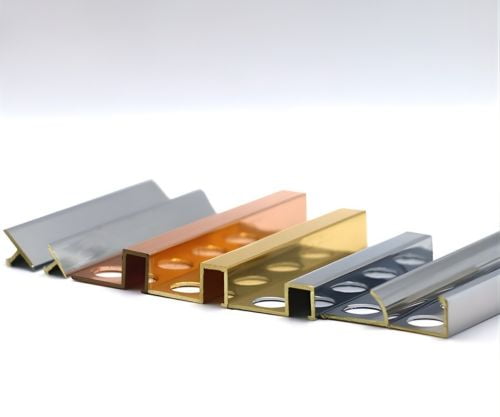
The range offers brushed, polished, satin and antique brass, or a custom finish by approved sample reference. That list lives on the range page and is not repeated here as a catalogue; what follows is the one selection-relevant trait of each finish.
Brushed: the directional working finish
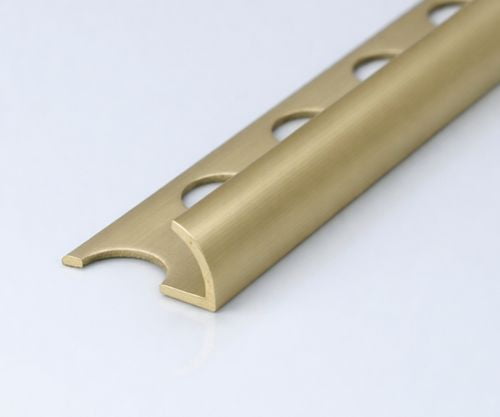
Brushed brass has a directional metal texture. The range page positions it for visible tile edges, backsplash ends, bathroom niches and commercial interior details, and names the points that make it a specification rather than a name: brushing direction, line consistency, colour tone and protective film should be confirmed before bulk production. Choose it where the edge is a working detail — seen daily, wiped often — and where a directional texture sits more quietly against the tile than a reflective surface would. The brushing direction is part of the finish: two batches brushed in different directions will not read as the same trim.
Polished: the bright feature finish
Polished brass is the bright, reflective end of the range: choose it when the brass line is meant to be seen — a feature edge, a border line, a detail the design points at. The caution mirrors the brushed rule: a reflective surface shows handling and cleaning traces at full contrast, so polished is a commitment to how the surface will be maintained, not only to how it looks on the sample board. Specify it where that maintenance is realistic, or where the line sits beyond routine handling.
Satin: the middle finish
Satin sits between the two: a softer sheen than polished, without the pronounced direction of brushed. Test it when a project finds polished too reflective and brushed too textured. Because “satin” is the least self-defining name of the four, it is the finish for which the approved sample matters most — the sample, not the word, is what your bulk will be judged against.
Antique: the pre-aged direction
Antique brass starts from a darker, aged appearance rather than arriving there over time. Choose it for an aged or heritage look from day one, or alongside darker fittings and hardware. Confirm the tone itself — how dark, and how uniform across the run — on an approved sample for your profile; an antique tone judged from a photo of a different profile is not yet your tone.
| Finish | Choose it when | Confirm before bulk |
|---|---|---|
| Brushed | The edge is a working detail, seen and wiped daily | Brushing direction, line consistency and colour tone against the sealed sample |
| Polished | The brass line is the feature and reflective-surface maintenance is agreed | Gloss level and tone on the sample |
| Satin | Polished reads too bright and brushed too directional | The exact sheen on an approved sample — the name alone does not define it |
| Antique | An aged, darker tone is wanted from day one | How dark and how uniform the tone is, on a sample of your profile |
The surface-change question: set the expectation before you order
Brass is the one trim material in this series whose appearance is expected to move. The range page’s own answer is the honest starting point: brass surface appearance may change over time depending on finish type, moisture exposure, cleaning method, handling and maintenance — buyers often describe this gradual darkening and tonal shift as patina. What the range page does not do is promise a version of brass that does not change: it names no coating or sealed-finish option for holding the as-new appearance, and neither does any other brass page on this site. Treat any such promise, from any supplier, as a claim to be evidenced, not assumed.
So handle the question as a written confirmation, agreed before bulk production, with three items. First, the starting appearance, defined by the approved sample. Second, the expected direction of change for your finish in your environment, stated by the supplier in writing — a bathroom niche, a kitchen backsplash and a dry feature wall expose the same finish to very different moisture and cleaning regimes. Third, the care requirements: cleaning method and surface protection, which the range page likewise says should be confirmed before bulk production for visible decorative edges. If your project needs the day-one appearance to hold as closely as possible, say so in the first enquiry and have the supplier state in writing what, if anything, will be done to slow the change. If that answer is not available in writing, assume the surface will evolve — and choose a finish, such as antique, whose starting point already suits an evolved look.
Choose by use: where each decision leads
The range is a premium interior line — visible tile edges, decorative wall lines, backsplash endings, floor borders and interior finishing details. Run your application through the closest row before approving a sample.
| Use | Finish direction | The decision that matters most |
|---|---|---|
| Bathroom niches and wall edges | Brushed as the working default | Moisture and daily cleaning drive surface change here — the written expectation and care requirements matter more than the starting tone |
| Kitchen backsplash endings and counter edges | Brushed or satin | Frequent wiping and food-area cleaning: a directional or soft-sheen surface, with cleaning method confirmed before bulk |
| Feature walls and premium interior details | Polished where the line is the feature; antique for an aged scheme | The tone against the actual tile and hardware, judged on a sample of the actual profile — see the published brass square-edge tile trim page for the straight feature-edge profile |
| Floor borders, inlay lines and transition joints | By design intent, matched across the whole run | Consistency across lengths and repeat batches — one finish direction, one sealed sample, referenced on every re-order |
Two boundaries apply to every row. This is an interior range: constantly wet, pool-adjacent and coastal exposure questions belong to the grade-led materials first, and no brass finish choice substitutes for that assessment. And final availability of any finish is confirmed by profile shape, quantity and approved sample before bulk production — the table narrows the direction, the sample closes it.
Profile and size: choose by the job, match the height to the tile
Profile selection for brass follows the job the edge has to do — a straight termination, a softened corner, a divider line between surfaces, a frame around a panel — and the full series list lives on the range page rather than in this guide. Size selection has one governing rule and three order variables. The rule: the trim height is matched to the tile thickness, so the edge finishes flush; the range’s common heights run from 6 mm to 12.5 mm, with custom heights available. The variables: profile thickness, which the range puts at 1.5–5.0 mm or custom by profile shape, drawing or sample; length, with common lengths from 2.44 m to 3.0 m or custom; and quantity, with orders starting from an MOQ of 200 pcs, the final figure varying by profile type, finish, size, packaging and customisation. State all three in the enquiry rather than letting a default stand — on a solid material sold by specification, an unstated thickness or length is an assumption built into your quote.
Locking the finish: the sealed sample is the standard
Every finish decision above is only as good as the mechanism that holds bulk production to it. Our tile trim finishes and colours page is explicit on three points that matter doubly for a material whose appearance evolves. A photo shows the general direction but is not used as the final colour standard, and metallic, brushed, polished and reflective finishes may require a physical reference because a colour code does not define the complete surface appearance. The same named colour can look different on aluminium, stainless steel, H59 solid brass and PVC — so the sample to approve is a brass sample, on your profile. And after approval, three sealed samples are made from the approved batch and retained for two years from the last repeat order, with bulk and repeat batches checked against them for dimensions, colour tone, gloss, texture and packaging.
Your half of that mechanism is a written lock with six items: (1) the material, stated as H59 solid brass; (2) the profile, height, thickness and length; (3) the finish, stated as a direction with its defining detail — brushing direction for brushed, gloss level for polished and satin, tone depth for antique; (4) the sealed sample reference the batch will be checked against; (5) the surface-change expectation and care requirements, as set out above; and (6) the protective film and packaging that keep the finished surface intact in transit. Custom requirements beyond the standard range are reviewed with the order itself on our custom tile trim page. For the wider ordering sequence this decision sits inside, see our guide to importing tile trim from China.
What to include in your RFQ when the finish is the decision
A brass enquiry needs the same core information as any trim RFQ — profile type, height, thickness, length, finish reference, quantity, packaging requirements, and drawings, photos or samples — plus the three items brass decisions turn on: the base material stated as H59 solid brass, so the quote is not for a brass-coloured substitute; a physical finish reference or a named direction to be sampled; and the installation environment with your surface-change expectation, so the supplier’s written answer on appearance over time and care is part of the quotation, not an afterthought. Brass orders start from an MOQ of 200 pcs, available profile samples are usually ready within 7 days and custom samples usually take 7–10 days, and bulk production usually runs 20–30 working days, each depending on profile, finish, quantity, packaging and schedule. Send the specification and the reference through our contact page.
FAQ
Is brass tile trim solid brass, or just gold-coloured?
On the NIUYUAN range it is the material itself: H59 solid brass. “Gold tile trim” usually describes a surface colour or finish effect, which can be produced on aluminium, stainless steel, brass or other materials. If you need solid brass, confirm the material grade in writing before quotation — a photo cannot distinguish a solid brass profile from a brass-coloured one.
What finishes are available for brass tile trim, and how do I choose?
The standard finishes are brushed, polished, satin and antique brass, or a custom finish by approved sample reference. Choose by use: brushed for working details that are seen and wiped daily, polished where the line is a maintained feature, satin for a softer sheen between the two, and antique where an aged, darker tone is wanted from day one. Confirm the defining detail of your finish — brushing direction, gloss level or tone — on an approved sample before bulk production.
Will brass tile trim change colour or develop patina over time?
The surface appearance may change over time — the gradual darkening buyers often call patina — depending on finish type, moisture exposure, cleaning method, handling and maintenance. No coating or sealed-finish option for preventing that change is stated on the NIUYUAN brass range, so do not assume one: agree the expected direction of change and the care requirements with your supplier in writing before bulk production, and choose a finish whose starting point suits how the surface will evolve.
How do I choose the right brass tile trim size?
Match the trim height to your tile thickness so the edge finishes flush — common heights are 6, 8, 10, 12 and 12.5 mm, or custom. Then state the remaining variables in your enquiry instead of accepting defaults: profile thickness (usually 1.5–5.0 mm, or custom by drawing or sample), length (commonly 2.44, 2.5, 2.7 or 3.0 m, or custom), and the profile shape that fits the job the edge has to do.
How do I make sure bulk production matches my approved brass finish sample?
Use the sealed-sample mechanism and reference it in writing. After sample approval, three sealed samples are retained for two years from the last repeat order, and bulk and repeat batches are checked against them for colour tone, gloss, texture, dimensions and packaging. On your order, state the material as H59 solid brass, the finish with its defining detail, and the sealed sample reference — and repeat that reference on every re-order.