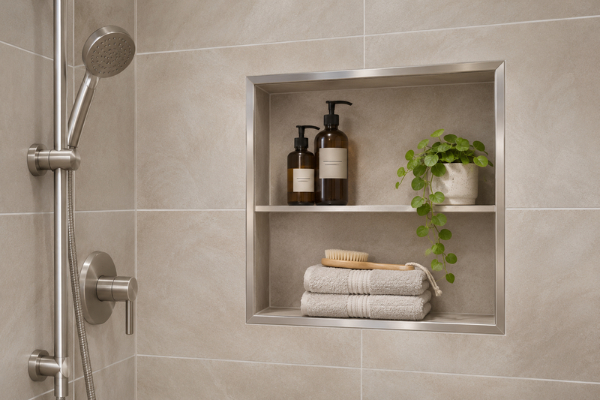
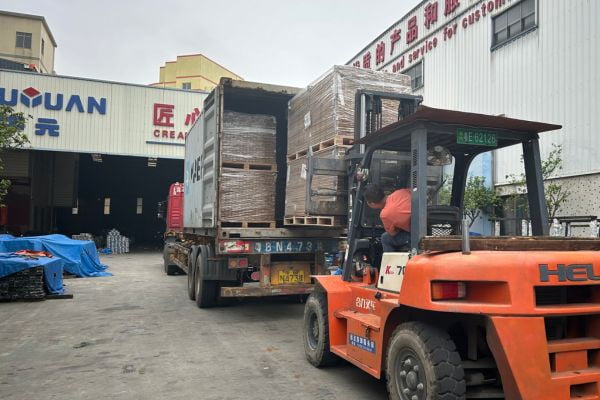
If you buy tile trim for the Australian market, the cheapest quote is rarely the decision. The real decision has three parts. Is the supplier’s duty position clean? Does the profile match the tile and adhesive on site? Will the first order clear customs without a surprise? Get those three right and the price almost takes care of itself.
Most Australian buyers source trim in one of two ways. Local distributors and tile retailers hold stock in common profiles. That suits small jobs and urgent top-ups. Direct factory import suits volume buyers, private-label brands and project orders. The range is wider there, and the unit cost is lower.
This guide covers the second route. It explains how to choose, what the duty position actually is, and what to check before a first order. If you want names of suppliers with verifiable Australian sales, our list of the seven suppliers is a separate article.
How Australian buyers actually buy tile trim
The local channel is fast and simple. You walk into a tile shop or order from a distributor, pick a profile off the shelf, and pay the retail price. The trade-off is range. A shop stocks the profiles that turn over locally. That is usually a handful of aluminium angles in silver and black, plus a few stainless options.
Anything unusual is a special order with a wait. A brass angle in a smoked finish, a 12.5 mm height or a custom colour will not be on the shelf. Direct import flips that trade-off. A factory holds thousands of moulds and can cut, finish and pack to your specification. In return you take on the order size, the lead time and the import paperwork.
The break point is volume. If you order a few cartons a year, local stock wins. If you order by the pallet, or you need the same profile in ten colours for a private-label range, the factory route usually wins on cost and on choice.
There is also a middle path that many distributors use. They hold local stock for the fast-moving profiles and import the slow-moving or custom lines direct. That mix keeps the shelf full while the imported lines carry the margin. If you are building a range rather than filling one job, plan the split before you place the first order.
What sells in Australia: profiles, heights and materials
Australian retail listings show the same pattern. The workhorse is the L-shaped aluminium angle, followed by square edge and round edge profiles. Heights cluster at 8, 10 and 12.5 mm, most in 3 m lengths. That tells you what tilers actually fit: standard wall tiles and common floor thicknesses, with the trim height matched to tile plus adhesive.
Material choice follows the room. Aluminium is the everyday choice. It is light, easy to cut, and available in the widest range of finishes. Stainless steel is the hard-wearing option for steps, commercial floors and wet areas. Brass suits warm colour schemes and brushed brass tapware. PVC covers volume lines where cost matters more than metal feel.
| Where it goes | Profile that usually fits | Material to start with |
|---|---|---|
| Wall tile edges and outside corners | L angle or square edge | Aluminium 6063 |
| Shower and wet-area edges | Round edge or L angle | Stainless 304, or 316 near the coast |
| Steps and stair nosings | Stair profile or round edge | Stainless 304 or 316 |
| Floor transitions | T profile or ramp profile | Aluminium or stainless |
| Decorative edges and feature walls | Square edge or brass angle | Brass H59, lacquered or smoked chrome |
Coastal and wet-area choices
Coastal work deserves a separate decision. A bathroom in Bondi or a balcony in Fremantle sees salt air every day, and the wrong metal shows it within a year. For those jobs, 316 stainless is the safe default. Aluminium also works if its anodised or powder-coated finish is intact, with cut ends sealed. If a supplier cannot tell you which grade they are shipping, treat that as a reason to pause.
Wet areas carry one more rule that buyers sometimes miss. The trim finishes an edge. It does not waterproof anything. The waterproofing membrane goes on first, under Australia’s wet-area standard, and the trim beds into the adhesive over it. A profile that traps water behind the tile will fail, whatever the metal. Ask how the profile drains and where the water goes.
Our full profiles guide shows the range by shape and use, with the aluminium, stainless steel and brass options in detail. Start with the shape, then narrow by material and finish. Brass finishes available to order are lacquered, chrome-plated and smoked chrome.
The duty position, in plain terms
This is the part that catches new importers. Australia’s ordinary tariff is only half the story for aluminium trim from China. The other half sits with the Anti-Dumping Commission, and it is exporter-specific. Two factories can ship the same profile and face different duty. The Commission sets rates per exporter and publishes them in its Dumping Commodity Register.
Aluminium extrusions from China have carried interim dumping and countervailing duties in Australia since 28 October 2010. A continuation review extended the measures to 28 October 2030. That is the background. Your supplier’s position is what matters, and it is found in the register, not in a sales brochure.
What our own position looks like
Our position changed in 2026. Under Accelerated Review No. 700, the ministerial decision took effect on 13 July 2026. Aluminium extrusions supplied directly by Foshan Nanhai Niuyuan Hardware Product Co., Ltd. are now listed in the register under DSN 330.
The dumping duty now runs on a floor-price basis. No interim dumping duty is collected while the export price stays at or above the assessed floor price, which is confidential. The interim countervailing duty is 1.3% on the FOB value, paid in cash. The 29.4% combined rate we previously carried under “all other exporters” no longer applies.
Three things follow from that. First, duty still applies. Any supplier who claims otherwise should show the register entry. Second, the duty actually collected depends on the declared export price against the confidential floor price. Your broker still confirms the DSN at entry.
Third, the position covers aluminium extrusions we supply directly, within the register’s goods description. Stainless steel, brass and PVC trim are not aluminium extrusions, so they do not sit under this measure. Our full duties guide walks through the register check step by step.
GST and the A$1,000 line
On top of any duty, Australia charges 10% GST on most imports. The tax base is the value of the taxable importation. That is the customs value, plus any customs duty, plus the cost of transporting and insuring the goods to Australia. So the GST on a shipment is a little more than 10% of the invoice alone, because freight and duty sit inside the base.
Where the GST is collected depends on the consignment value. If the customs value is A$1,000 or less, the overseas seller or marketplace collects the GST at checkout. Nothing is collected at the border. If the value is above A$1,000, the GST is collected at the border by the Australian Border Force as part of a Full Import Declaration. The goods are not released until it is paid.
A first factory order will almost always sit above that line, so budget for GST at the border, not at checkout. One practical point: keep the commercial invoice, the packing list and the freight documents consistent. A mismatch between the declared value and the freight papers is the most common reason a shipment is held for questions. Your broker can clear most of it in advance if the papers agree with each other.
A first-order checklist
I have watched first orders go wrong in the same few ways, and almost all of them were avoidable at the sample stage. A sample is not a souvenir. It is the one physical object both sides can point at, and it is why we keep approved samples on file for two years. Order the sample in the exact profile, height, finish and length you intend to buy. Check it against your tile and adhesive, not against a photo.
Confirm the commercial terms in writing before production starts. Minimum order quantities differ by material: aluminium 1,000 pieces, stainless steel 500, brass 200, PVC 2,000. Standard samples take about 7 days, custom samples 7 to 10 days, and bulk production 20 to 30 working days. Those are the numbers to plan around. Any quote that promises far less deserves a question about what was left out.
Packing and trade terms
Agree the packing before you agree the price. Trim is long, light and easy to bend in transit, so cartons, end protection and container loading matter as much as the profile. Custom packaging and OEM labelling are available, but they need to be specified up front. The artwork and the carton marking should be confirmed on the sample order.
A tooling charge, where one applies, is credited back once the agreed cumulative order volume is reached. Ask for that threshold in writing too. The same goes for the trade term: EXW, FOB or CIF, and who handles the Australian side. A CIF quote that leaves customs clearance to you is not the same price as one that includes it.
| Item | What to confirm |
|---|---|
| Profile and height | Cross-section drawing, height matched to tile plus adhesive |
| Material and grade | Alloy or grade in writing: 6063 or 6463 aluminium, 304 or 316 stainless, H59 brass |
| Finish | Named finish and sample: anodised, brushed, powder-coated, lacquered, chrome-plated or smoked chrome |
| Quantity | MOQ by material, and whether mixed colours count toward it |
| Lead time | Sample 7 days, custom sample 7 to 10 days, bulk 20 to 30 working days |
| Packing | Carton spec, end protection, custom packaging and carton marking |
| Trade term | EXW, FOB or CIF, and who handles the Australian side |
Choosing a supplier without a factory visit
Most Australian buyers never visit the factory, and that is fine. A visit is a poor test of a supplier anyway. What matters is whether the supplier answers the hard questions in writing, with documents you can check. Ask for the register position by name and DSN, not a general claim about duty.
Ask for the mould list behind the profiles you want. A factory with 3,000 moulds can usually supply from stock tooling where a trader has to buy it in. Stock tooling also means the first sample comes faster, because no new mould has to be cut.
Ask how the supplier handles the first problem, not the first order. When a finish varies between batches, or a carton arrives bent, who pays for the remake and how fast is the answer? Our technical response comes within one working day, and that is the number to hold any supplier to. A supplier who will not put a response time in writing is telling you something about the second order, not the first.
Finally, ask for a customer you can call. Not a logo slide, a person. A factory that has supplied your market for years will have a distributor or project buyer willing to take a five-minute call. If the answer is always no, weigh that against the price difference before you commit.
What to confirm before you pay
Before money moves, the whole order should fit on one page. Profile, height, material, finish, quantity, packing, trade term, lead time and the landed cost, with duty and GST estimated separately. If any line is still vague, it is cheaper to fix it now than to argue about it at the port. Pay the deposit against that page, and keep the approved sample as the reference both sides signed off on.
One last check: confirm the name on the invoice matches the name in the Dumping Commodity Register. The duty position belongs to the exporting company, not to the brand on the carton. Ask your broker to check the name before the goods ship.
The Australian market rewards buyers who do this groundwork once and then reorder with confidence. The trim itself is a small part of any project, but it is the edge every customer sees. The supplier you choose for it is the supplier you will call when a project needs the same profile again in six months. Choose on the register position, the sample in your hand and the answers in writing, and the price will look after itself.
Frequently asked questions
Do I pay anti-dumping duty on aluminium tile trim from China?
It depends on the exporter. Aluminium extrusions from China have been subject to interim dumping and countervailing duties in Australia since 2010, and the rates are exporter-specific. NIUYUAN is listed in the Dumping Commodity Register under DSN 330: the dumping duty runs on a floor-price basis, and the interim countervailing duty is 1.3% on the FOB value. Your broker confirms the DSN at entry.
Is there a minimum order when importing tile trim from a factory?
Yes, and it differs by material. Our minimums are 1,000 pieces for aluminium, 500 for stainless steel, 200 for brass and 2,000 for PVC. Mixed colours or profiles may or may not count toward one minimum, so confirm that before you build the order.
How much GST do I pay on imported tile trim?
10% of the value of the taxable importation, which is the customs value plus any customs duty plus international transport and insurance. For consignments above A$1,000, the GST is collected at the border by the Australian Border Force. For consignments of A$1,000 or less, the seller or marketplace collects it at checkout.
What trim height do I need for Australian tiles?
Match the trim height to the tile thickness plus the adhesive bed. Australian retail ranges cluster at 8, 10 and 12.5 mm heights in 3 m lengths. Measure your tile and adhesive together, then choose the nearest height: too low and the tile edge sits proud, too high and the trim stands above the tile.
Which material suits coastal areas in Australia?
316 stainless steel is the safe default near salt air, for example in coastal Sydney, Brisbane or Perth. Aluminium works if its anodised or powder-coated finish is intact and cut ends are sealed. Brass is a decorative choice for interiors rather than exposed coastal edges.
Can I buy a small quantity first to test a supplier?
Yes. Order a sample in the exact profile, height, finish and length you intend to buy, and check it against your tile and adhesive. Standard samples take about 7 days, custom samples 7 to 10 days. We keep approved samples on file for two years, so a re-order can be matched against the original.