

Pick the finish by the room, not by the swatch. Brushed suits the long runs that hands touch every day, while polished suits short feature lines that hands rarely reach. PVD adds colour, and the colour is fixed by an approved sample, not by a name on a chart. The grade comes first in every case, so set 304 or 316 by exposure, then choose the finish inside that grade.
I run a tile trim factory in Foshan, and I have seen the same order fail in the same way. A buyer picks a finish from a photo, and the bulk run follows the photo. The cartons arrive in a tone the project team will not accept, but the fix is dull and it works. Name the grade, the finish and its base, then seal a sample before bulk starts.
Set the grade before you pick a finish
304 fits most indoor work: bathrooms, kitchens, walls and standard commercial interiors. 316 fits showers, coastal areas, wet spaces and commercial kitchens, where stronger corrosion resistance is needed. Our grade guide sets out the same split in more detail, so read it first for a project near the sea or around pool water.
A finish changes how trim looks and how it is cleaned. It cannot change what the steel does in salt air or chlorinated water. That is why the grade sits first on the order sheet and the finish sits second. A polished 304 edge in a coastal shower is still 304, because the shine does not upgrade the steel under it.
Some projects mix exposures in one order. A hotel may need 316 for pool-side trim and 304 for dry corridors on the same purchase order. Split the order by zone on the order sheet, and give each zone its own grade and finish line. One combined line invites the factory to guess which rooms the trim serves. A guess here costs more than a second line on the sheet.
Brushed: the finish for the runs people touch
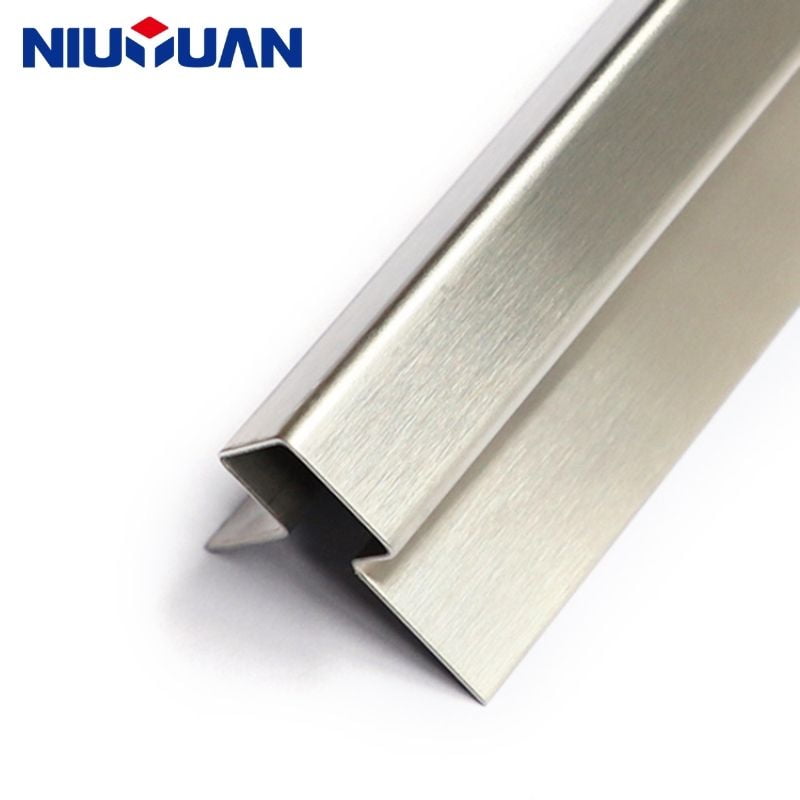
Brushed trim carries fine lines in one direction across the surface. The grain softens glare and breaks up the light, so the edge sits quietly beside tile and taps. Our stainless steel trim range lists it as the default direction for kitchens, bathrooms, commercial interiors and modern wall details. I put brushed first on distributor orders for one reason: it is the finish that looks the same after a year of daily use.
Marks show less readily on a directional grain than on a mirror face, which is a working rule, not a test result. It guides where each finish goes, and it is the reason brushed carries the long runs in this guide. Confirm the brushing direction before bulk production, and keep it running one way along each run. Mixed directions read as a fault on site, even when the steel is correct.
Leave the protective film on until the tile work is done, because the film guards the face while grout and tools move across the room. Peel it only when the edge is set and the room is clean. A brushed face without its film still needs the same check, so look at the visible surface before the cartons leave the factory floor.
Polished is mirror: one finish, two names
Polished and mirror name the same finish on our stainless steel trim, with a bright, reflective surface and no grain to break the light. It suits short feature lines, niche edges and low-touch details, where the shine is the point. Use it in short lengths and above hand height, away from the traffic of a busy corridor. A mirror edge at hand height collects every mark the room makes.
The naming trap matters more than the shine. One maker may sell the same bright finish as polished, while another sells it as mirror. A buyer who orders by name alone can receive two looks on one project. Put the finish name and the sealed sample reference on the order together, because the sample, not the word, is what bulk production must match.
PVD: colour laid over a base finish
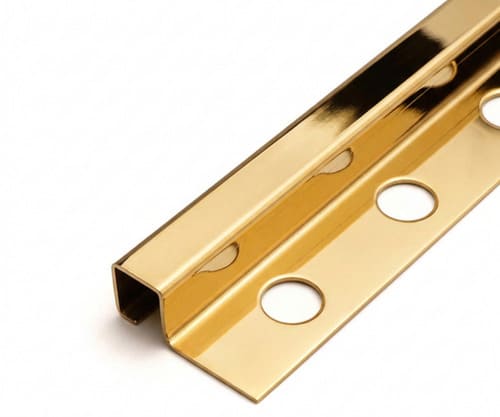
PVD is a coating laid over the stainless surface. The colour follows the base beneath it. A PVD coat on a brushed base reads softer than the same colour on a mirror base. That is why a PVD order must name two things: the colour direction and the base finish under it. Name one without the other, and the factory has to guess.
Our PVD colour directions are gold, black, rose gold, champagne and bronze. Each direction is reviewed by sample, colour reference, material grade and order quantity. A colour name is a direction only, while the approved sample on the same grade and profile is the colour. Check it under the room light, beside the taps and handles it must sit with. Our hardware coordination guide shows how to compare those pieces before you order.
PVD adds a coating step to the order, so confirm feasibility, quantity and sample requirements for each order before bulk starts. Do not carry a PVD colour from one profile to another by name. The same colour direction can read differently on a flat face and a round edge, so each profile needs its own approved sample.
The three finishes at a glance.
| Finish | What it looks like | Where it fits | Confirm before bulk |
|---|---|---|---|
| Brushed | Fine grain in one direction, soft sheen | Long runs, kitchens, bathrooms, corridors | Grain direction, film, sample |
| Polished / mirror | Bright, reflective, no grain | Short feature lines, niches, low-touch edges | Sample, placement height, cleaning plan |
| PVD colour | Colour over a brushed or mirror base | Rooms that need a metal tone | Base finish, colour sample, per-order review |
Four rooms, four calls
Finish choice turns on three facts about the room: how wet it gets, how often hands touch the trim, and whether the design needs colour. The table below gives a starting call for four common rooms. Treat it as a starting call, since final availability is confirmed by grade, profile, finish and quantity before bulk production.
| Room | Grade first | Finish call | Why |
|---|---|---|---|
| Dry living room wall | 304 | Brushed for the main run, polished for one short feature line | Low moisture and low touch, so the finish is a design call |
| Bathroom, shower zone | 316 for shower faces, 304 for dry walls | Brushed main runs, polished only on low-touch niche edges | Steam and water sit on the trim every day |
| Hotel lobby, retail wall | 304 | Brushed main runs, polished or PVD as short accents | High traffic, so the main run must stay quiet |
| Coastal balcony, pool edge | 316 | Brushed main runs, PVD or polished only as short accents | Salt air and pool water punish a bright face |
Two published guides show the same split in real projects. Our coastal apartment case put 316 on balconies and pool edges and kept brushed on the main runs. Our outdoor and pool guide and hotel and commercial checklist cover the same exposure logic for open-air and high-traffic work.
Check the sample under the light of the room where it will sit. A brushed edge under cool white light can read colder than the same edge under warm light. Hold the trim beside the tile and the grout, not on its own, because the edge is judged in place, beside tile, grout and taps. Judge the sample the same way.
Why bulk runs drift, and what a sealed sample does
A photo shows the direction of a finish, but it is not the standard for the colour. A RAL or Pantone code cannot define a brushed, polished or reflective surface on its own, because the code carries no grain, gloss or texture. The same colour name can look different across aluminium, stainless steel, brass and PVC. Approve the real sample for the selected material and profile first.
After sample approval, we make three sealed samples from the approved batch. We keep them for two years from the last repeat order. Bulk and repeat batches are checked against them for dimensions, colour tone, gloss, texture and packaging. That check is the whole mechanism, because without a sealed piece to check against, bulk colour is a matter of memory, and memory drifts.
Lock five items in writing before the order starts.
- Grade: 304 or 316, set by room exposure.
- Profile, height and thickness.
- Finish name, plus the base finish for a PVD colour.
- Sealed sample reference.
- Packing and label.
If a bulk batch arrives off tone, compare it with the sealed sample first, not with a photo on a phone. The sealed piece is the agreed standard, and the comparison tells you whether the batch or the light is at fault. Raise the gap with the factory while the sealed sample is there. That order keeps the dispute about one piece of steel, not about two memories.
I have reopened sealed samples two years after the first order, and the repeat batch was checked against the piece the buyer approved. That is the only repeat method I trust. A new photo cannot replace the sealed piece, because light and screens shift the tone before the factory sees it.
What to put in the RFQ
Send the finish decision as part of the order, not as a note after it. The list below is the minimum, and a supplier who receives it can quote the trim you approved. A repeat order can match the first.
- Grade: 304 or 316, set by room exposure.
- Profile, height, thickness and length.
- Finish: brushed, polished/mirror, or PVD colour plus its base finish.
- Sealed sample reference, or a physical sample to match.
- Quantity, packing, labels and destination.
- Drawings or photos of the tile edge and the room.
Stainless steel trim starts at 500 pieces per order, and the final figure varies by profile, finish, packaging and custom work. Standard samples usually take 7 days, custom samples 7–10 days, and bulk production usually 20–30 working days. Our first technical response comes within one working day, and mould fees are refunded once the agreed cumulative order volume is reached. Our sample and mould fees guide sets out how those two charges work.
We make the trim in our Foshan plant. It covers 31,706 square metres and runs 40 or more machines, with 250 or more staff and 3,000 or more moulds. Monthly capacity is 2 million pieces or more, and those figures set the scale of the order we can take. They do not change the finish call, which still comes from the room, the touch level and the sealed sample.
Send the grade, the finish and the sample reference together, and ask for the sealed sample before bulk starts, because that is the decision. Our custom profile review covers non-standard shapes, and our contact page takes the order details. A finish chosen this way survives the first year of use, and the second order can match the first.
Frequently Asked Questions
Is polished stainless steel tile trim the same as mirror finish?
Yes. Polished and mirror name the same finish on our stainless steel trim. The surface is bright and reflective, with no grain. Order it by finish name plus the sealed sample reference, so bulk production matches the piece you approved rather than the word on the order.
Which finish suits a busy family bathroom?
Brushed, for the main runs. Its directional grain shows marks less readily than a mirror face, and it sits quietly beside taps and tile. Keep polished or mirror trim for short, low-touch feature lines, such as a niche edge above hand height.
Can PVD trim match my taps and handles?
It can, when both are approved against the same physical sample under the room light. Send the hardware sample with the trim order, and name the PVD colour plus the base finish under it. A colour name alone cannot fix the match.
Does the finish change whether I need 304 or 316?
No. The finish changes the look, not the steel. Set the grade by exposure first: 304 for most indoor work, 316 for showers, coastal areas, wet spaces and commercial kitchens. Then choose brushed, polished or PVD inside that grade.
How do I keep a repeat order the same colour?
Approve a physical sample before the first bulk run. We make three sealed samples from the approved batch and keep them for two years from the last repeat order. Each repeat batch is checked against the same sealed piece for dimensions, colour tone, gloss, texture and packaging.