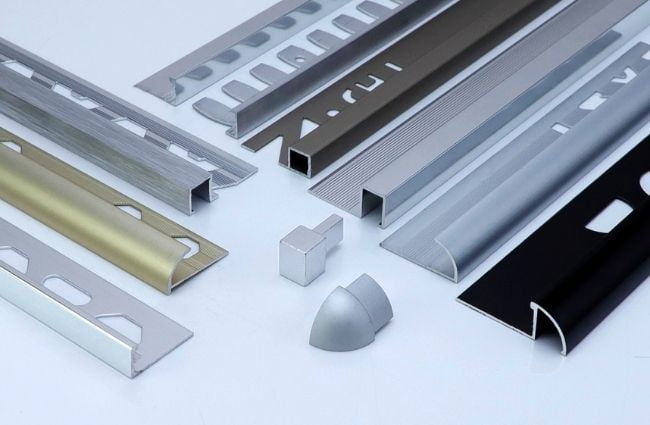
A sample fee and a mould fee pay for two different things. The sample fee pays for a physical piece you can hold, measure, and test before bulk. The mould fee pays for the tool that makes your shape. It only appears when your order needs a tool the factory does not already own. Both fees should appear as separate lines, with credit, return, and ownership terms written down before you pay.
Most first-time buyers lose money the same way: they agree a fee in chat, pay, and only later learn what it did not cover. A stock sample is not the same as a custom sample, and a mould fee is not the same as a unit price. This guide explains the three sample types and how each fee is handled.
Three kinds of sample
A stock sample is a piece taken from the factory’s existing range, made with an existing mould and a standard finish. It shows the real profile, the real alloy, and the real surface. It cannot show a colour, size, or logo that is not already in the range. Ask which profile and finish the piece comes from, so you compare like with like.
A custom sample is made to your specification: your profile, your size, your finish, or your logo and packaging. It proves the factory can build what you asked for, rather than only what it already sells. Samples take 7 days, and a custom sample takes 7 to 10 days. If your design needs a new mould, the mould is made first, and the sample comes after it.
The third type is the sealed sample, also called a golden sample. It is the unit both sides sign off on before bulk starts. One unit stays with you, and one stays sealed at the factory, where the factory keeps it for 2 years. Measure the sealed sample against the dimensions and compatibility chart, and record the profile, finish, and date.
How the sample fee is handled
A sample fee covers the work of making one piece outside normal production. A stock sample needs little extra work, so the main cost is express shipping. A custom sample needs a machine setup, a finish run, or printed packaging for one piece. Whether the fee is credited against your first bulk order is a term to agree, not a fact to assume.
Keep the sample invoice and the written terms together. The invoice should name the sample type, the profile, the finish, and the number of pieces. First-time buyers importing tile trim from China should ask for these terms on the quotation itself, not in a chat message. If the supplier will not put the sample terms in writing, treat that as a warning sign.
What a mould fee is
A mould, also called a die, is the steel tool that shapes the profile as metal is pushed through it. The factory holds more than 3,000 moulds, so most standard profiles need no new tool. A new mould is only needed for a shape, size, or finish not already held. For the product itself, see what tile trim is. A mould fee is a one-time charge for that tool, separate from the unit price of the trim.
How the mould fee is returned
At NIUYUAN, the mould fee is returned once the agreed cumulative order volume is reached. The key word is agreed. The volume, the time limit, and the form of the return must be written into the quotation or the contract before you pay. No supplier should promise a return without naming the volume that triggers it.
The MOQ matters here, because the return volume is counted in pieces. Our guide explains why MOQ differs by material. The four levels are 1,000 pieces for aluminum, 500 for stainless steel, 200 for brass, and 2,000 for PVC.
Ownership is the second question to settle. Paying for a mould does not by itself prove you own it. Ask who owns the tool, where it is stored, who pays for maintenance, and whether it can move. Record the tool number, the drawing revision, and the ownership wording with the contract.
Six items to confirm in writing before you pay
Use this list as a checklist on the quotation. Each item should have a written answer before money moves. If an item is missing, ask for it, and if the supplier will not answer, pause the order.
- Sample type: stock, custom, or sealed, and how many pieces are covered.
- Sample fee: the amount, and whether it is credited against the first bulk order.
- Mould fee: what the tool covers, and how many trial pieces are included.
- Return terms: the volume that triggers it, the time limit, and the form.
- Ownership: who owns the mould, where it is kept, and whether it can move.
- Lead times: sample 7 days, custom 7 to 10, bulk 20 to 30 working days.
The rule is simple: a sample proves the product, a mould makes the shape, and neither fee should rest on a spoken promise. Get the sample type, the credit terms, the return volume, and the ownership wording in writing before you pay. Then order the sample, check it against the sealed reference, and let the signed sample set the standard for bulk. A technical reply comes within 1 working day.
Frequently asked questions
Do I have to pay for a tile trim sample?
A stock sample usually carries a small fee or none at all, plus express shipping. A custom sample costs more because the line is set up for one piece. Ask whether the fee is credited against your first bulk order, and get the answer in writing before you pay.
When do I pay a mould fee?
Only when your order needs a tool the factory does not already hold. The factory holds more than 3,000 moulds, so standard profiles need no new tool. A new shape, size, or finish is what creates the charge.
Is the mould fee returned?
At NIUYUAN, the mould fee is returned once the agreed cumulative order volume is reached. The volume, the time limit, and the form of the return must be written into the quotation or the contract before you pay. Do not rely on a spoken promise.
What should I confirm before paying any fee?
Six items: the sample type and piece count, the sample fee and credit terms, the mould fee and its scope, the return terms, the mould ownership and storage, and the lead times. Each one should have a written answer on the quotation.