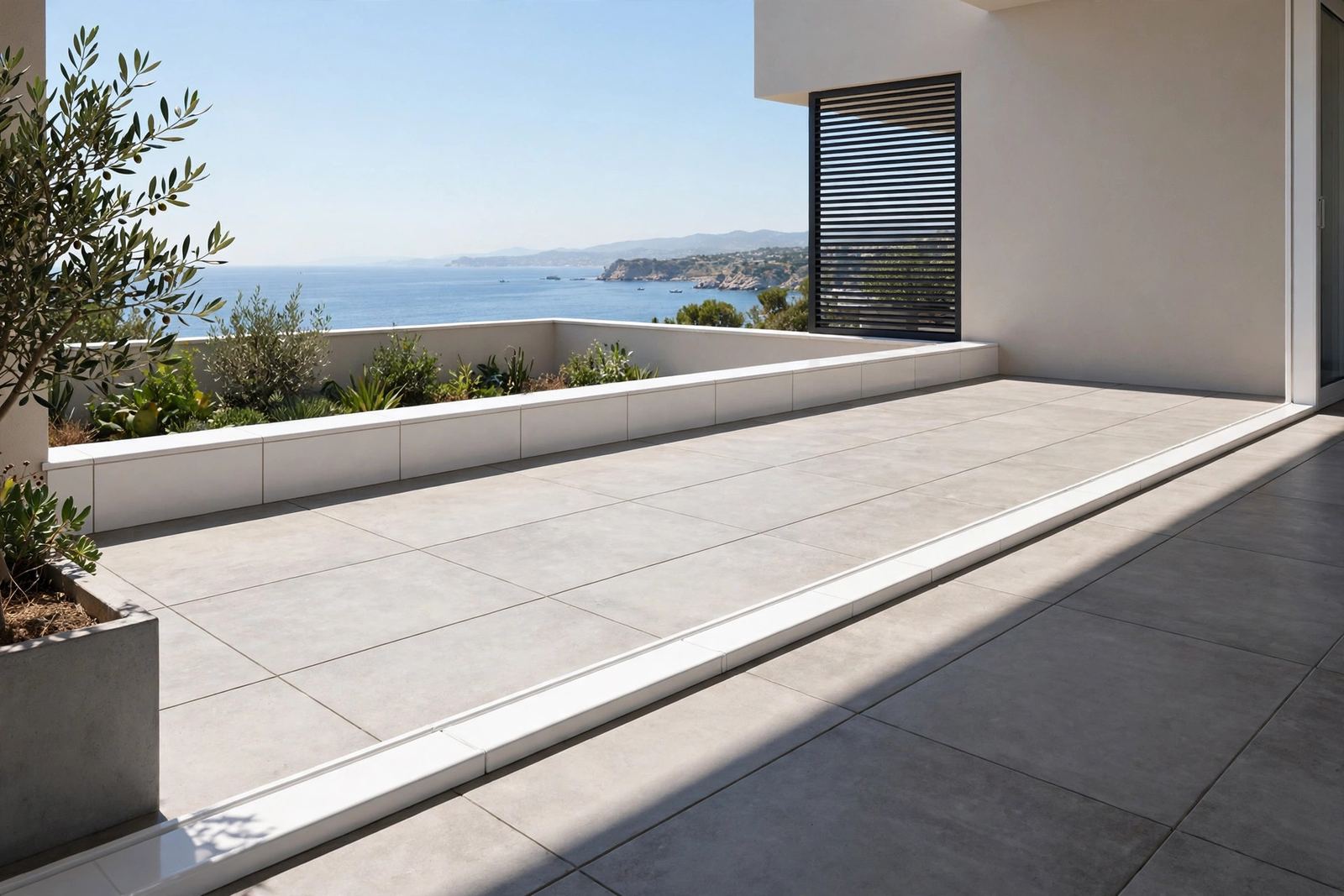
Yes, PVC tile trim can fade and yellow outdoors, although the outcome depends on the formulation. Trim made with UV stabilizers holds its color far longer than plain PVC, while unstabilized PVC in full sun yellows sooner. The change is usually cosmetic at first, but long exposure can also make the surface chalky and brittle.
Below: what happens to PVC in sunlight, and which factors speed the change. Plus how to choose and care for trim on a balcony, patio, or pool surround.
Why PVC Yellows in Sunlight
Sunlight damages PVC through its ultraviolet, or UV, rays, which carry enough energy to break chemical bonds in the polymer chains of the material. As those bonds break, the material gives off hydrogen chloride gas in a process chemists call dehydrochlorination.
The broken chains form new structures called polyenes, which absorb visible light differently, and that shift is what you see as yellowing. At the same time, the surface layer breaks down into a white powder known as chalking, which leaves the trim looking dull.
Heat speeds the whole process up, so a trim piece that bakes in direct sun degrades faster than the same piece in shade. This is why color matters so much outdoors: dark colors absorb more solar heat and run hotter than light ones.
What Speeds Up Fading
Fading comes from sunlight dose, heat, and formulation combined. The table below sums up each factor, so you can judge how fast a given installation is likely to change.
| Factor | What it does |
|---|---|
| Full, direct sun | Raises UV dose, so yellowing and chalking appear sooner |
| Dark colors | Absorb more heat, speeding the same breakdown |
| No UV stabilizers | Leaves polymer chains unprotected against UV |
| Hot, high-sun climates | Combine strong UV with heat |
| Dirt and pollution | Stains the surface and makes fading look worse |
How to Choose Trim That Keeps Its Color
The single biggest factor is the formulation, because outdoor-grade PVC contains UV stabilizers added during manufacturing. The two common types are titanium dioxide and HALS. Titanium dioxide is a white pigment that blocks UV light, while HALS additives interrupt the chain reaction once it starts.
When you buy, ask the supplier whether the trim is made for outdoor use and what UV protection it carries. A supplier who can name the stabilizer package beats a vague weather-resistance claim. Our PVC tile trim range covers the standard profiles, but whether a given batch carries an outdoor UV package is still unconfirmed.
Color is the second choice to get right, since white and light colors reflect more heat and show yellowing less than dark colors. For a sunny, south-facing edge, light colors are the safer pick; dark colors belong in shaded or covered spots.
Where You Install It Matters
Placement can matter as much as the product. Trim under a roof overhang or on a shaded wall gets a far smaller UV dose than trim on a south-facing balcony. Reflected heat counts too: trim next to pale paving or glass can run hotter than in open air. Our pool and outdoor tile trim guide covers exposed wet areas, and the outdoor tile trim overview lists exterior profiles.
For exposed spots such as pool surrounds and open terraces, an outdoor-grade PVC is the minimum. Where trim will sit in harsh sun all day, a metal trim may be the more durable choice. Metal does not yellow in UV light, as our PVC vs aluminum tile trim guide and best materials for tile trim overview show.
What to Do If Your Trim Has Already Yellowed
Start by cleaning, because dirt, algae, and pollution can look like fading. A wash with mild soap and water may restore much of the original color. If the yellow tone stays after cleaning, the change is in the material itself rather than on its surface.
A faded surface can often be painted over with a plastic-rated primer and a light-colored topcoat. A light topcoat reflects heat and slows further breakdown. Dark paint can warp the profile; see our guide to whether you can paint tile trim.
Replace the trim if it has turned brittle, cracked, or chalked deeply, since paint can hide color change but cannot restore strength. A profile that snaps or crumbles under light pressure should not be patched over.
Frequently Asked Questions
Does all PVC tile trim fade outdoors?
No, not all of it: outdoor-grade PVC with UV stabilizers holds its color far longer than plain PVC. But no PVC is fully immune, and given enough sun and heat, even stabilized grades will change.
Does white PVC yellow faster than colored PVC?
White shows yellowing more clearly, but it runs cooler than dark colors. Dark colors absorb more heat and break down faster, even if the change is harder to spot at first. That is why a dark profile in full sun often ages fastest.
Can yellowed PVC tile trim be restored?
Cleaning removes surface dirt that mimics fading, but true yellowing inside the material cannot be washed out. It can be covered with a plastic-rated primer and a light topcoat; brittle or cracked trim should be replaced instead.
Is PVC or metal trim better for sunny outdoor edges?
For fully exposed, high-sun edges, metal trim avoids yellowing entirely, since metal does not degrade in UV light. PVC works well in shaded or partly covered spots, provided it is an outdoor grade with UV stabilizers.