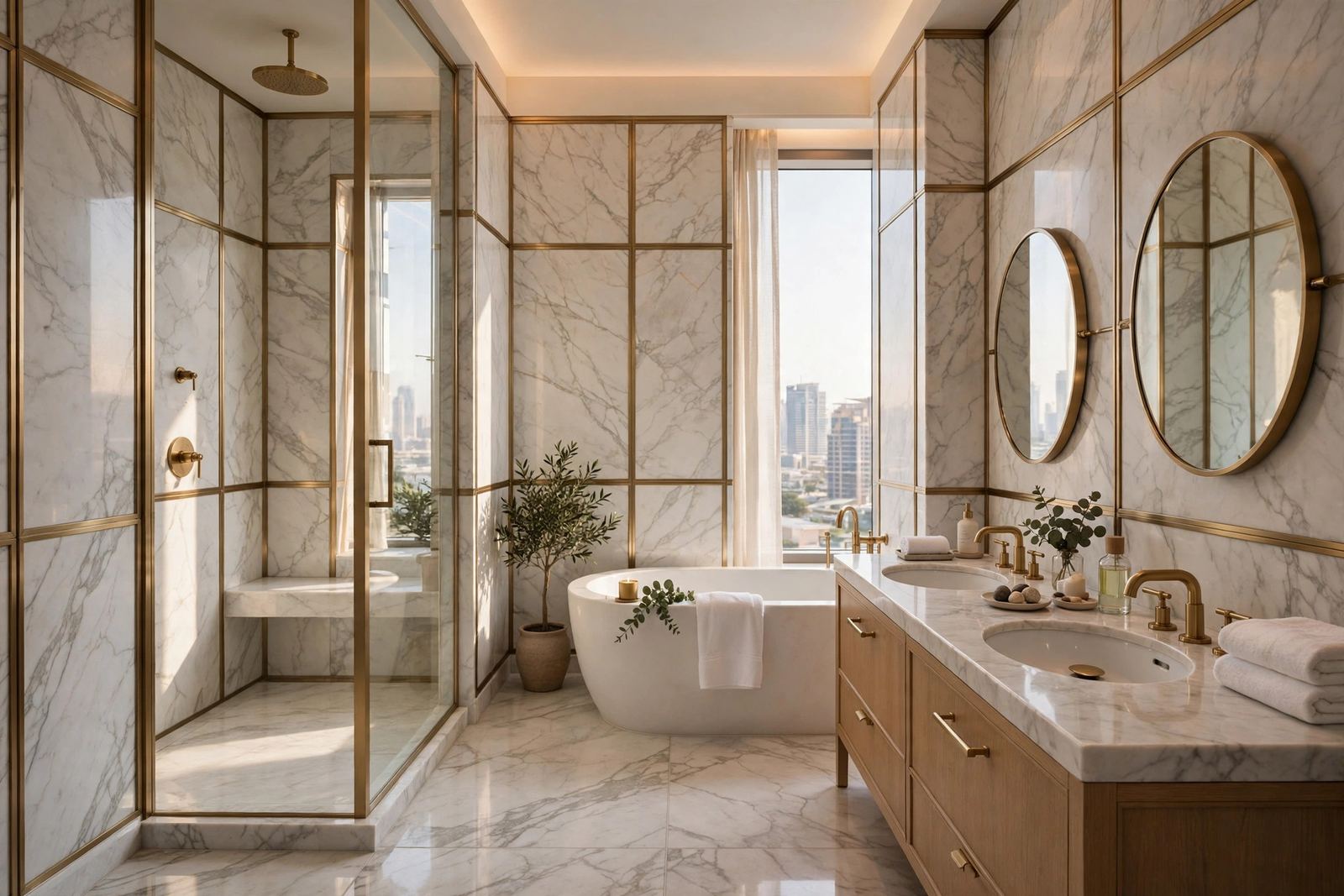
A hotel refurbishment is the wrong place to learn that brass changes colour. Unlacquered brass will patina, and it will do so at different speeds in a steamy bathroom and a dry corridor. The owner must accept that before the order goes in, not after the first floor is tiled. Get the finish route right first, then spec by zone, and a brass trim scheme can run for years without a complaint.
This case follows a de-identified hotel refurbishment. Bathrooms were refitted floor by floor, with brass trim on bathroom wall ends, lobby floor edges, and corridor corners. There is no hotel name and no order figure in this account, but the value is in the decisions, which repeat in any hotel job. They cover which brass, which finish route, which profile per zone, and what to confirm in writing.
New to trim profiles, start with what tile trim is for the profile shapes this case refers to.
Why solid brass, and why not brass-tone PVD
Three products answer to the name brass on a hotel job, and they age in different ways. Solid brass is copper and zinc through the whole profile, so it can be lacquered, chrome-plated, or left live to patina.
Brass-tone PVD stainless steel carries a brass colour on a steel body, so the colour stays put but the metal underneath is not brass. Brass-tone aluminum is the lightest of the three and the easiest to cut, but it dents more readily in a corridor.
The alloy behind the solid brass matters. NIUYUAN brass trim uses H59, a GB standard brass with 57 to 60 percent copper and the balance mainly zinc. That is the grade to write on the order, because a bare word like brass tells the factory nothing about the alloy. If a supplier cannot name the alloy grade in writing, the finish route below cannot be guaranteed either.
The three brass options side by side
| Material | What it is | Colour behaviour | Care | Best hotel zone |
|---|---|---|---|---|
| Solid brass H59 | Copper-zinc alloy through the profile | Patinas unless sealed; lacquer locks the tone | Neutral cleaner; no bleach, acid, or abrasive | Bathroom feature walls, lobby edges |
| Brass-tone PVD stainless steel | Steel body with a brass-colour coat | Colour stays stable; no patina | Neutral cleaner; treat like coated steel | High-traffic corridors, wet areas |
| Brass-tone aluminum 6063 / 6463 | Aluminum body with a brass-tone coat | Coat can dull under harsh cleaners | Mild cleaner only | Dry-side edges, low-traffic trims |
The choice is about who owns the colour change: solid brass asks the owner to accept patina or pay for a sealed finish. PVD steel keeps the colour fixed, which suits a brand standard that must match across floors.
Aluminum suits dry edges where weight and cutting ease matter more than the metal itself. Our brass versus aluminum tile trim comparison sets out the same trade-off for a single material pair. The range behind this case is on our brass tile trim page.
Finish routes, one decision
A brass trim order is really an order for a finish route, not a colour name. Live brass is unlacquered, so it starts bright and patinas with heat, moisture, and touch. Lacquered brass holds its tone because the clear coat locks the surface, but the coat can wear early in high-traffic spots. Chrome-plated brass is the most stable of the routes, and it reads cooler than a brass tone.
Smoked chrome is a fourth route on the NIUYUAN list, a darker chrome tone for schemes that want brass warmth without a bright gold face. Order it only as a named finish with a sealed sample, because smoked covers a wide range of tones across makers. Whatever the route, confirm it in writing with a physical sample, and sign it off under the hotel’s own lighting, not from a screen photo.
Our brass tile trim selection guide covers the same choice in depth, from the H59 alloy to sealed finishes.
The sample step is the whole decision. Ask for one length in each finish route. Fit it against the actual tile, and look at it under the corridor lights and the bathroom downlights. A tone that matches in daylight can split under warm LEDs, so sign the chosen sample and keep it.
Specifying brass by hotel zone
One finish route rarely serves a whole hotel. Bathrooms run hot and wet, corridors take trolleys and luggage, and the lobby floor takes foot traffic all day. Map the zones first, then assign one profile and one finish route to each zone. The table below is a starting point, not a standard. Check each row against the real tile and the cleaning routine.
| Zone | Profile | Finish route | Why |
|---|---|---|---|
| Bathroom wall ends | L or round-edge | Lacquered or chrome-plated | Sealed against steam and splashes |
| Shower niche | Round-edge with factory corner pieces | Chrome-plated | Wettest spot; corners need a clean joint |
| Lobby floor edges | Square or round-edge | Chrome-plated or smoked chrome | Foot traffic; stable tone across phases |
| Corridor outside corners | L profile | Lacquered, or chrome if trolleys pass daily | Trolley knocks; lacquer wear must be accepted |
| Bar and restaurant edges | Square | Smoked chrome or lacquered | Warm tone; check cleaner rules with the operator |
Phased work adds one more rule: fix the finish route for the whole hotel before the first floor ships. A lacquered tone ordered floor by floor can drift between batches. A lobby finished in two phases will show the join. One signed sample and one finish route across all phases is the cheapest insurance against a visible mismatch.
Check each delivery against the signed sample before it goes to the floor. A tone that drifted between batches is cheapest to catch at the goods-in door, not after the tile is set. Reject a batch that does not match, and keep the sample as the written reference in the dispute.
Bathrooms with a shower as well as a bath need one more read. Our shower tile trim guide covers the wet zones in full, from wall ends to the curb and the niche.
Sizing, samples, and the tile behind the trim
Trim height follows tile thickness plus the adhesive bed, and hotel tile is often thicker than the residential sizes buyers know. Measure the real tile, not the box label, and add the bed and any membrane. Where the tile is thick, a deeper trim depth is the answer. State the depth on the order. Our tile trim dimensions and compatibility chart maps common tile thicknesses to trim depths.
Order the corner pieces with the trim, not after it. Factory corners give a clean joint at the niche and the corridor turn. A run ordered without them leaves the tiler to improvise on site. List the pieces per zone on the same order, with counts, so no zone is left short.
Samples do two jobs on a hotel order. The first is colour: one signed sample per finish route, checked under the hotel’s lights. The second is fit: one length dry-fitted against the real tile and bed, checked with a straight edge. NIUYUAN keeps the sealed sample on file for two years, so a later phase can be matched against the same reference.
Risks to clear before you order
Four risks cause most hotel brass complaints, and all four are decided before the order. First, patina: unlacquered brass will change. The owner must sign that acceptance in writing, or the first colour shift becomes a dispute. Second, lacquer wear: a lacquered coat can break down early where trolleys and luggage pass daily. High-traffic runs may need chrome instead.
Third, chemical exposure: brass does not belong in pools or commercial kitchens, where the chemical load attacks the metal. Keep it to bathrooms, lobbies, corridors, and dining rooms. Fourth, cleaning: housekeeping must know the rules before handover. Bleach, acid cleaners, and abrasive pads will mark any brass finish. A one-page care note per floor beats a complaint per room.
The cleaning handover is the part buyers forget. Write the cleaner rules into the handover pack: neutral pH cleaner, soft cloth, no bleach, no acid, no abrasive pads. Check that the housekeeping team has the note before the first guest room opens. The first wrong cleaner sets the tone for the whole floor.
What held, and what to copy
Three decisions held the scheme together. The finish route was fixed for the whole hotel before the first order, so no phase drifted. One signed sample per route was checked under the hotel’s own lights. The tone on site matched the tone on the order. And the cleaner rules reached housekeeping before handover, so the first month of cleaning did not undo the finish. Copy those three, and the brass will age the way the owner agreed to.
Hotel brass order checklist
Send these items to the supplier in writing before you order. A written answer beats a verbal promise when a phased delivery lands wrong.
- Zone map: one profile and one finish route per zone.
- Real tile thickness, adhesive bed, and membrane build-up, with trim depth stated.
- Finish route in writing: live, lacquered, chrome-plated, or smoked chrome.
- Signed physical sample per finish route, checked under the hotel’s lights.
- Corner pieces, end caps, and connectors listed per zone, with counts.
- Lengths and quantities per phase, with the finish route fixed across phases.
- Brass MOQ of 200 pieces, and sample lead time of 7 days, confirmed in writing.
- Packaging and labelling per phase, so later floors match the first.
- Handover care note for housekeeping: neutral cleaner only.
A hotel brass order is a finish-route decision first and a trim order second. Fix the route, sign one sample, map the zones, and put the rest in writing. The brass will still age, but it will age the way the owner agreed to. That is the difference between a feature and a complaint. For the full profile range behind this case, see the tile trims ultimate guide.
Frequently Asked Questions
Will brass tile trim change colour in a hotel bathroom?
Yes, if it is unlacquered. Bare brass patinas with heat, moisture, and touch. A lacquered or chrome-plated finish locks the tone. Agree the finish route in writing before you order.
Which brass finish lasts longest in a hotel corridor?
Chrome-plated brass is the most stable route. Lacquer can wear early where trolleys pass daily. Check high-traffic runs against the lacquer warning before you choose.
Can brass tile trim go in a pool or commercial kitchen?
No. Brass does not belong where the chemical load is high, such as pools and commercial kitchens. Keep it to bathrooms, lobbies, corridors, and dining rooms.
How do I stop brass trim drifting in colour between hotel phases?
Fix one finish route for the whole hotel and sign one physical sample per route. Check the sample under the hotel’s own lights. NIUYUAN keeps the sealed sample on file for two years.
What should a hotel brass trim order state in writing?
The zone map, the real tile thickness with the adhesive bed, the trim depth, the finish route, the signed sample, corner pieces with counts, and quantities per phase. Brass MOQ is 200 pieces.