
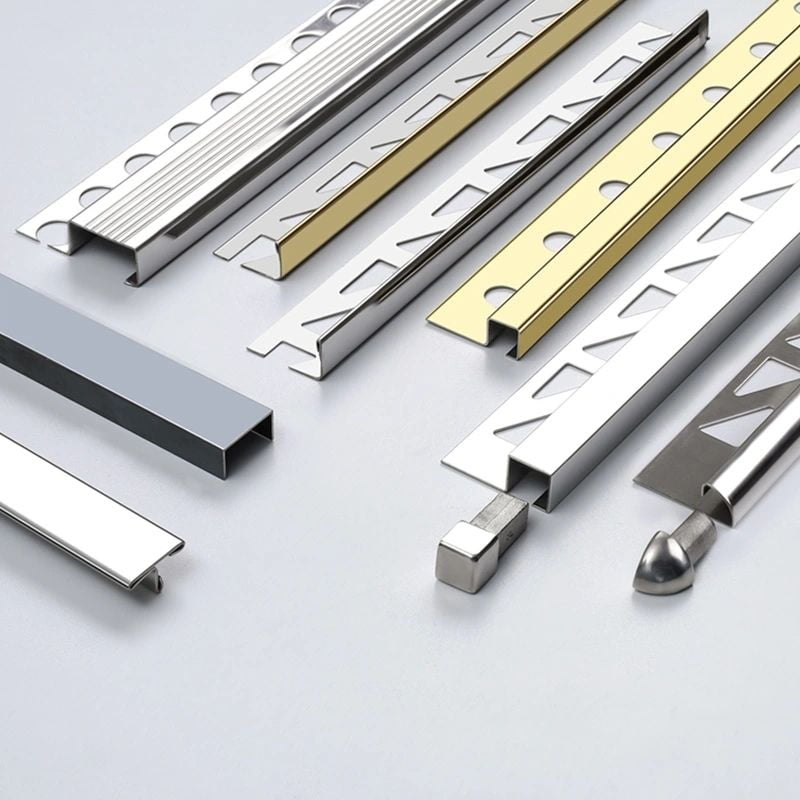
No, most metal tile trim does not rust the way buyers fear. Rust is iron oxide, and it forms only where iron is exposed. Aluminum and brass contain no iron, so they cannot rust. Stainless steel does contain iron, but its chromium layer shields it, so it does not rust in normal indoor use. Each metal can still change in wet or salty rooms, but the mechanism differs, and so does the fix.
The practical question is not whether metal trim rusts, but which failure to guard against in your project. A dry inland shower faces a different risk than a coastal pool deck. The table below gives a quick map, and the sections below explain each row.
Rust Is Iron Oxide. The Metal Decides What Happens Next
Rust needs iron, oxygen, and water. When iron meets all three, it turns into flaky red oxide. That oxide does not protect the metal below it: it flakes off, exposes fresh iron, and the cycle repeats until the section is gone.
That is why plain carbon steel trims fail fast in wet rooms, while none of the three common trim metals is plain iron. Rust is the wrong label for most trim problems, and buyers who use the right word get the right fix.
| Material | What actually happens | Where it holds up | Watch out for |
|---|---|---|---|
| Stainless steel 304 | Chromium builds a passive layer; chlorides can break it. | Kitchens, bathrooms, most interiors | Pool water, salt air |
| Stainless steel 316 | Molybdenum helps it resist chlorides. | Pools, coastal sites, steam rooms | Chlorides left unrinsed |
| Aluminum 6063 | No rust; chlorides and alkaline cleaners can pit it. | Dry interiors, anodized profiles outdoors | Bare aluminum by the sea |
| Solid brass H59 | No rust; surface darkens into patina. | Dry areas, lacquered finishes | Unlacquered brass in wet use |
Stainless Steel: 304 for Interiors, 316 for Salt and Chlorine
Stainless steel resists rust because chromium builds a thin passive layer that repairs itself after scratches, as long as oxygen can reach it. Grade 304 suits most kitchens and bathrooms, and it handles steam and daily cleaning.
Grade 316 adds molybdenum, which helps the passive layer stand up to chlorides, so 316 is the safer pick for pools and coastal sites. Match the grade to the site instead of defaulting to the highest one.
Even stainless steel can show brown surface spots, often called tea staining. They usually come from iron dust left by cutting tools or chloride deposits. The spots are a surface problem, not rust eating through the profile, and they rarely return once the source is removed.
If a supplier cannot name the grade on the order, treat that as a warning sign. Ask for the grade in writing before you pay. Our full 304 vs 316 comparison walks through the choice.
Aluminum: It Cannot Rust, But It Can Corrode
Aluminum contains no iron, so it cannot rust at all. It forms a thin layer of aluminum oxide on contact with air, and that layer protects the metal indoors. The risk is corrosion, not rust. Chlorides, alkaline grout, and some cleaners can break that layer, and the surface then shows white powder or small pits.
Anodized aluminum holds up far better outdoors, because its layer is thicker and harder than the natural oxide film. For coastal work, read our coastal projects guide before you specify bare aluminum, and ask which finish the profile carries.
Brass: Patina Is Not Rust
Brass is an alloy of copper and zinc. It holds no iron, so it cannot rust either. What buyers often mistake for rust is patina: the surface darkens over time as copper reacts with air and moisture. Lacquer slows that change, while unlacquered brass darkens faster in wet rooms.
Patina is a surface color change. It does not eat into the profile the way rust eats iron. Buyers who want a stable gold tone should order a lacquered or chrome-plated finish and confirm it on the order.
Five Questions to Ask Before You Order
A supplier who answers these five questions clearly is usually a safe bet. Vague answers are a reason to pause. Write the answers on the order, so the batch matches the grade and finish agreed.
- Which exact grade is it, 304 or 316, and will it appear on the order?
- What finish protects the surface, and how should it be cleaned on site?
- Can you keep a sealed sample of this batch? NIUYUAN keeps sealed samples for 2 years.
- What is the minimum order, and how long do samples take? Stainless MOQ is 500 pcs, samples take 7 days.
- Which profile height and thickness fit my tile, and does the size and height selection chart confirm the match?
The short version is simple. Match the metal to the site, confirm the grade in writing, and pick the finish for the room. A trim that fails in year two failed on paper first, in a grade nobody checked.
Frequently Asked Questions
Does stainless steel tile trim rust?
No, not in normal indoor use. Grade 304 can show brown surface spots where chlorides or iron dust sit on the surface. Grade 316 resists those spots better. The spots are surface marks, not rust eating through the metal.
Does aluminum tile trim rust?
No. Aluminum holds no iron, so rust cannot form. It can corrode instead, showing white powder or small pits in salt air or with alkaline cleaners. Anodized profiles resist that damage far better.
Does brass tile trim rust?
No. Brass darkens into patina over time. That color change is a surface effect, not rust. A lacquered or chrome-plated finish keeps the gold tone stable for longer.
What trim should I use near a pool or the coast?
Grade 316 stainless steel is the safer choice for pools and coastal sites, because it resists chlorides better than 304. Confirm the grade in writing, and read our pool and outdoor guide before you order.