If you buy tile trim for the Saudi market, you are buying into a project-led supply chain. A large share of Saudi tile work is specified through projects — housing programmes, hotels, malls and the Vision 2030 developments — and even dealer stock ultimately feeds contractors working to a specification. In practice, Saudi buyers source trim four ways: through project supply companies and trading groups that service contractors, from building-materials dealers and tile showrooms holding standard lines ex-stock, off the shelf from big-format building and finishing retailers, and by direct import from Chinese factories when they need range depth, grade control or their own brand. Two things make Saudi Arabia different from most markets in this series: the conformity step — imported products are registered on the SABER platform before they can clear customs — and the split between a dry, extreme-heat interior and two humid, chloride-bearing coasts. This guide works through the channels, what to specify for those conditions, and the steps involved in importing from Foshan.
Where Saudi buyers get their tile trim
Project supply companies and trading groups. The top of the Saudi market buys by specification, not off a shelf. Contractors and developers working on hotels, malls, hospitals and housing projects procure finishing materials through project supply companies and the building-materials divisions of large trading groups, against approved drawings, material submittals and supplier lists. Tile trim enters as part of the tiling package: the profile, grade and finish are fixed in the specification long before the goods move. For a distributor, this channel rewards documented specifications and consistent supply over spot pricing — and it is where premium grades and finishes are actually consumed.
Building-materials dealers and tile showrooms. Below the project tier, wholesale dealers and tile showrooms in Riyadh, Jeddah and Dammam are the working backbone of the trade. They hold standard aluminum and stainless trim lines ex-stock for contractors and smaller distributors, replenish quickly, and cover the renovation and fit-out market that never goes through a formal submittal. The limitation is the same as in every dealer market: the range is what the dealer chooses to stock, grade depth is thin, and less common profiles or finishes wait for the next import cycle.
Big-format building and finishing retail. Megastore retailers sell the same shelf logic to the retail and small-contractor end of the market. ABYAT, the building and finishing materials megastore operator, opened its first Saudi store in Dammam in 2012 and sells tiles and finishing materials alongside bathrooms, lighting and kitchens; trade data also shows the large retailers acting as importers in their own right, bringing in building materials in volume rather than buying everything locally. For an importer, that means the biggest shelf customer in the market is also a factory-level buyer — the same competitive reality as in other import-led markets.
Direct import from China. Importing from a Foshan factory is how Saudi distributors and project suppliers secure the full profile range in one shipment, specify grade and finish instead of accepting a stock list, and build their own brand into the range. The trade-offs are concrete: minimum order quantities per material, a production lead time measured in weeks, and a conformity workload that sits with you — SABER registration is held by the Saudi importer of record, under a Saudi commercial registration, not by the foreign factory. The channel comparison below summarises the decision.
| Channel | Best for | Range & spec control | Commitment |
|---|---|---|---|
| Project supply / trading groups | Specified project packages, premium grades | Set by project specification and submittals | Approval process; documented specs required |
| Dealers & tile showrooms | Standard lines, fast replenishment, fit-out work | Limited to the dealer’s stocked range | Low; ex-stock |
| Big-format retail | Retail and small-contractor shelf demand | Fixed to shelf stock | None — retail pricing |
| Direct import (Foshan) | Range building, grade/finish control, private label | Full — profile, grade, finish, length, packing | MOQ per material, production lead time, own SABER registration and QC |
What to specify for Saudi conditions
Grade: two coasts and a hot, dry interior
Saudi Arabia asks two different corrosion questions. Jeddah and the Red Sea coast combine heat with high humidity and salt air; Dammam, Khobar and Jubail on the Gulf coast expose metal to chlorides as well. Riyadh and the interior are dry, and there the dominant stresses are heat and UV rather than corrosion. Specify accordingly: 316 stainless for coastal sites on either coast, outdoor edges, pool surrounds and wet commercial areas, because its molybdenum content is what resists chloride pitting and the tea staining that appears on 304 near the sea; 304 covers the interior and inland volume. That is the same rule set out in our 304 vs 316 vs 316L grade guide and applied to wet-area projects in our pool and outdoor tile trim guide. Anodized aluminum carries the mainstream residential and commercial range, brass stays on interior decorative work specified as H59 solid brass rather than a brass colour, as our brass tile trim selection guide sets out, and PVC belongs on interior and budget lines rather than exterior exposure.
Heights and lengths: follow the tile package, take full lengths
Trim height follows tile thickness plus the adhesive bed, and Saudi commercial work lays a great deal of large-format porcelain — so confirm the height against the actual tile package on each project or range plan instead of ordering by habit, using the method in our tile trim size guide. On lengths, Saudi channels differ from retail-led markets: dealers and project sites generally take full factory lengths, commonly 2.44 m to 3.0 m, and cut on site, so the cutting plan is a site decision rather than a factory one — unless you are supplying a retail format, in which case state the cut length and per-piece packing in the RFQ exactly as you would for any packaged line.
Finishes Saudi projects ask for
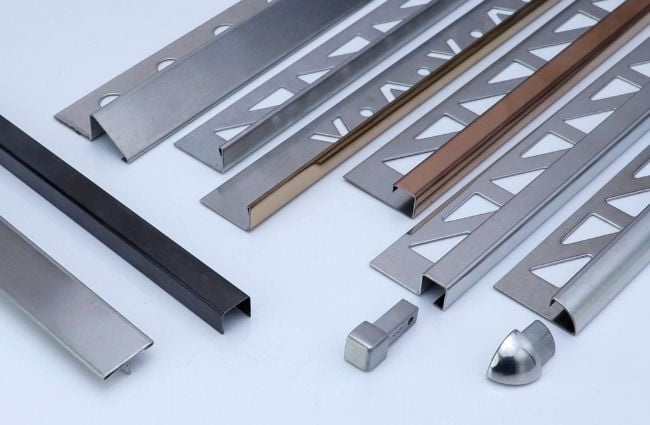
Brushed and polished stainless carry the commercial default; gold-tone PVD and brass are specified where hospitality and premium residential work wants a warm metal line; matte black and satin anodized aluminum recur in contemporary commercial interiors. Whatever the finish, the mechanism that protects it is the same: approve a physical sample, seal it as the reference, and check bulk against it — the full logic is covered on our tile trim finishes and colours page. For project work, fold the finish sample into the material submittal, so what is approved is what is checked on delivery; our tile trim specification checklist for hotels and commercial projects sets out how that documentation is usually assembled.
How importing from Foshan works, step by step
- Shortlist and samples. Confirm the factory makes the profiles you need in the grades above, then order samples of the exact profile, finish and height you plan to stock or submit. At NIUYUAN, standard samples are ready in 7 days (custom profiles 7–10 days); check the finish against the tile package it will sit with, not against a photo.
- Fix the specification in writing. Profile, material and grade, height, finish reference, length and cutting plan, protective film, and packing — including whether cartons carry your brand. For project supply, agree at the same time which documents the submittal file will need (datasheets, material data, finish samples), so they are produced with the order instead of chased after it. Most import disputes are specification gaps, not factory errors.
- Quotation, classification and SABER. Ask for the quotation on a named Incoterm and destination port. Saudi Arabia runs conformity through SABER, the Saudi Standards, Metrology and Quality Organization (SASO) platform: the importer registers each product under their own SABER account, regulated products obtain a Product Certificate of Conformity (PCoC) through a SASO-approved assessment body before the first shipment, and every shipment then needs its own Shipment Certificate of Conformity (SCoC) — since October 2025 the shipment certificate has been a mandatory precondition for filing the customs declaration. Before the first order, confirm with your broker or assessment body how your exact trim lines are classified and whether they fall under a SASO technical regulation; the factory’s part is to supply the product data, specifications and photos the registration file is built from.
- Production. At NIUYUAN, bulk production usually runs 20–30 working days after order confirmation, depending on profile, finish, quantity and packaging. Agree the inspection points — photos or video of finished goods and packing — before production starts, and keep the SABER timeline in the same plan: certificates are arranged before arrival, not after it.
- Freight and arrival. Jeddah Islamic Port is the working gateway for the Western Region and the Makkah corridor, King Abdulaziz Port at Dammam serves the Eastern Province, and Riyadh’s dry port handles capital-bound cargo. Choose the arrival port against where the goods will actually be consumed or warehoused, and settle it at quotation stage, where the comparison is still free.
- Clearance and delivery. Your broker files the customs declaration through FASAH, the national trade single window, where the SABER certificates are verified electronically; the shipment clears against the invoice, packing list and bill of lading, with the specification sheet kept in the file to answer classification questions. The end-to-end China import process — documents, payment milestones and inspection options — is covered in our guide to importing tile trim from China.
Building a starter range for the Saudi market
A first import range does not need every profile. It needs the profiles your tile range already sells, in the grades the coasts and the interior each require, with a deliberate step up for project work:
| Tier | What to stock | Why |
|---|---|---|
| Core | Aluminum L-shaped, square-edge and round-edge profiles in the heights your tile range sells, silver, black and gold anodized | Covers the mainstream residential, renovation and dealer trade across all three regions |
| Step-up | Stainless steel L-shaped and square-edge in 304 for interiors; the same profiles in 316 for Red Sea and Gulf coastal work, pools and wet commercial areas; brushed, polished and gold-tone PVD finishes for hospitality specifications | The grade split and the documented finish are the specification dealer stock does not offer — and the one project submittals check |
| Support | PVC interior lines for budget projects; brass profiles for interior decorative work; matching connectors, corner pieces and end caps | Completes the installation system so a project is not lost over a missing accessory |
The logic behind tiering a range this way — core profiles first, depth by tier, no duplicate shapes across materials — is set out in our guide to building a tile trim range for distributors. If the range will carry your own brand, decide the branding before the first production run: private-label cartons, labels and barcodes are part of the specification, as our OEM and private label guide explains — and note that product registration on SABER sits with your company either way, so the brand on the carton and the importer of record should be settled together.
Sourcing from NIUYUAN Metal
NIUYUAN Metal manufactures tile trim in Foshan, Guangdong — a 31,706 m² factory with 250+ staff, 40+ production machines and 3,000+ existing molds, producing aluminum (6063/6463), stainless steel (304/316), solid brass (H59) and PVC profiles plus LED strip profiles and accessories. For Saudi buyers, the working numbers are: MOQs of 1,000 pcs for aluminum, 500 pcs for stainless steel, 200 pcs for brass and 2,000 pcs for PVC; samples in 7 days for existing profiles; bulk production in 20–30 working days; and OEM production with custom packaging for importers building their own brand. Quotations are built against a named destination port, and the product documentation behind each line — specifications, material data and photos — is supplied for the importer’s SABER registration file. Send the RFQ inputs below through our contact page and the quotation will be built against them.
What to send in your RFQ
- Profiles (shape and series) and the material and grade for each
- Trim height per profile, matched to your tile thickness and adhesive bed
- Finish reference for each line — photo, sample, or a finish from the finishes page
- Length plan: full factory lengths for site cutting, or a specified retail format with per-piece packing
- Quantity per SKU, and the total per material against the MOQs above
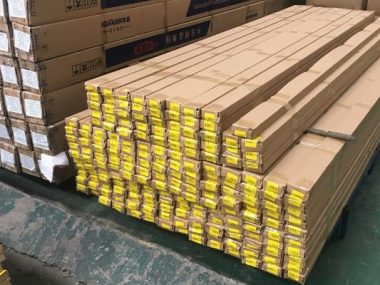
- Packing: protective film, pieces per carton, your labels/barcodes if private label
- Destination port (Jeddah, Dammam or Riyadh dry port) and Incoterm you want quoted
- Conformity: who holds the SABER registration, and any submittal documents the project file requires
FAQ
Where do Saudi contractors and distributors buy tile trim?
Through four channels: project supply companies and trading groups that procure against specifications for hotels, malls and housing projects; building-materials dealers and tile showrooms in Riyadh, Jeddah and Dammam holding standard lines ex-stock; big-format building and finishing retailers for shelf demand; and direct import from Chinese factories for range depth, grade control and private label. Most established distributors use a mix — dealer stock for replenishment, direct import for the core range and project grades.
304 or 316 stainless trim for Red Sea and Gulf coast projects?
316. Inland and interior work is well served by 304, but both Saudi coasts expose trim to humid, chloride-bearing air that pits 304 and leaves tea staining — the Red Sea side around Jeddah and the Gulf side around Dammam and Jubail alike. The grade comparison is set out in full in our 304 vs 316 vs 316L guide.
Does tile trim need SABER certification to enter Saudi Arabia?
Imported products are registered on SABER, the SASO conformity platform, by the Saudi importer of record — the foreign factory cannot hold the registration. Regulated products need a Product Certificate of Conformity (PCoC) before the first shipment and a Shipment Certificate of Conformity (SCoC) for each consignment, and since October 2025 the shipment certificate must be in place before the customs declaration is filed. Whether a given trim line is regulated depends on its classification, so confirm your exact product lines with your broker or a SASO-approved assessment body before the first order; the factory supplies the product data and specifications the registration is built from.
What are NIUYUAN’s MOQs and lead times for Saudi orders?
MOQs are 1,000 pcs for aluminum, 500 pcs for stainless steel, 200 pcs for brass and 2,000 pcs for PVC. Existing-profile samples are ready in 7 days (custom profiles 7–10 days), and bulk production usually runs 20–30 working days after order confirmation, depending on profile, finish, quantity and packaging. Ocean transit, SABER certification time and clearance are confirmed in the quotation for your destination port.
Can we order private-label trim for the Saudi market?
Yes — OEM production and custom packaging are part of the standard offer, including branded cartons, labels and barcodes. Settle the branding before the first production run, and settle it together with the SABER registration: the importer of record registers the products under their own account, so the brand on the carton and the registering company should be the same plan from order one.